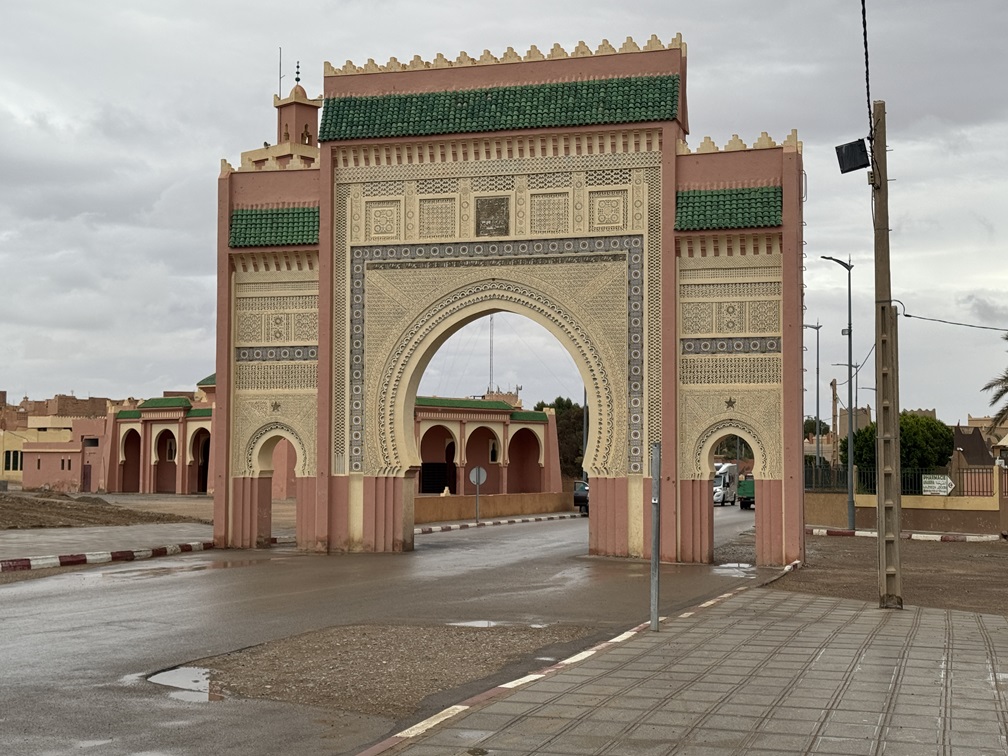
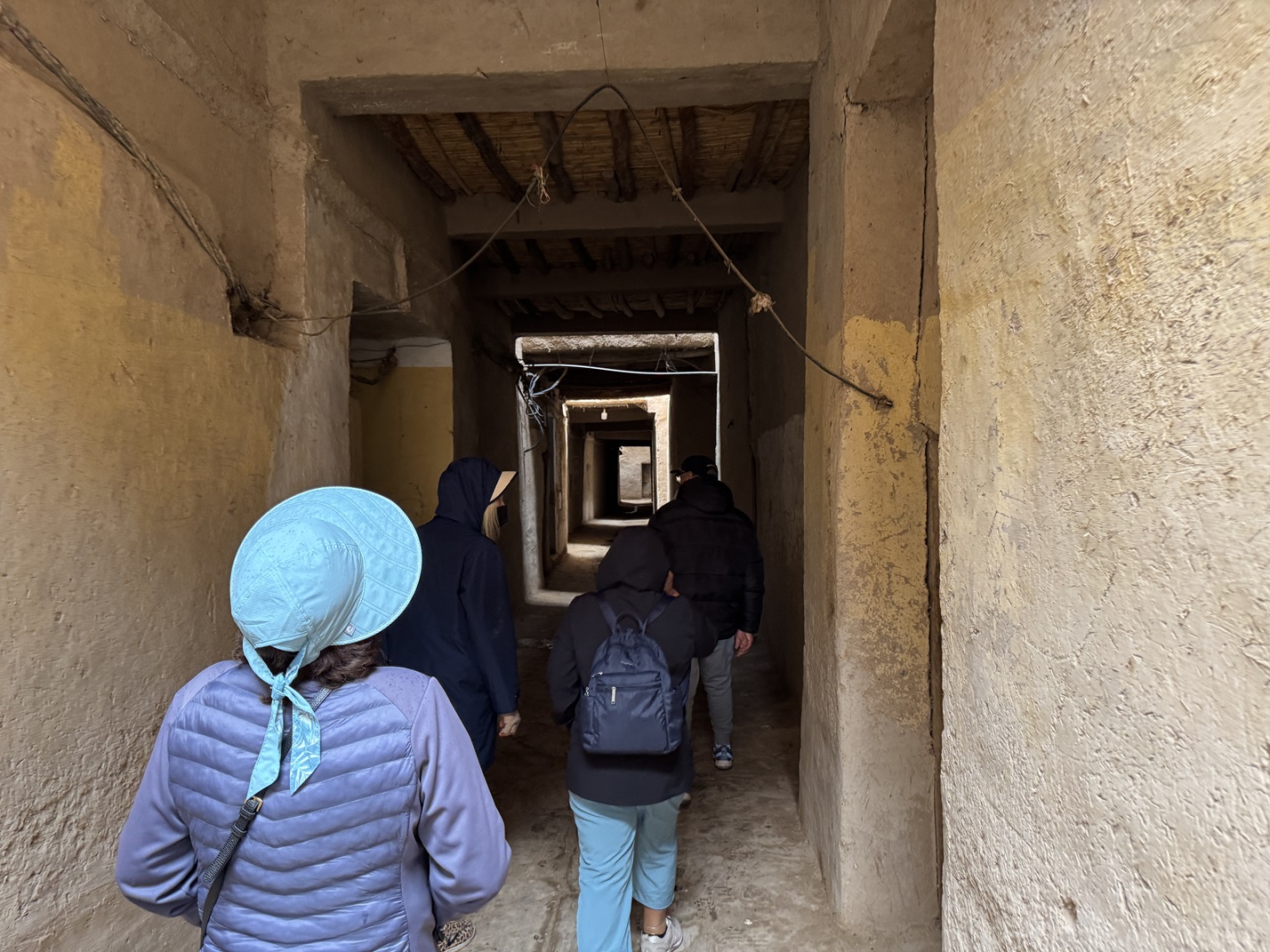
A main gateway into the Mausoleum of Moulay Ali Cherif.
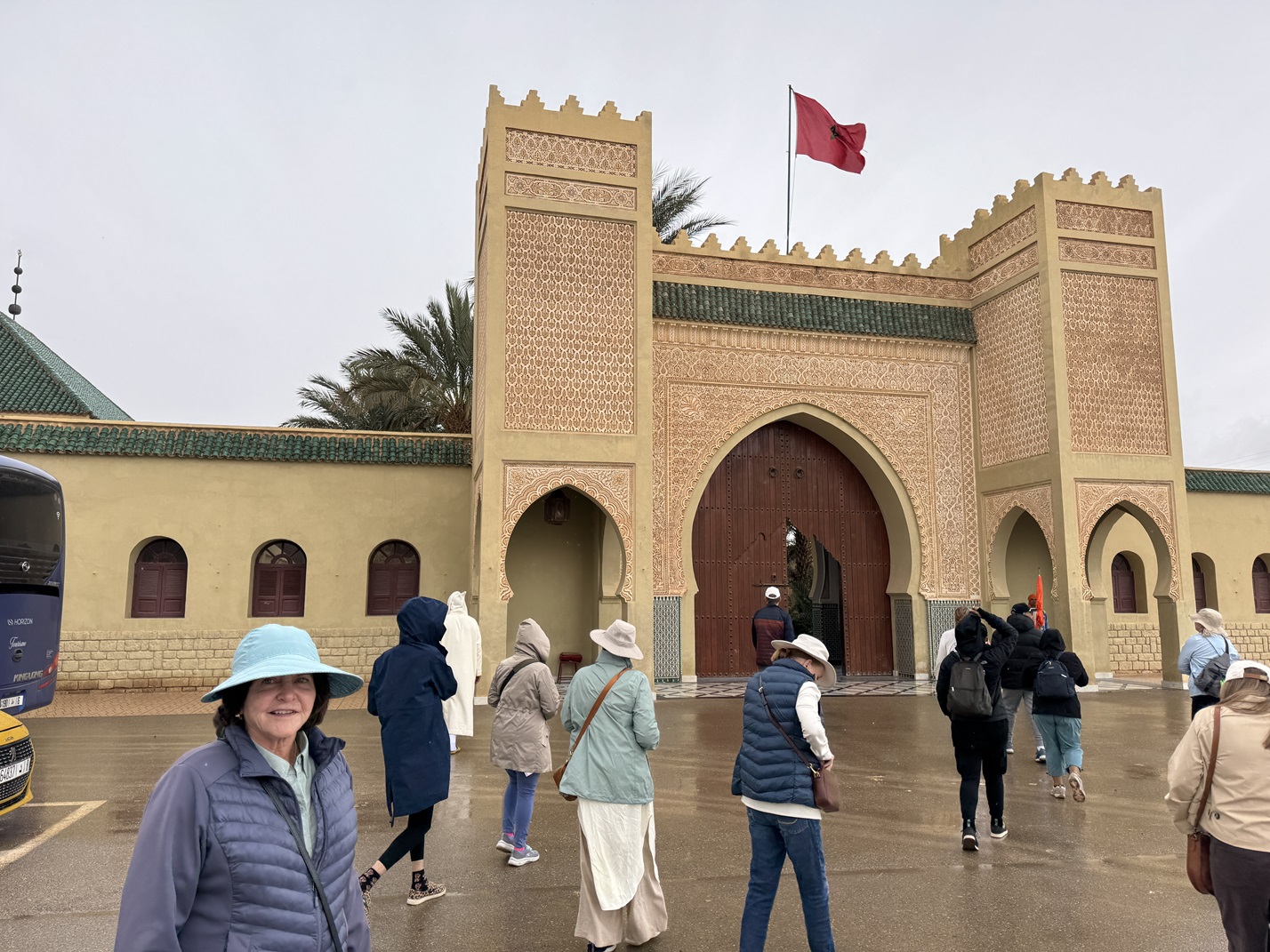
Continuing on to the mausoluem (which we cannot actually enter).
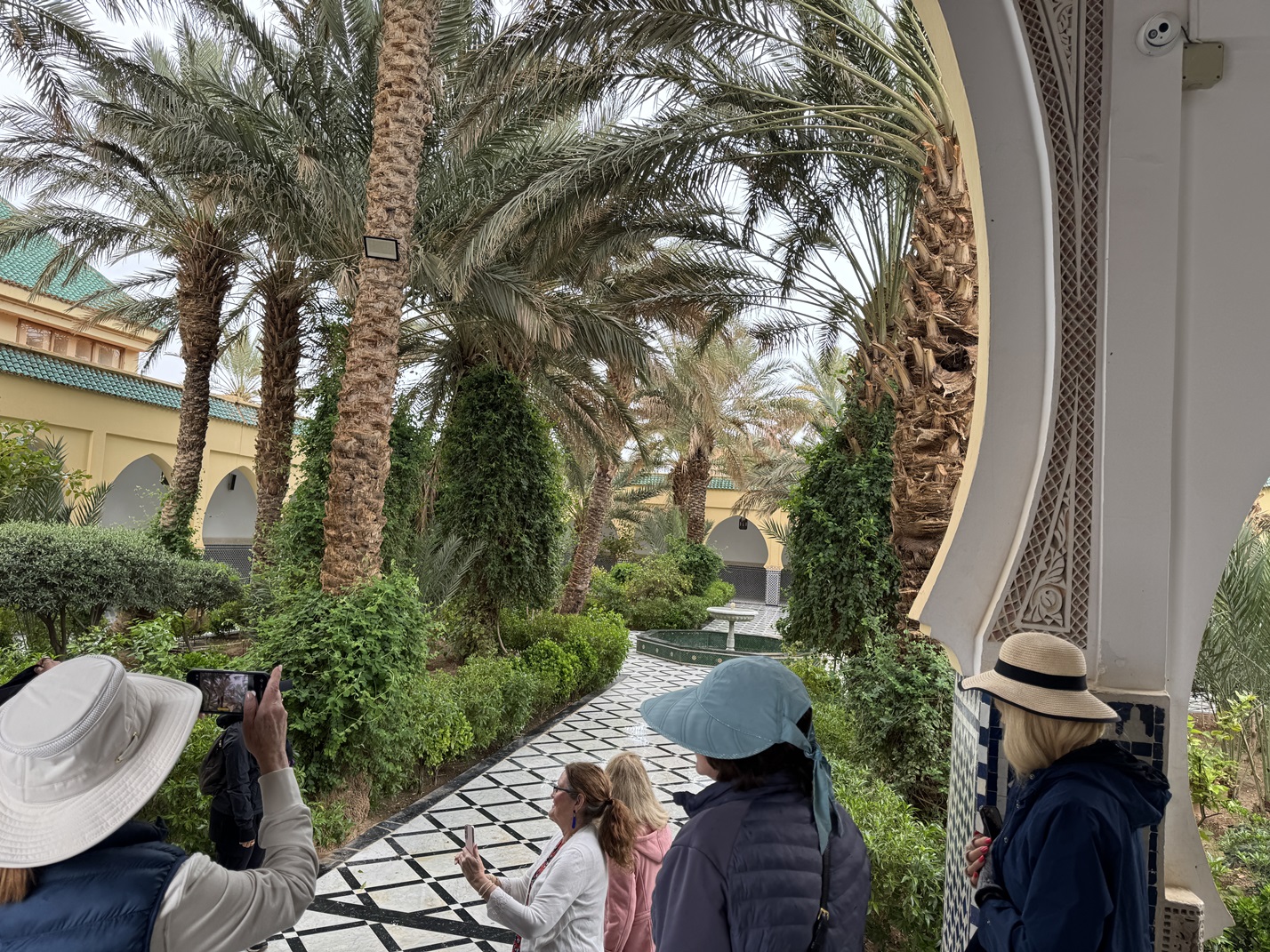
Another garden area with its four sections.
Driss shows how the doorways have the large door and the smaller door, for controlling heating and cooling.
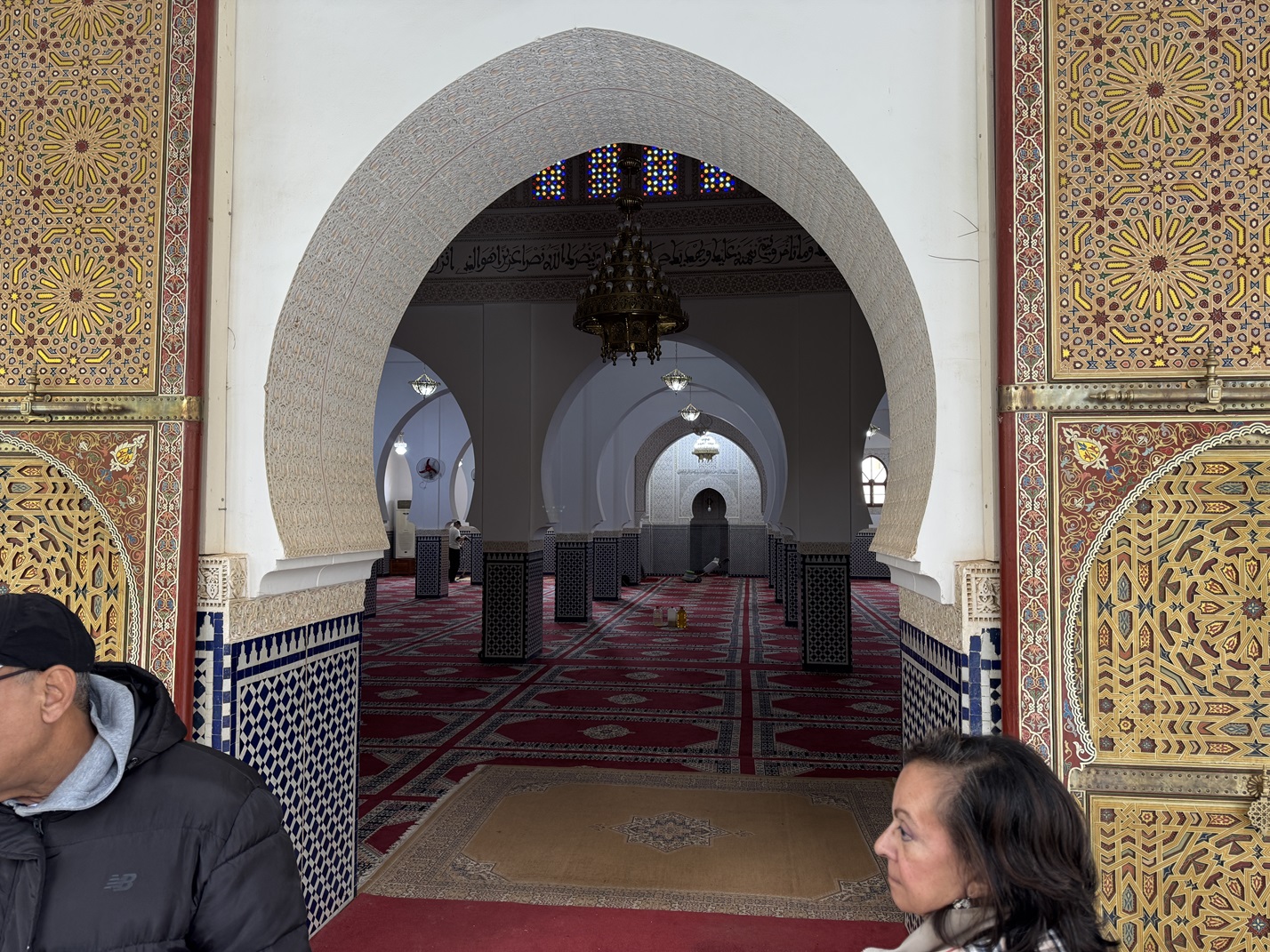
The mosque area within the mausoleum.
It's raining today. In the background is Ksar El Fida.
A ksar is an old style of building a community area within protective walls.
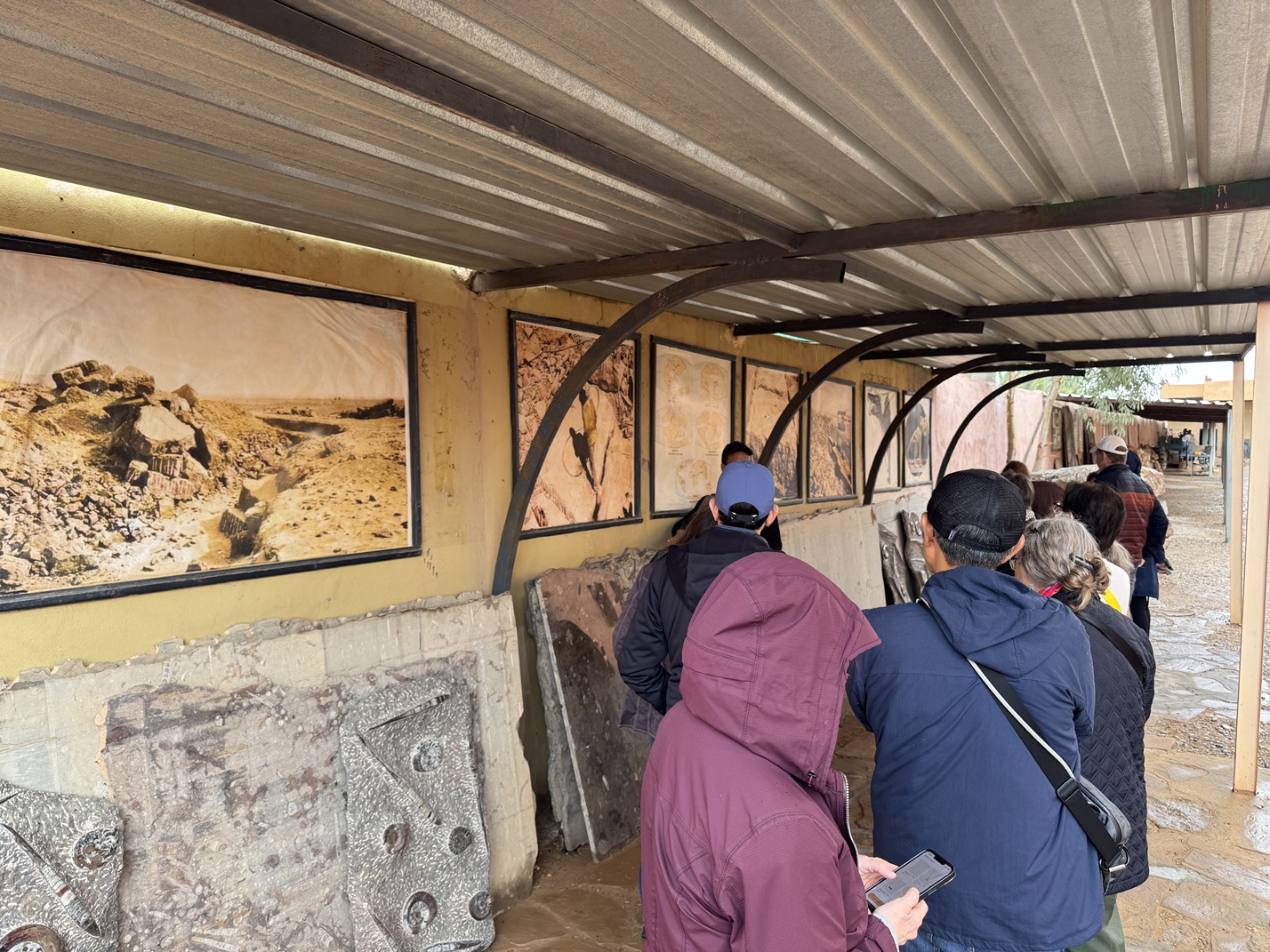
Our next stop is a fossil processing shop and museum.
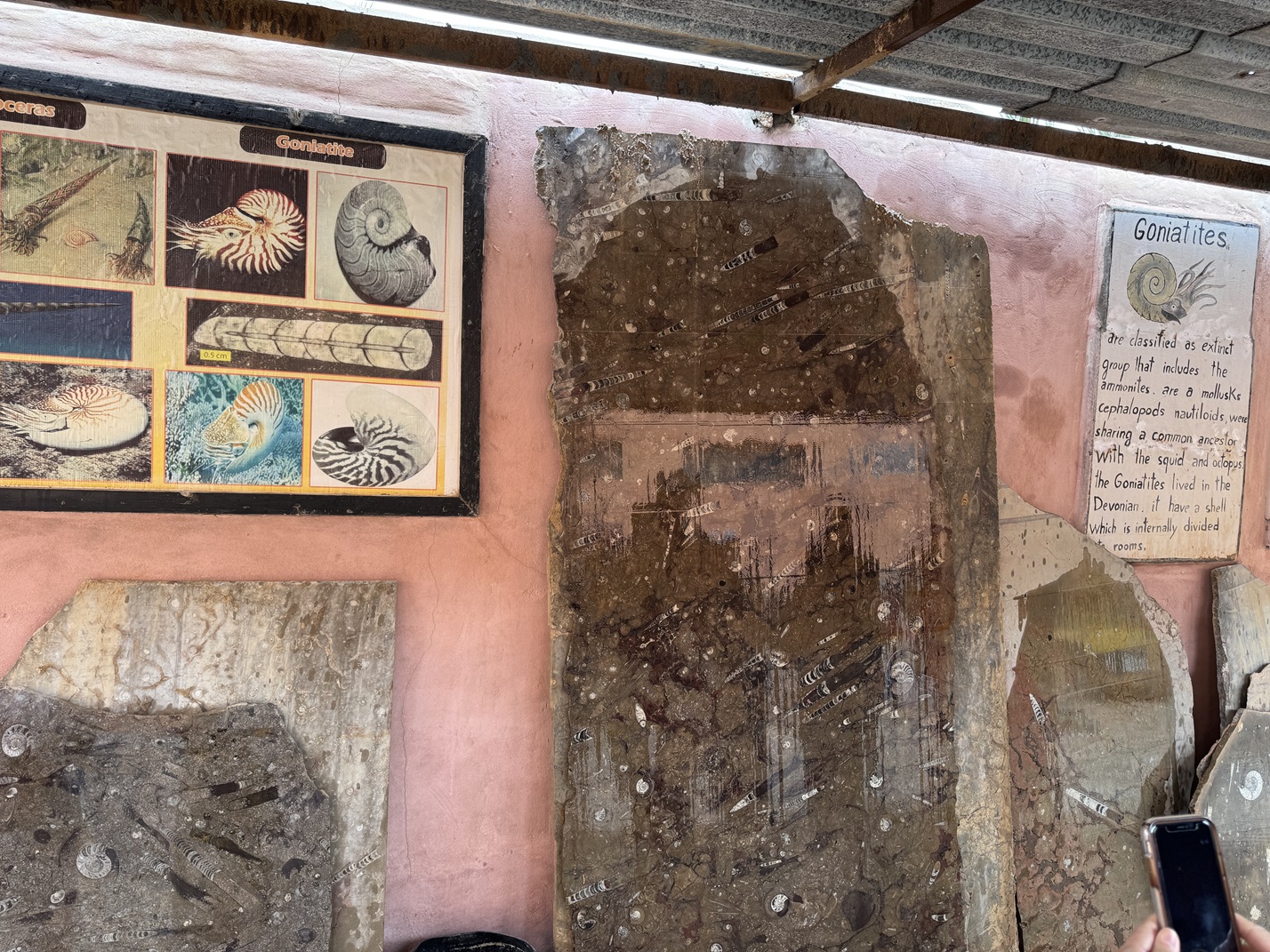
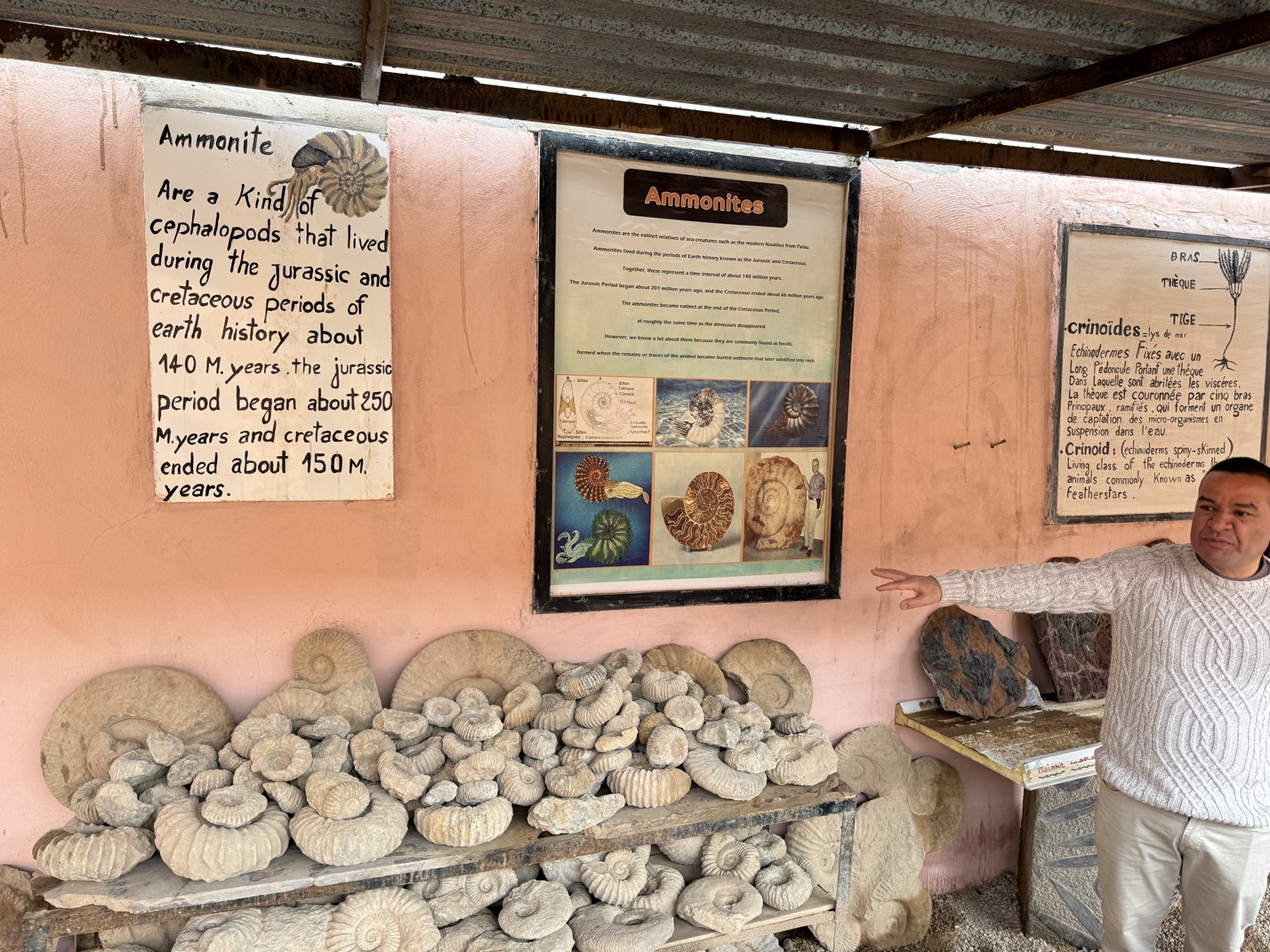
Showing the various types of fossils that are found in the area.
Some are left flat and made into tabletops and sinks.
Some fossils are extracted and sold as is...
...or cut in half to show the inner parts of the fossil.
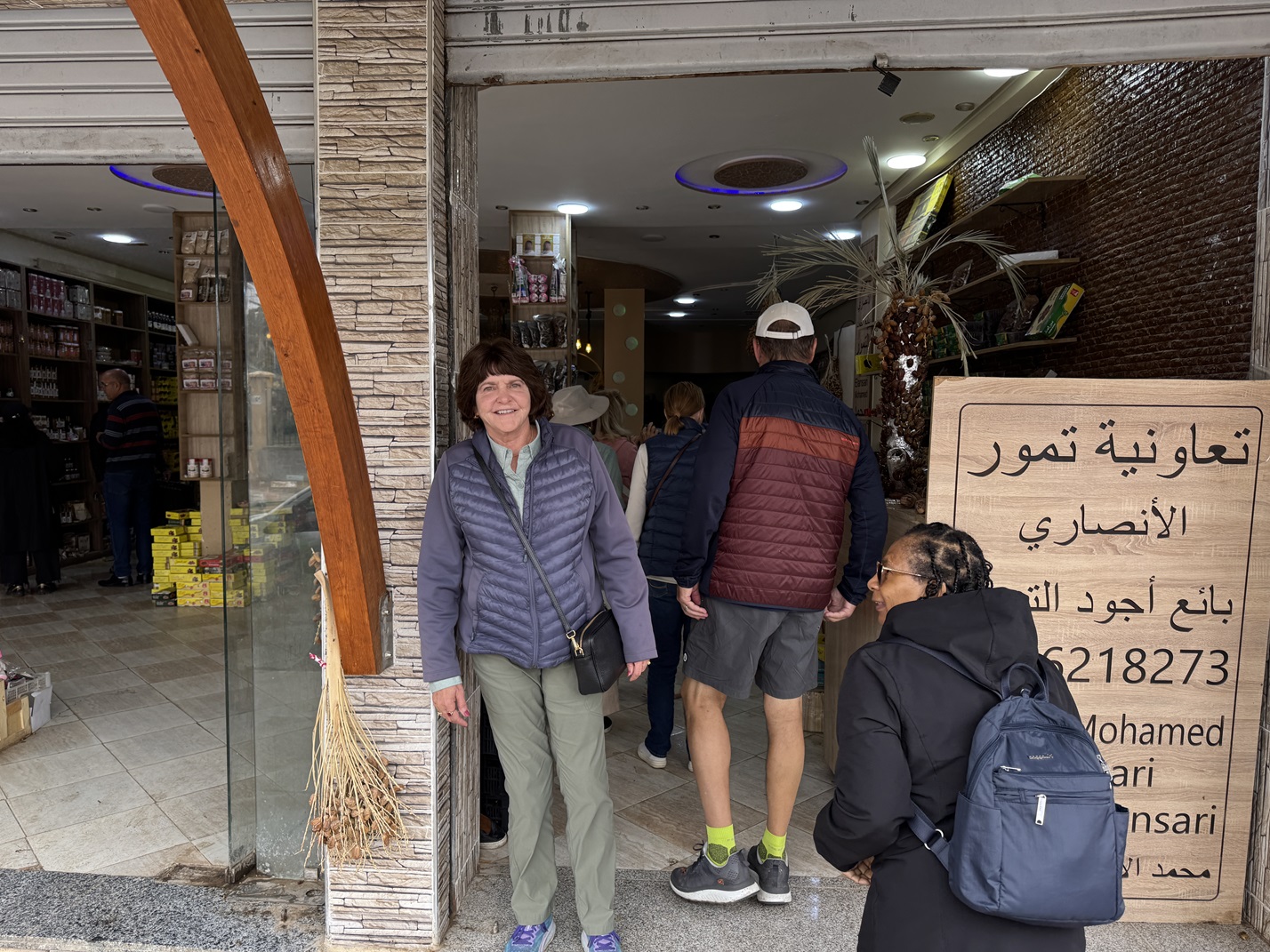
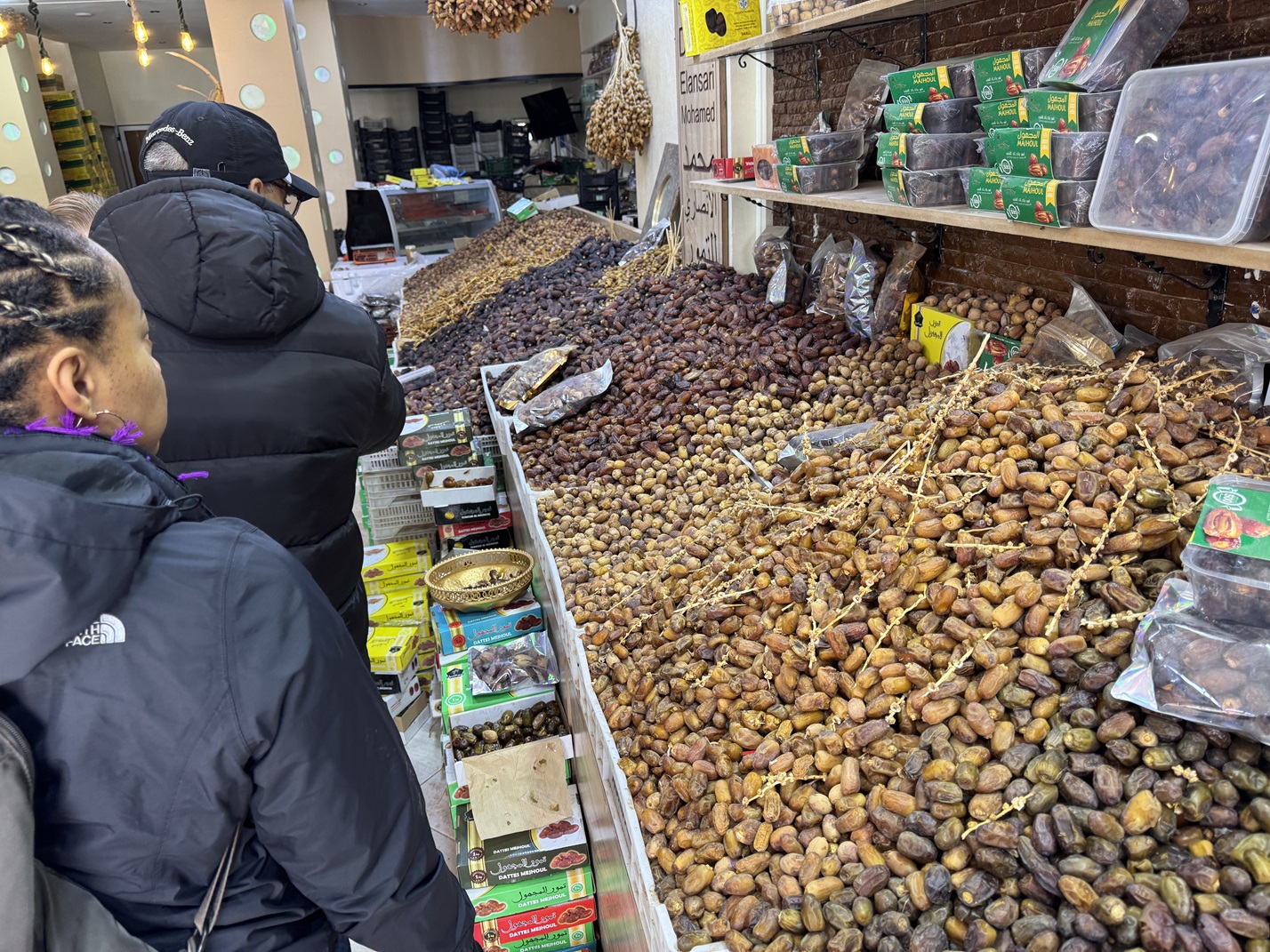
Our next stop is a date store.
It features several types of dates.
Hopping into our 4x4's for the desert tour.
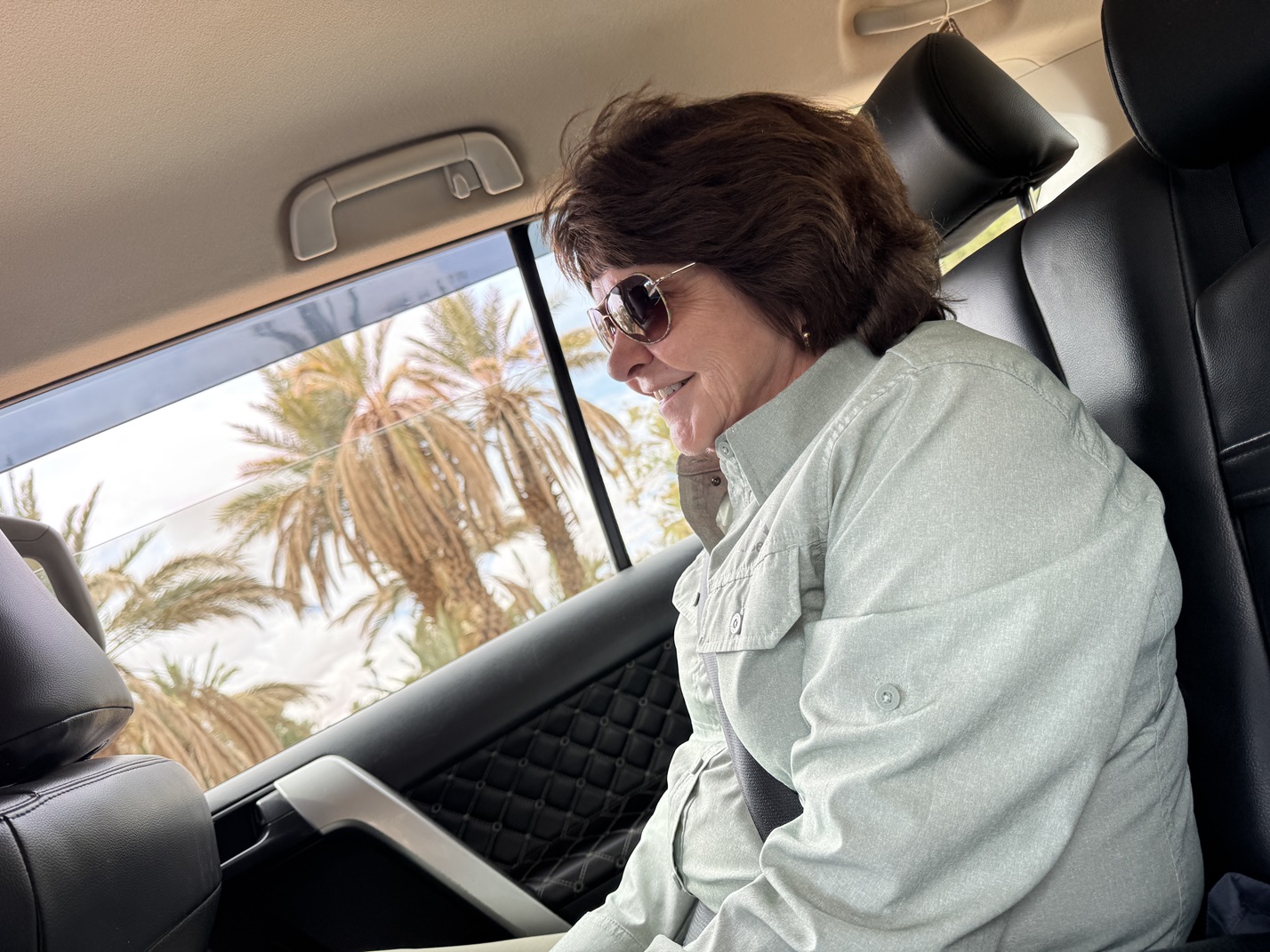
All belted in and ready to go.
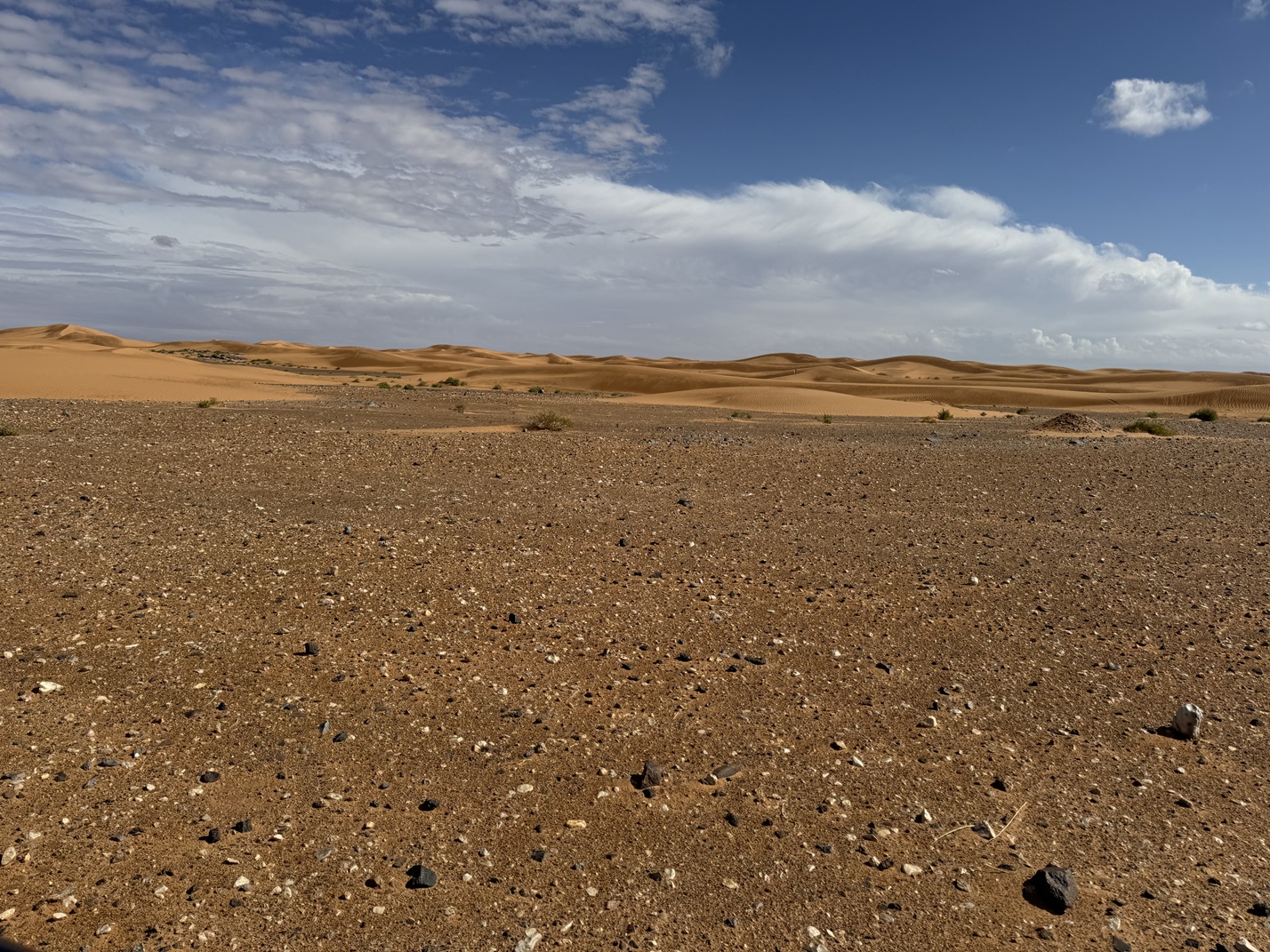
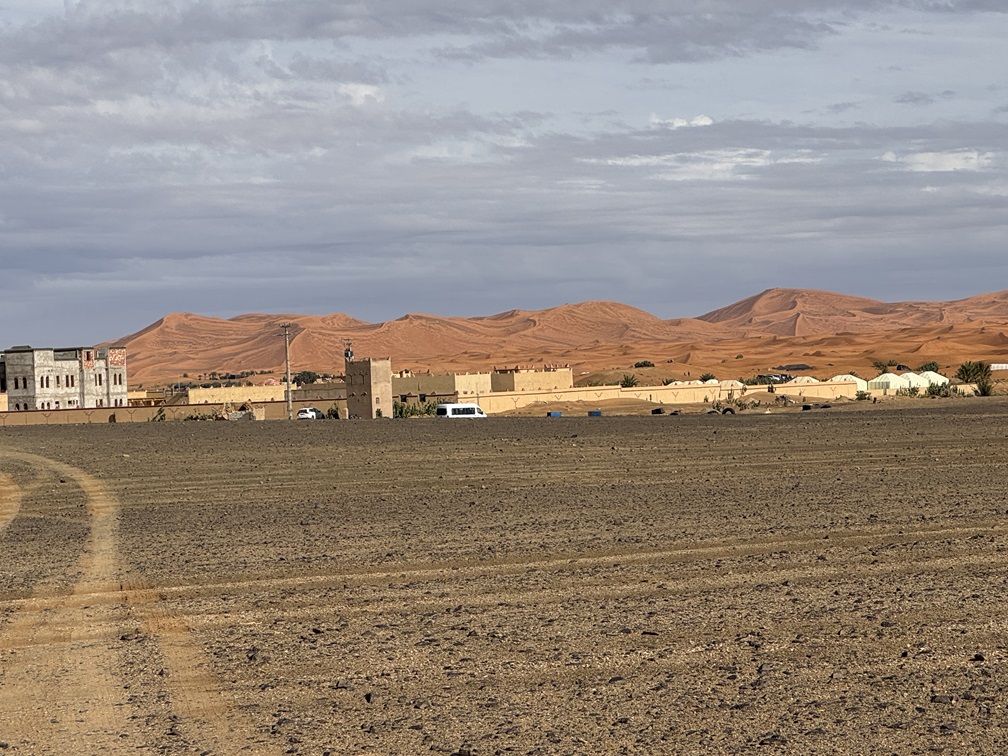
This part is a rocky desert, but we are headed toward the dunes.
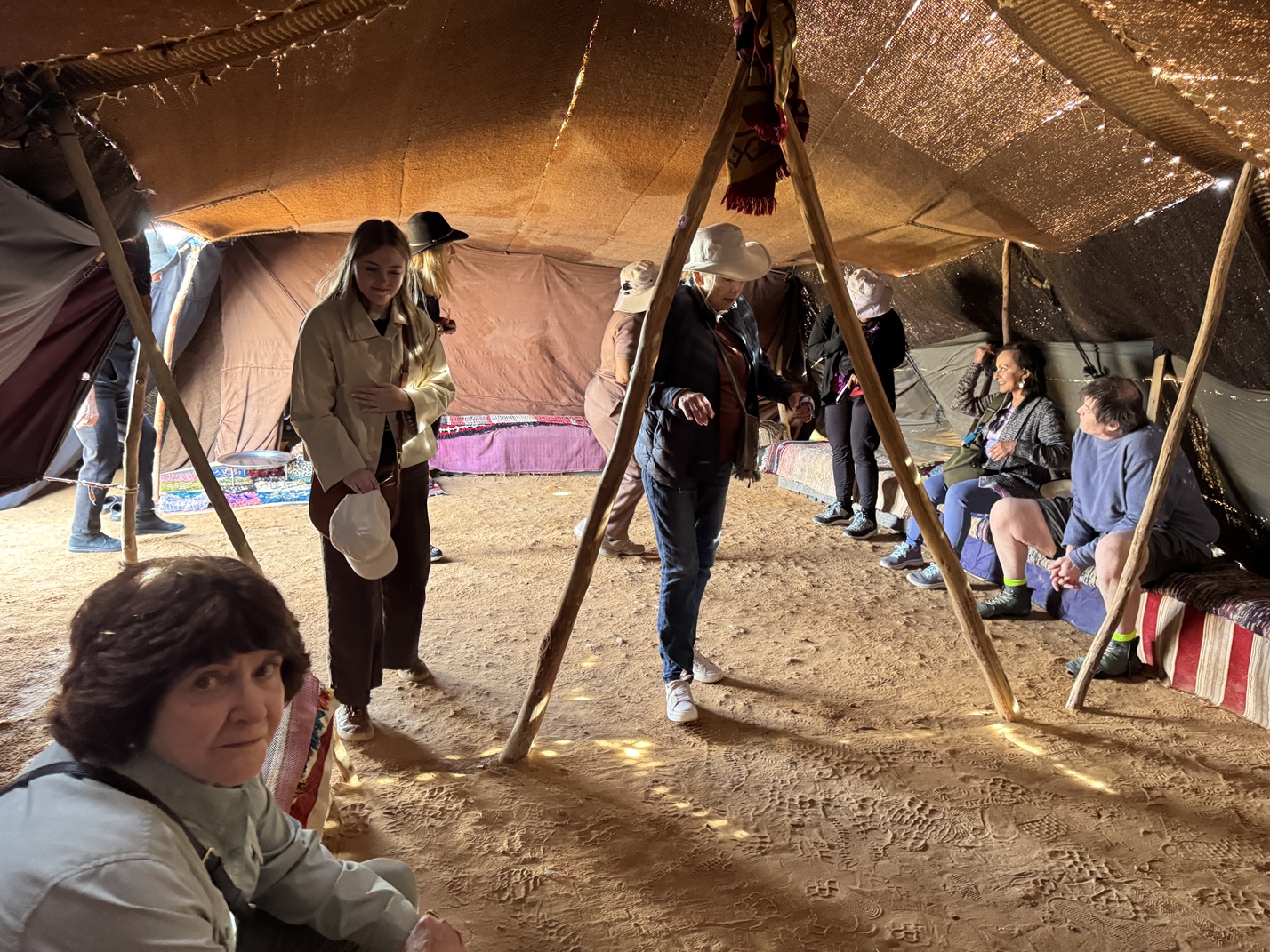
We stop at a tent representative of how the nomads lived.
It is pretty spacious inside, and we have another mint tea.
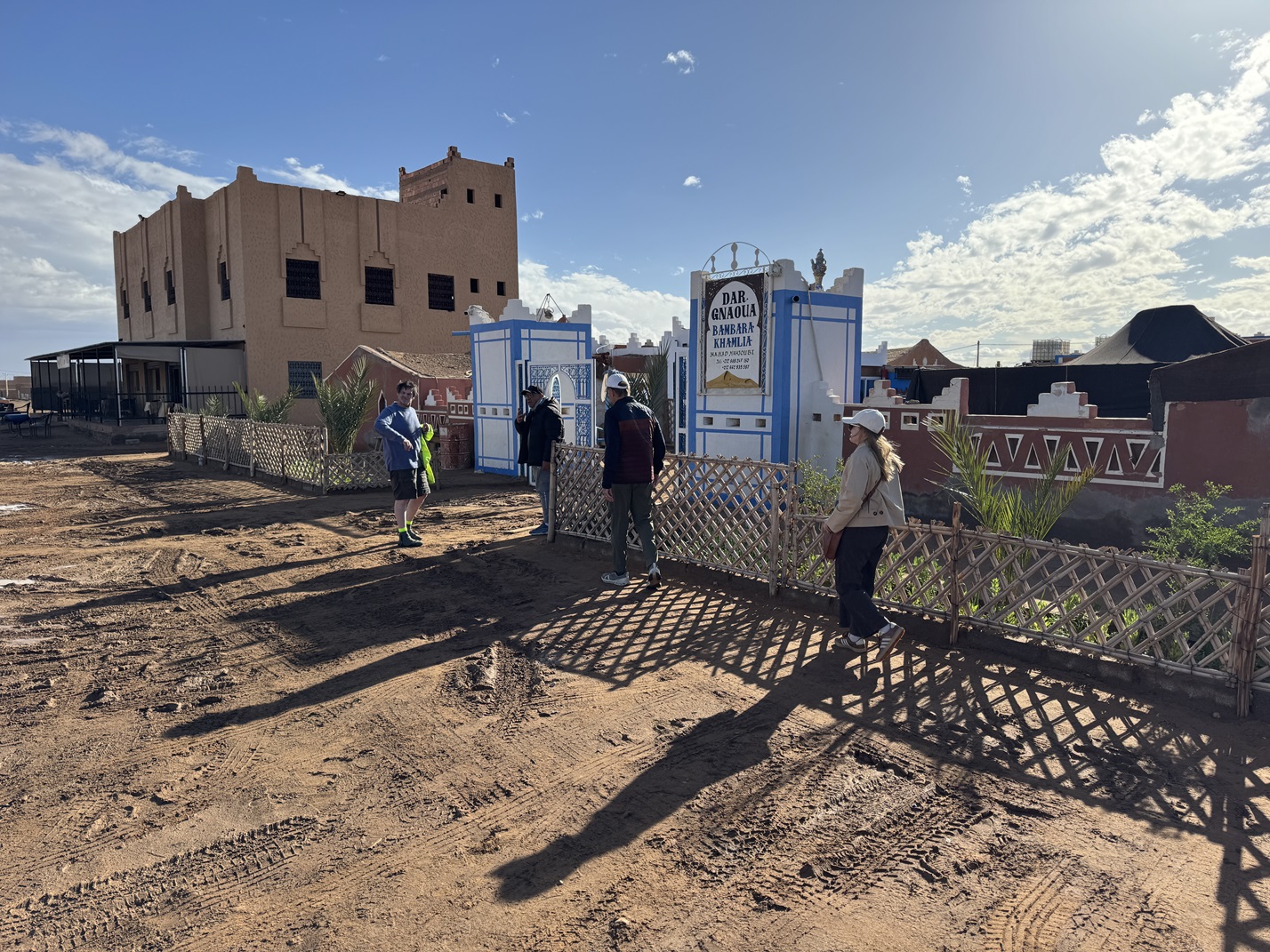
We take a side trip over to this little town.
The dunes are close, and this town rents various equipment to use.
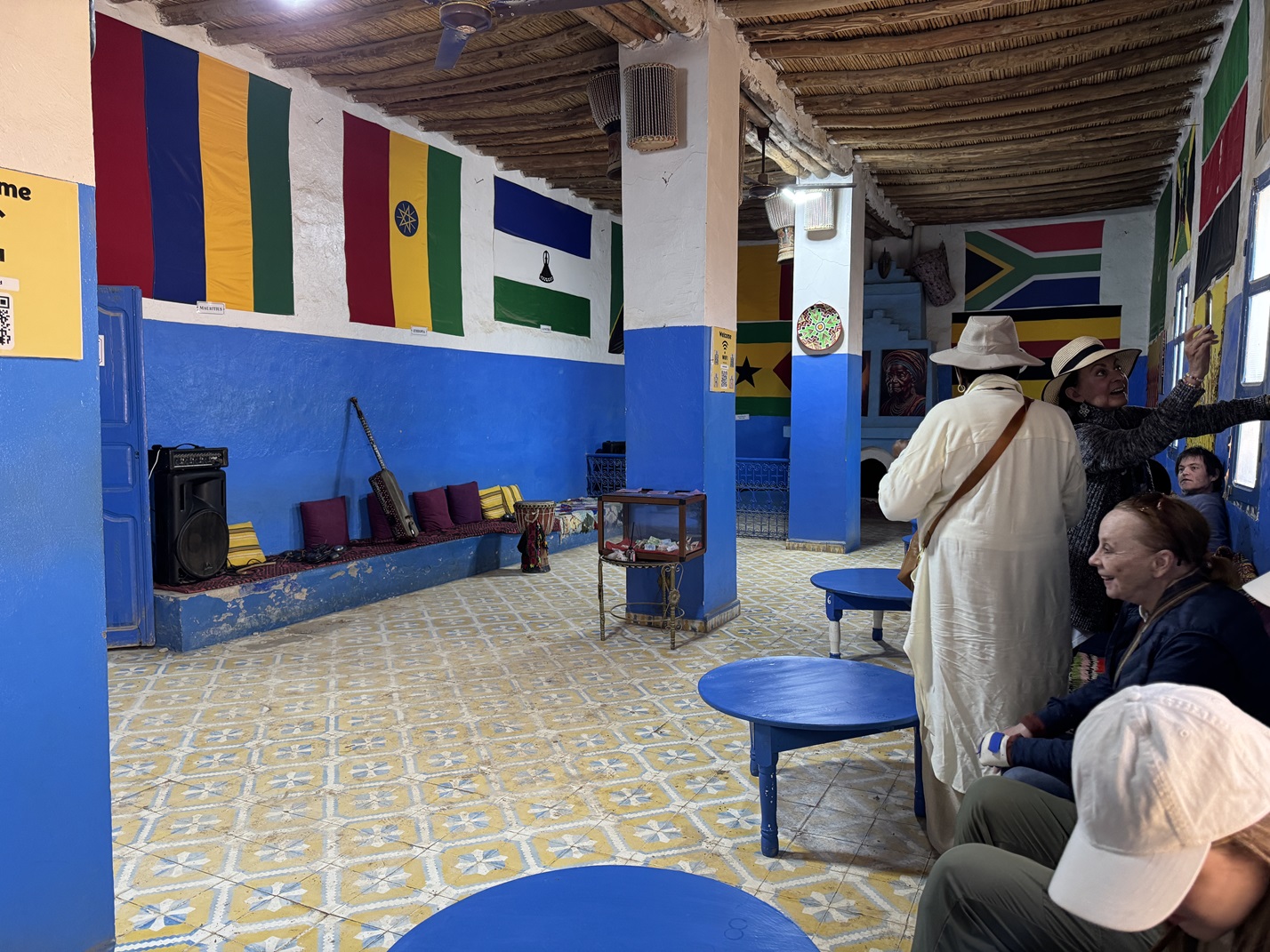
We stop for mint tea again ...
...and to learn about the West African Gwana people and hear their music.
Driss showing the main instrument used (the only non-percussion instrument).
A short clip of the musicians.
Another number.
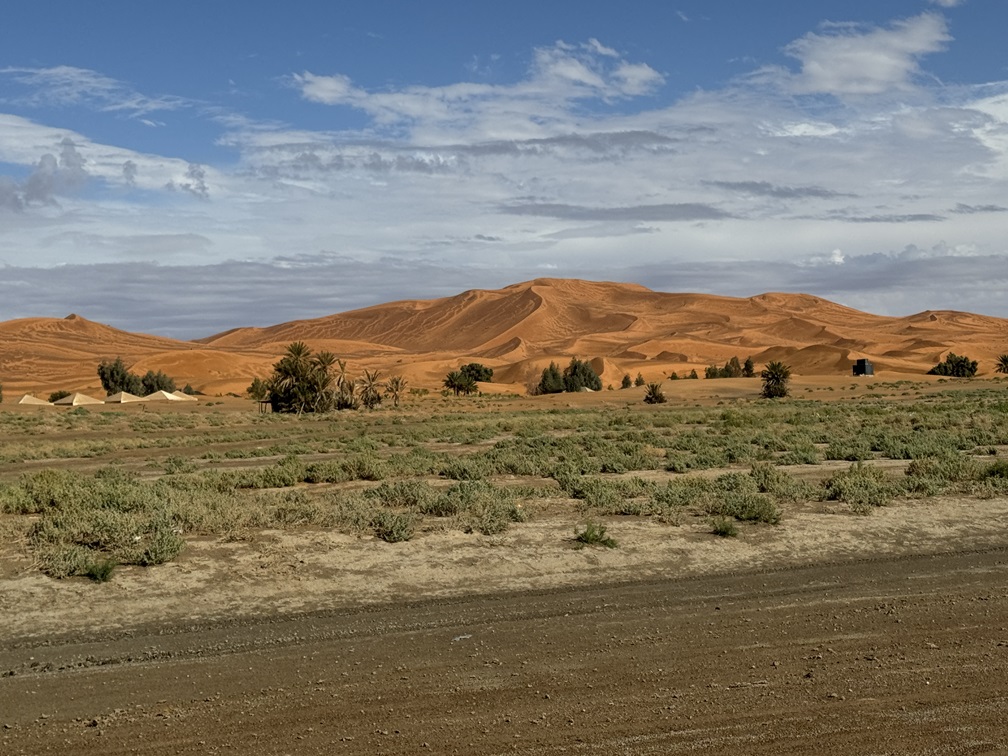
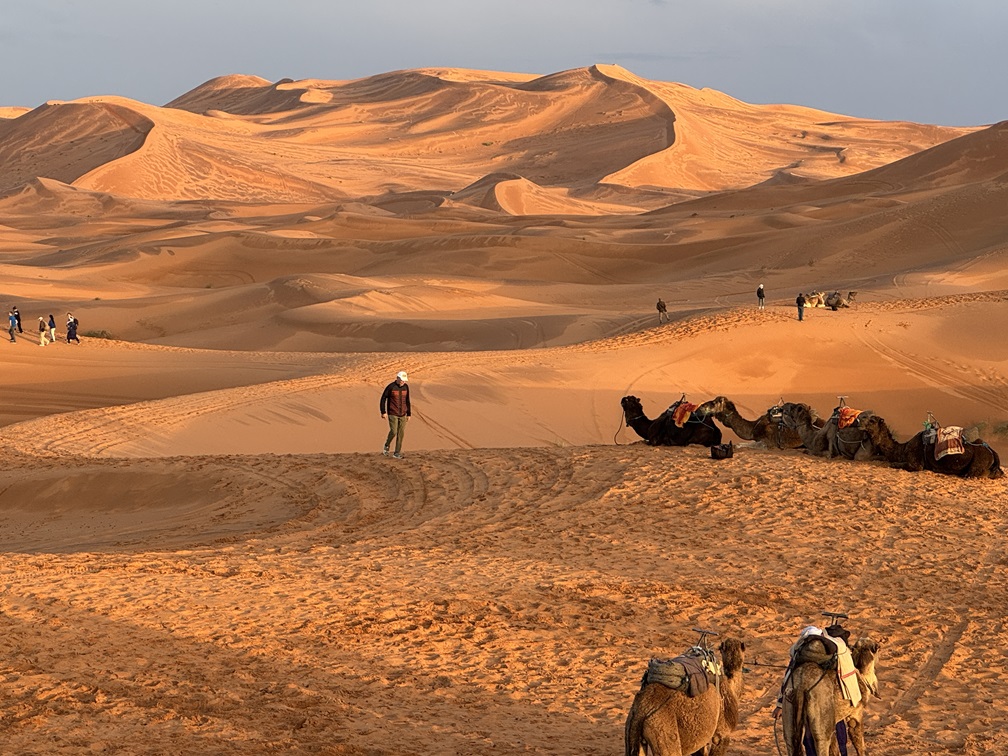
Finally on to the fun part: the dunes and the camels.
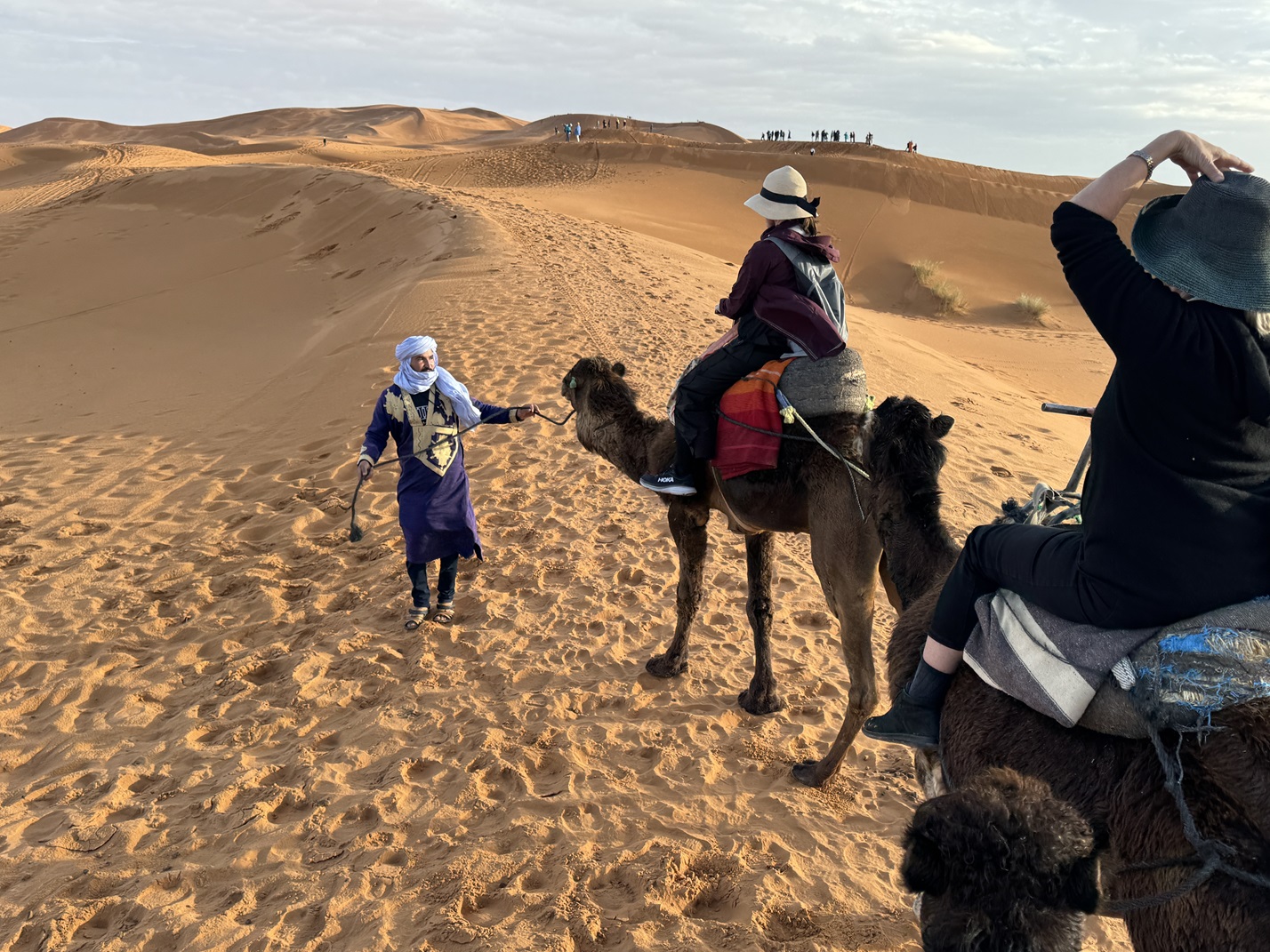
Our guides lead out trains of the camels about 1/4 mile into the dunes.
Wade and Kimberly in the camel train.
A shot of the longer train.
The sun is setting, and we get a cool shot of the shadows.
Posing with our favorite camel (this is the best-looking one).
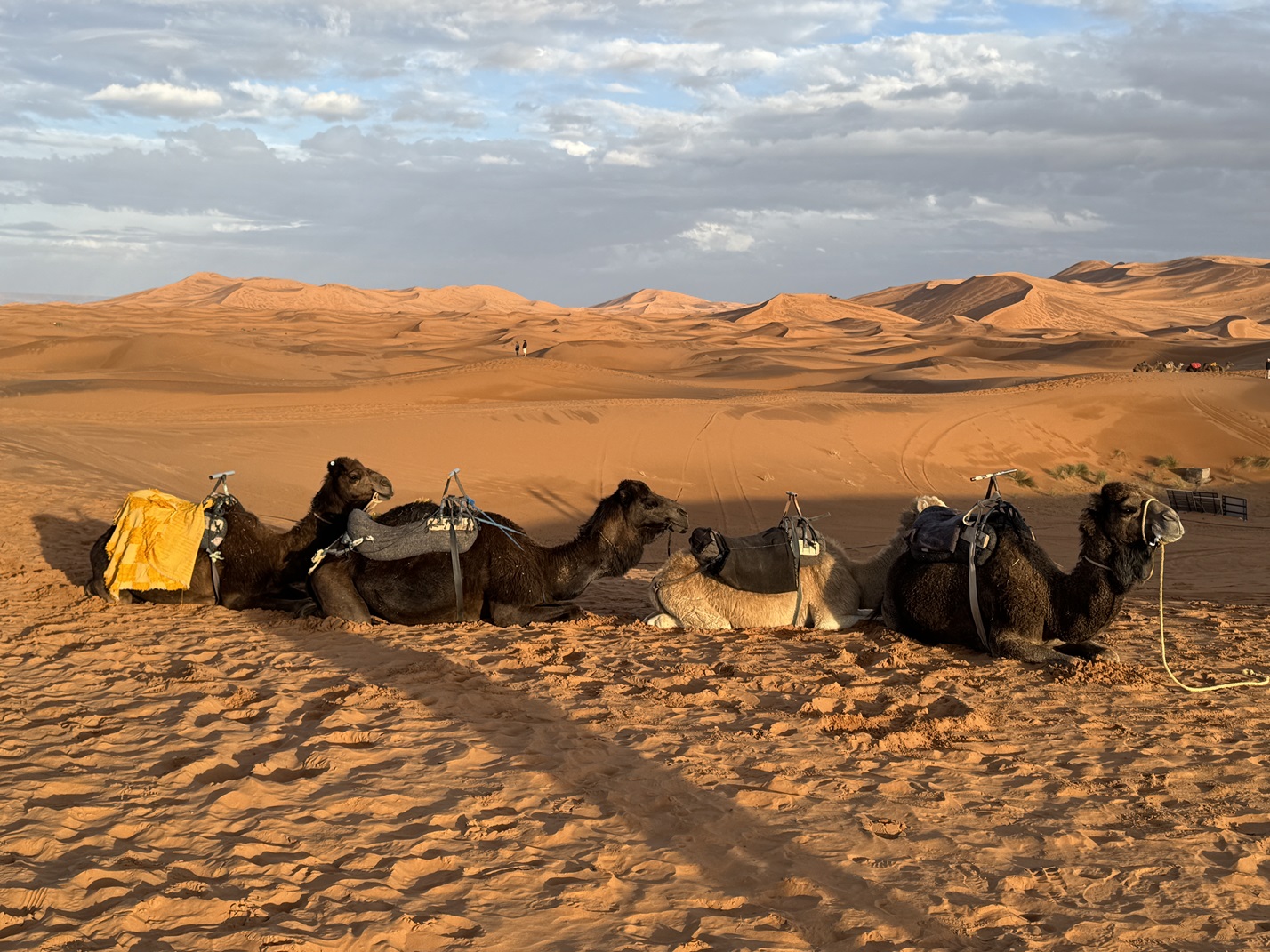
Our camels patiently waiting to take us back to the 4x4's.
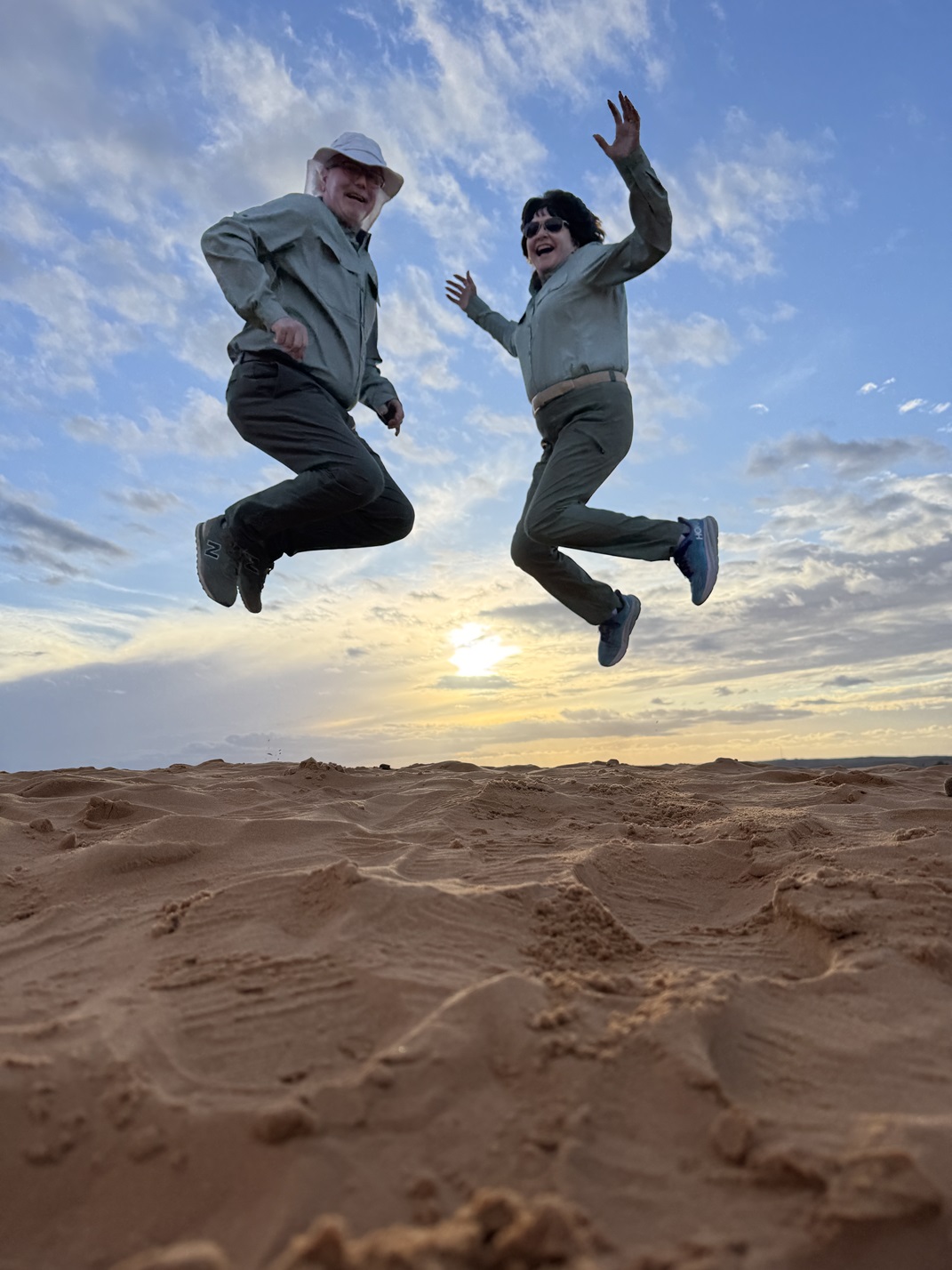
Our local guide took a cool picture of us jumping over the setting sun.
We would have stayed to see the stars, but the cloud cover was thickening to prevent it.
Looking at the dunes like this is like trying to feel the size of the ocean by looking from the shore.