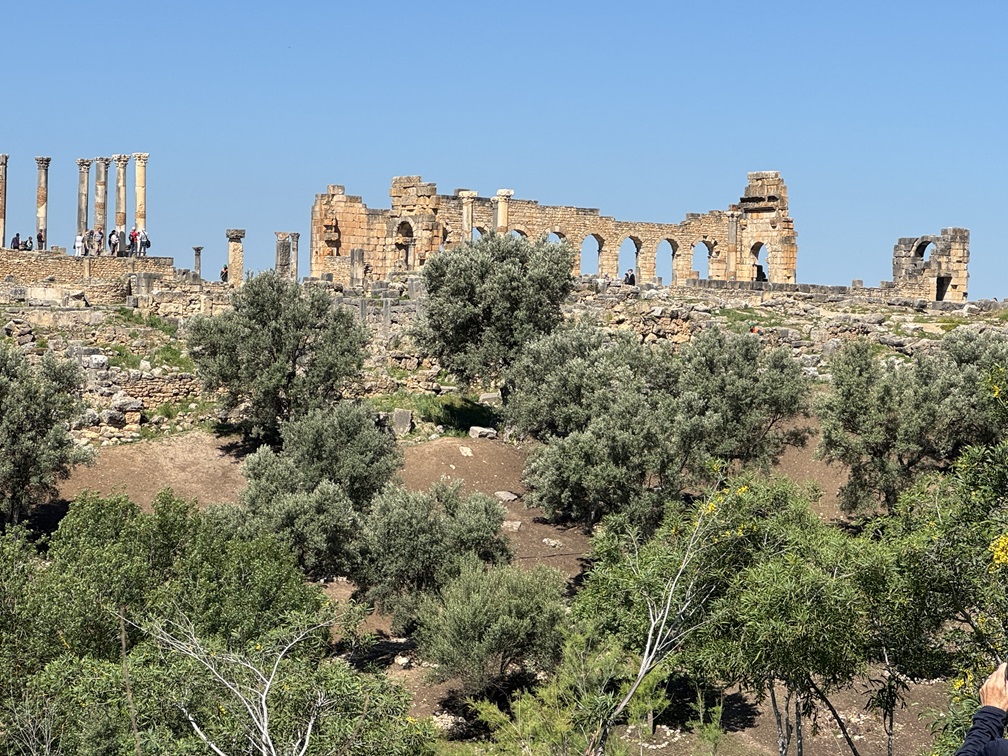
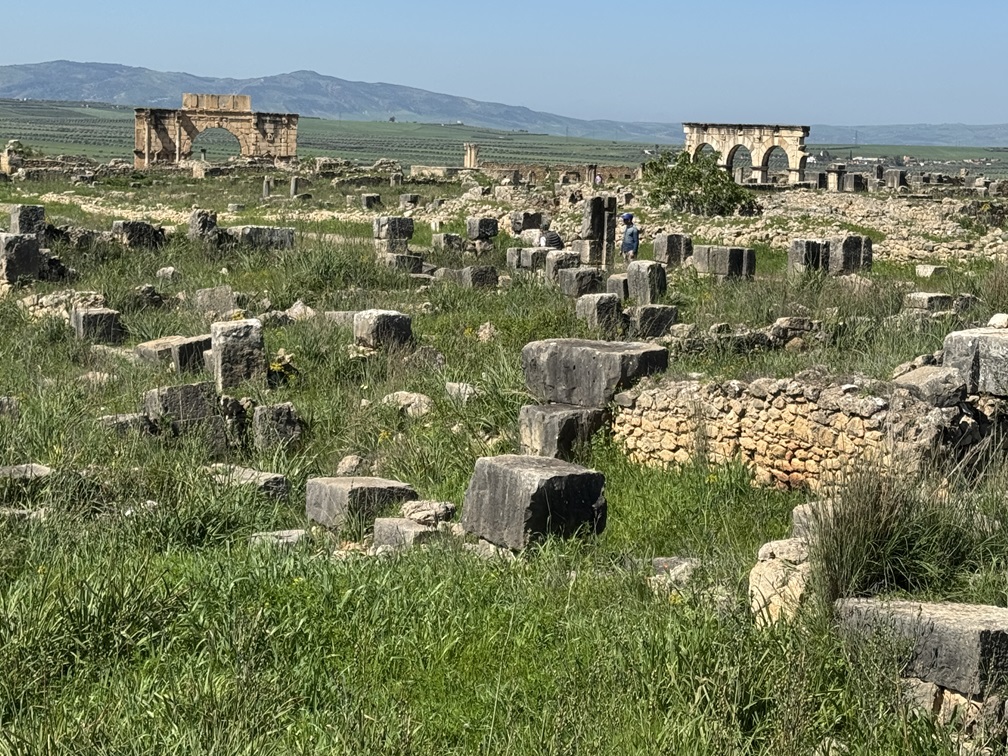
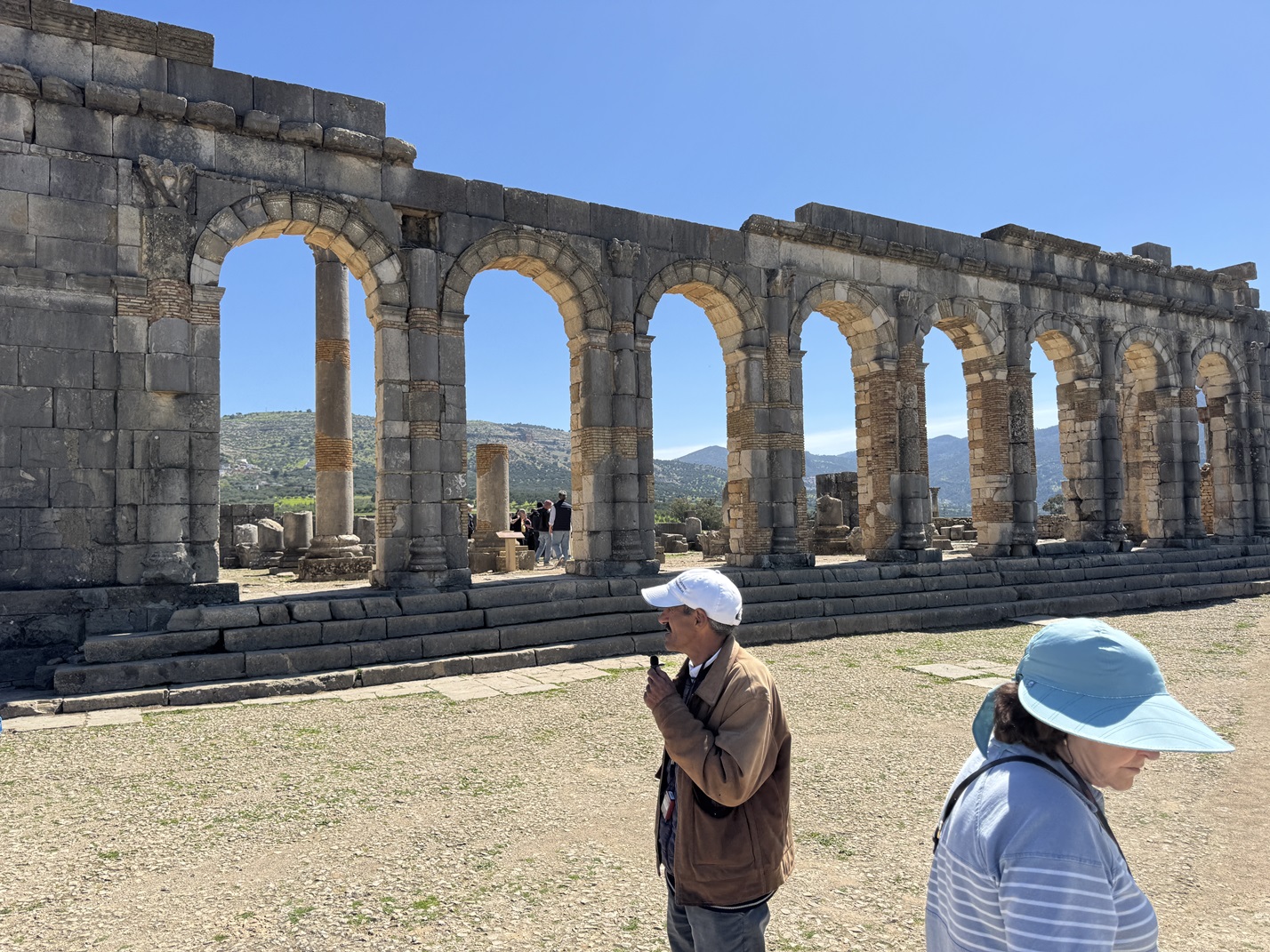
We approach the Roman ruins of Volubilis in the background.
We love ruins, and we have been looking forward to this part of the trip.
Volubilis is named for this morning glory flower.
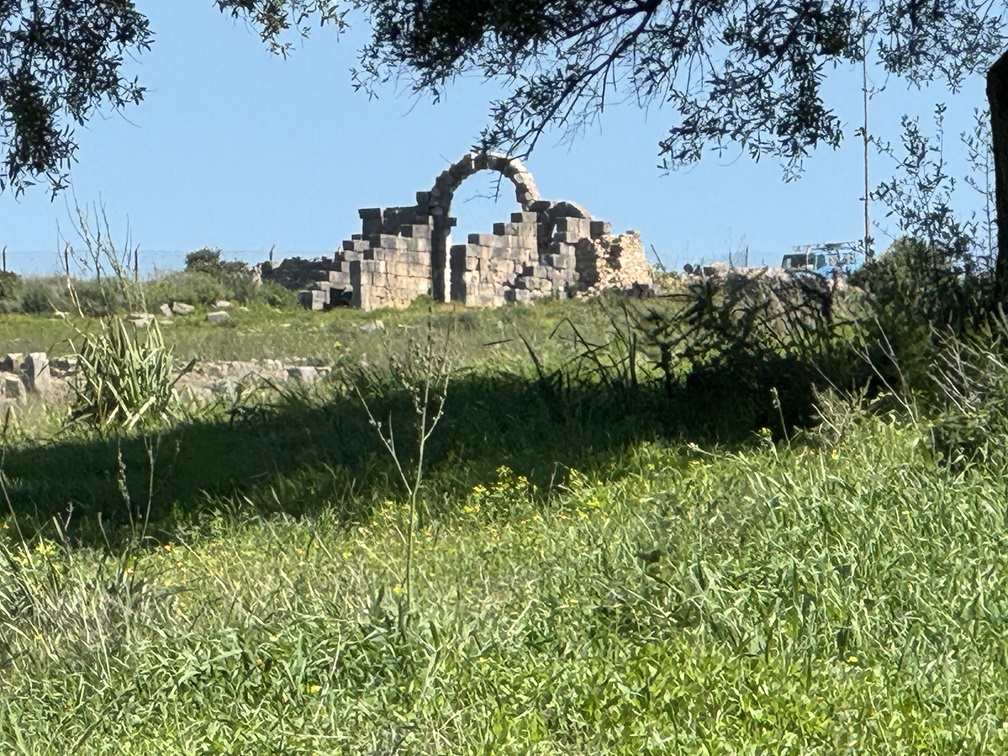
A distant view of the main gate into the city.
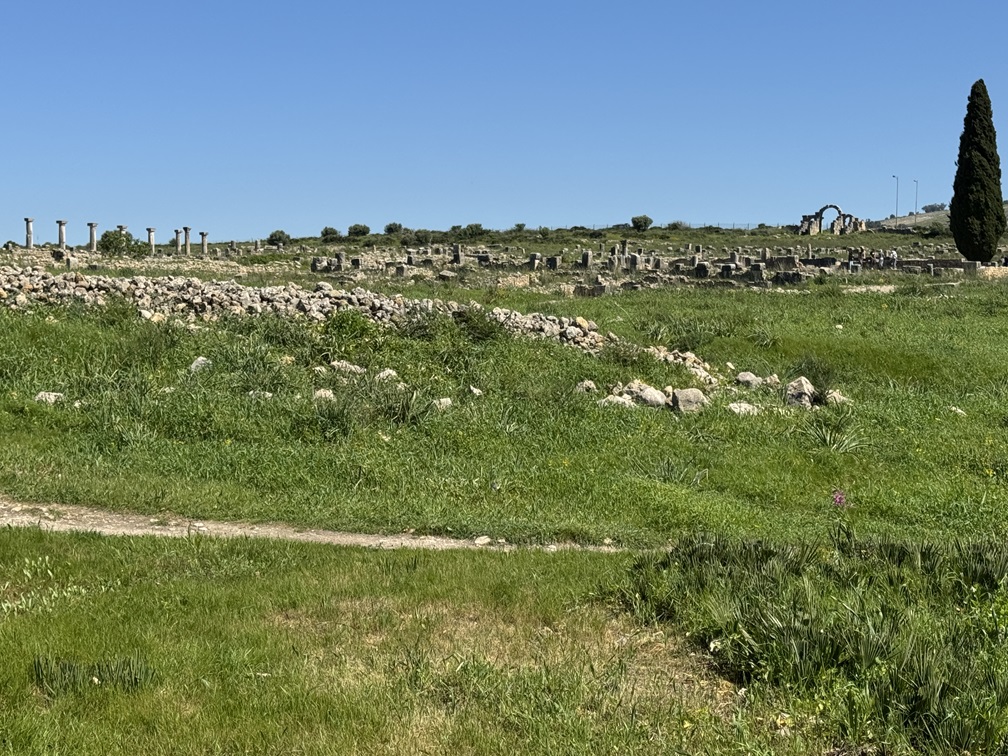
The site is about 100 acres, so lots to explore.
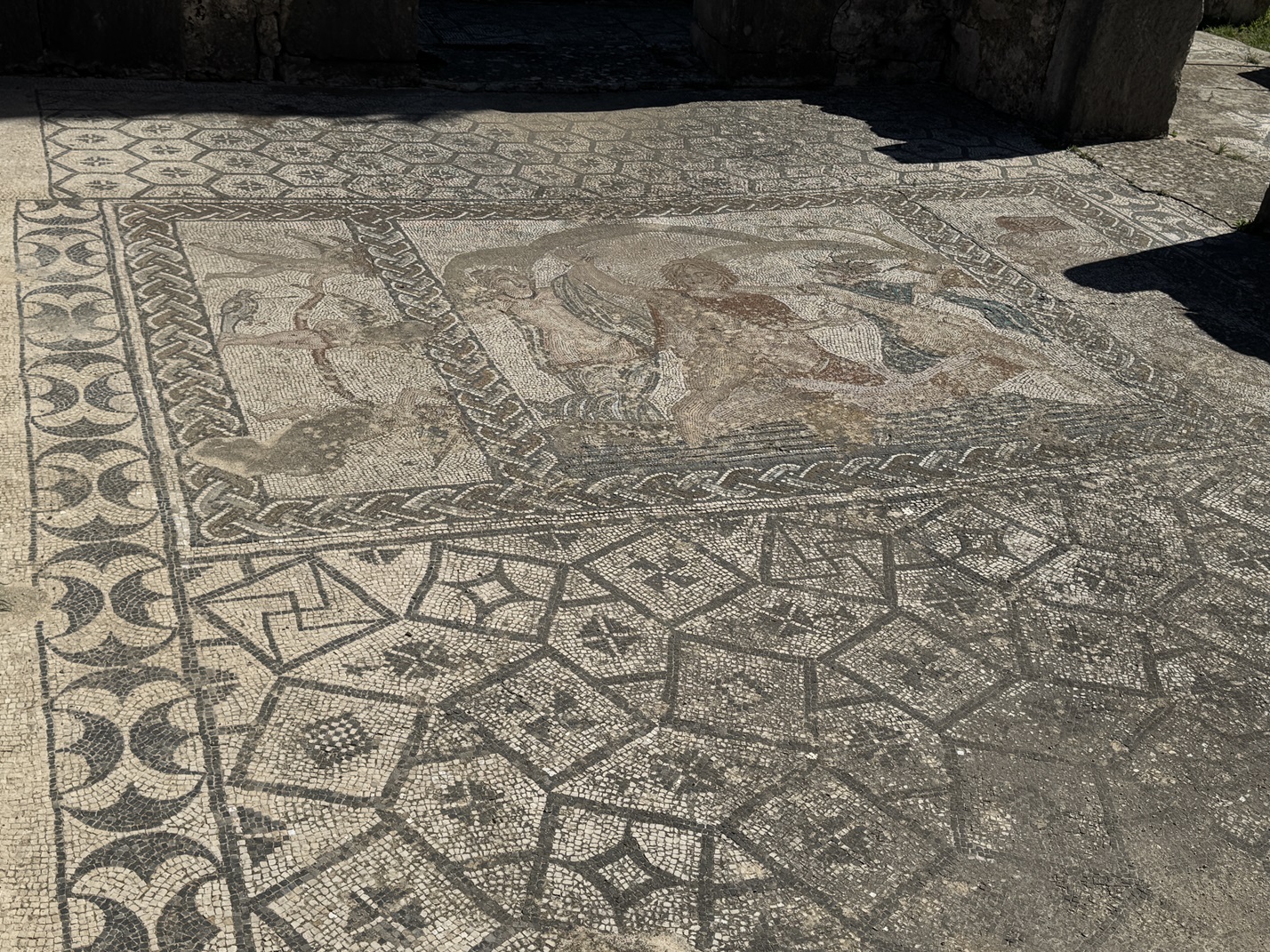
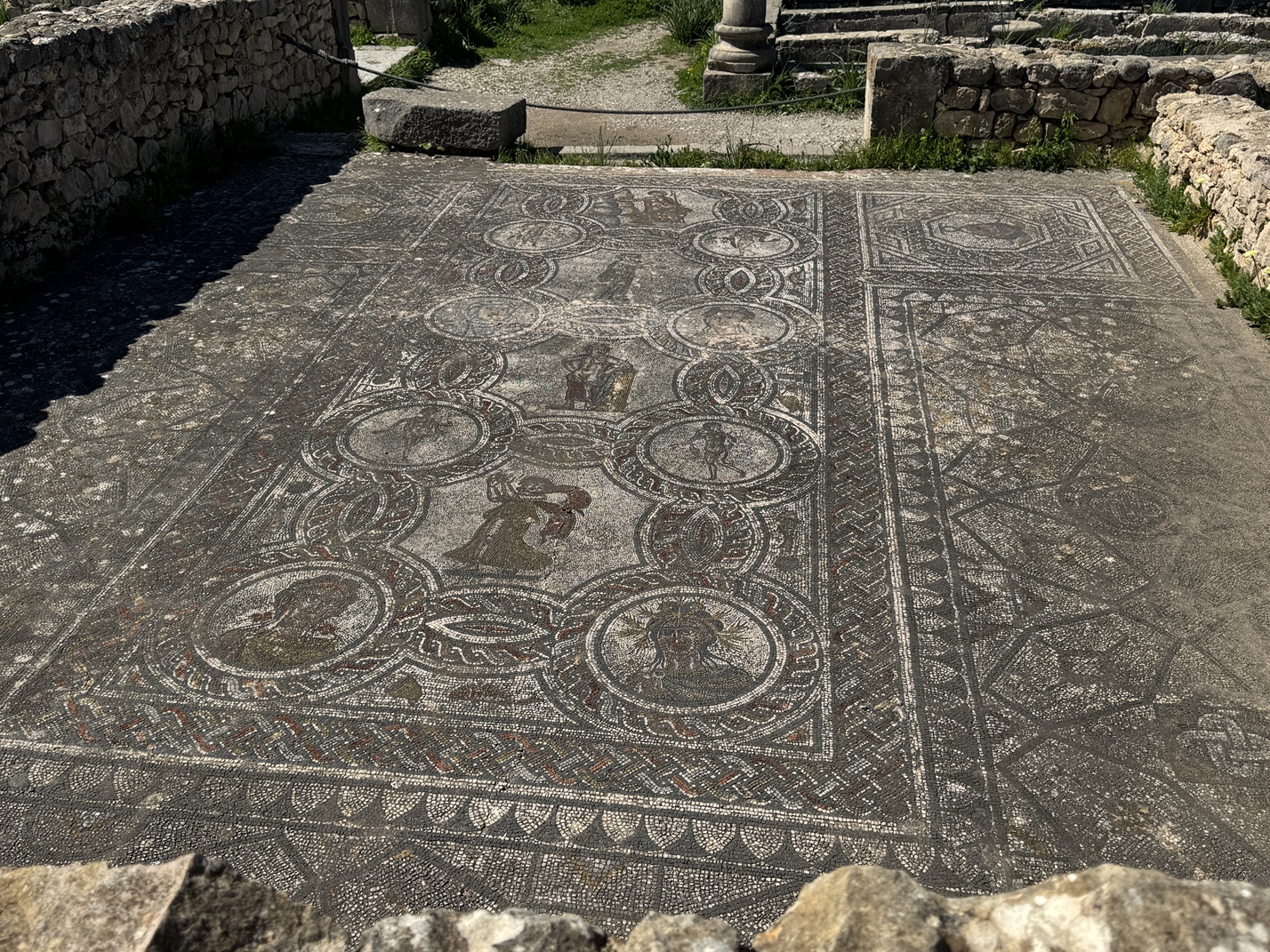
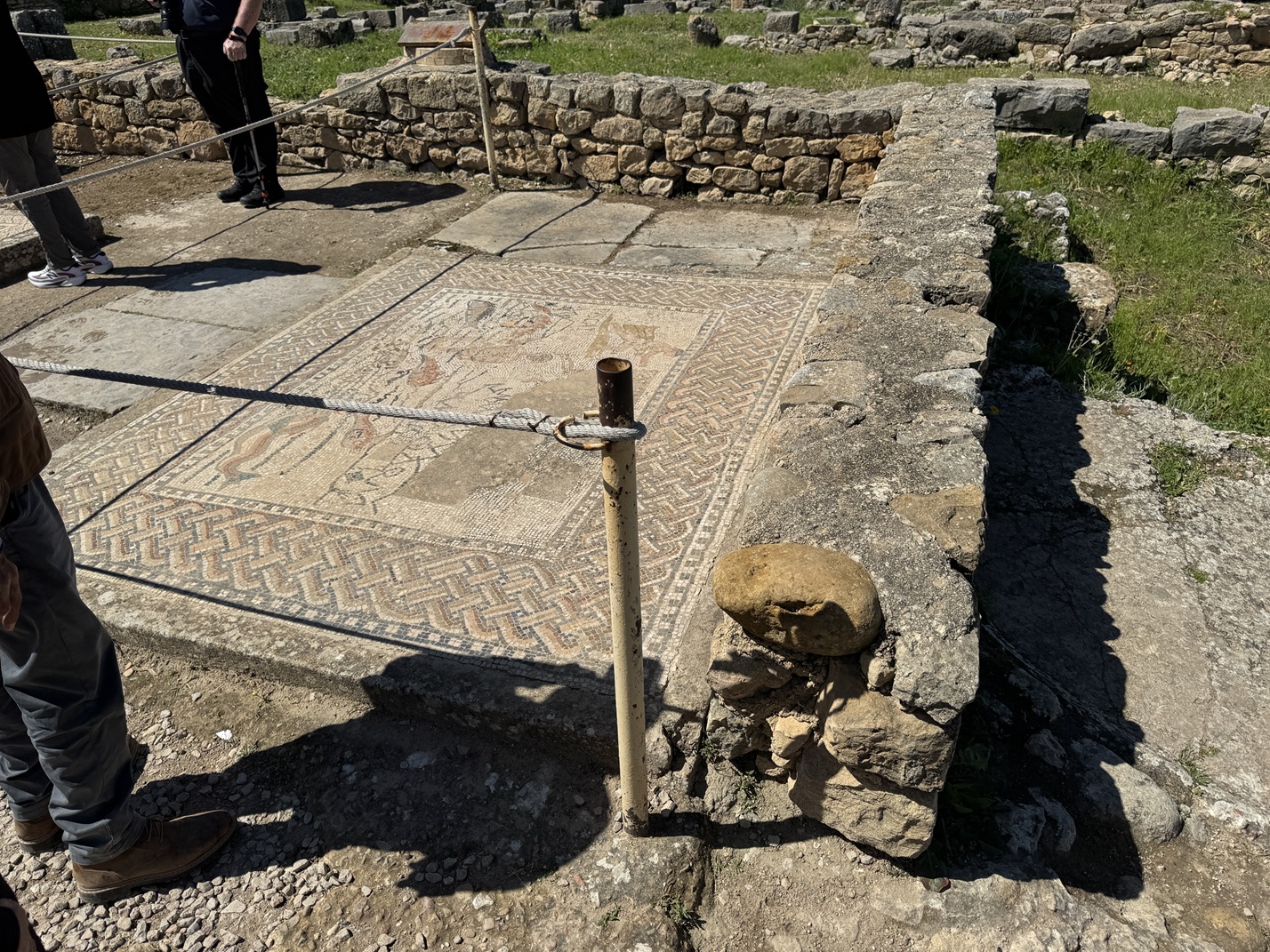
A mosaic dating back 1800-2100 years.
Another shot of the floor mosaic.
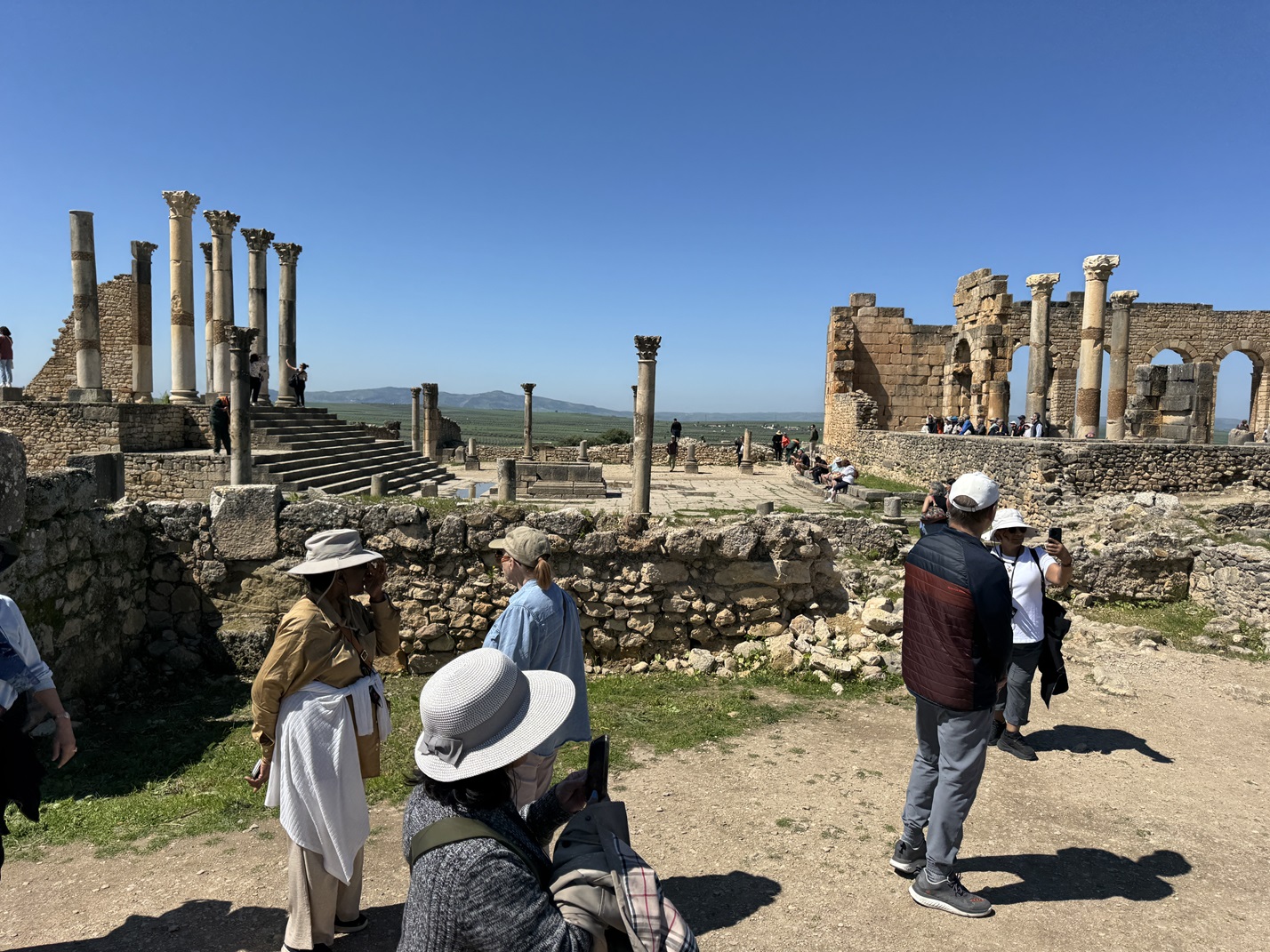
Looking out over the city.
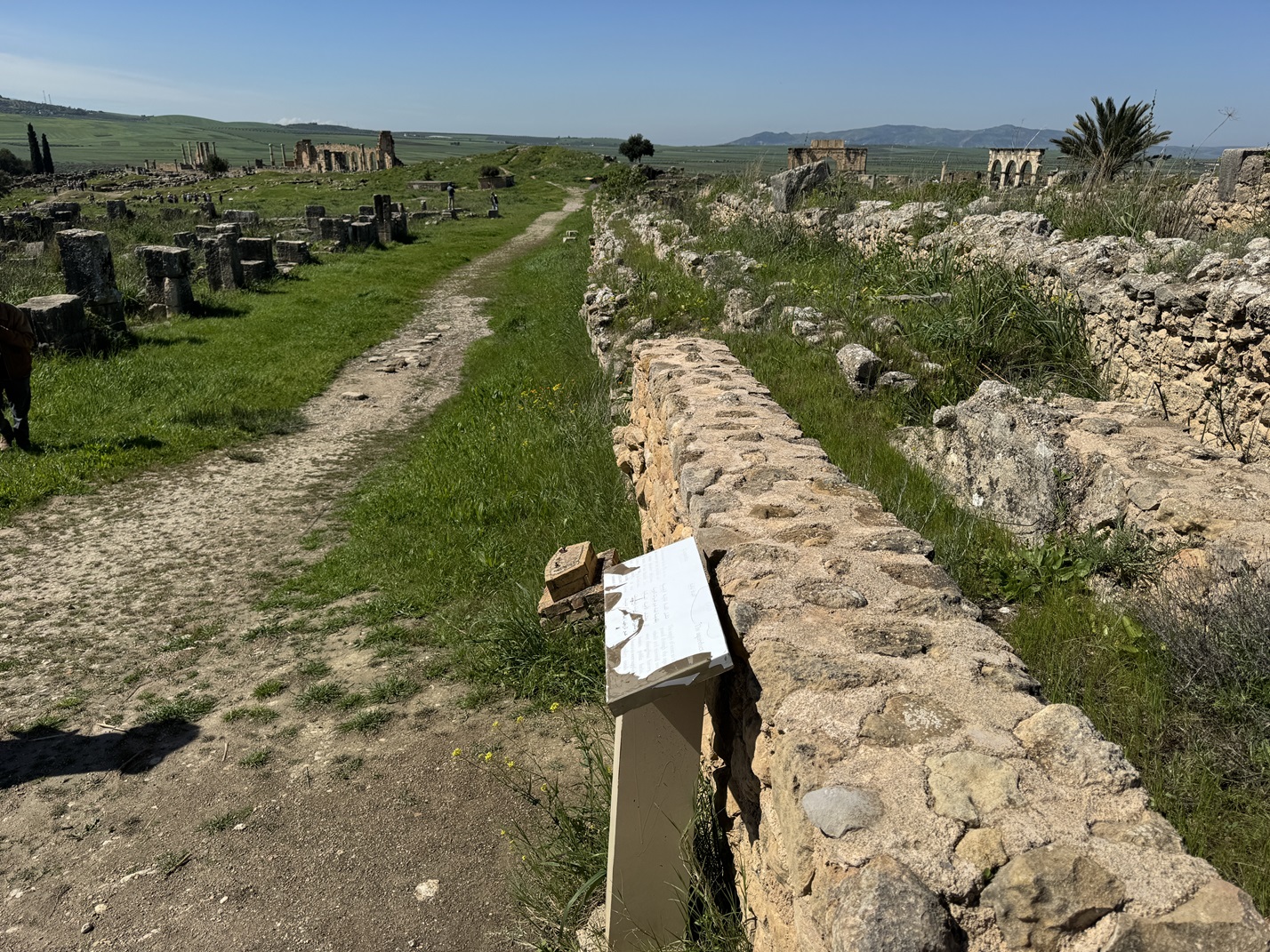
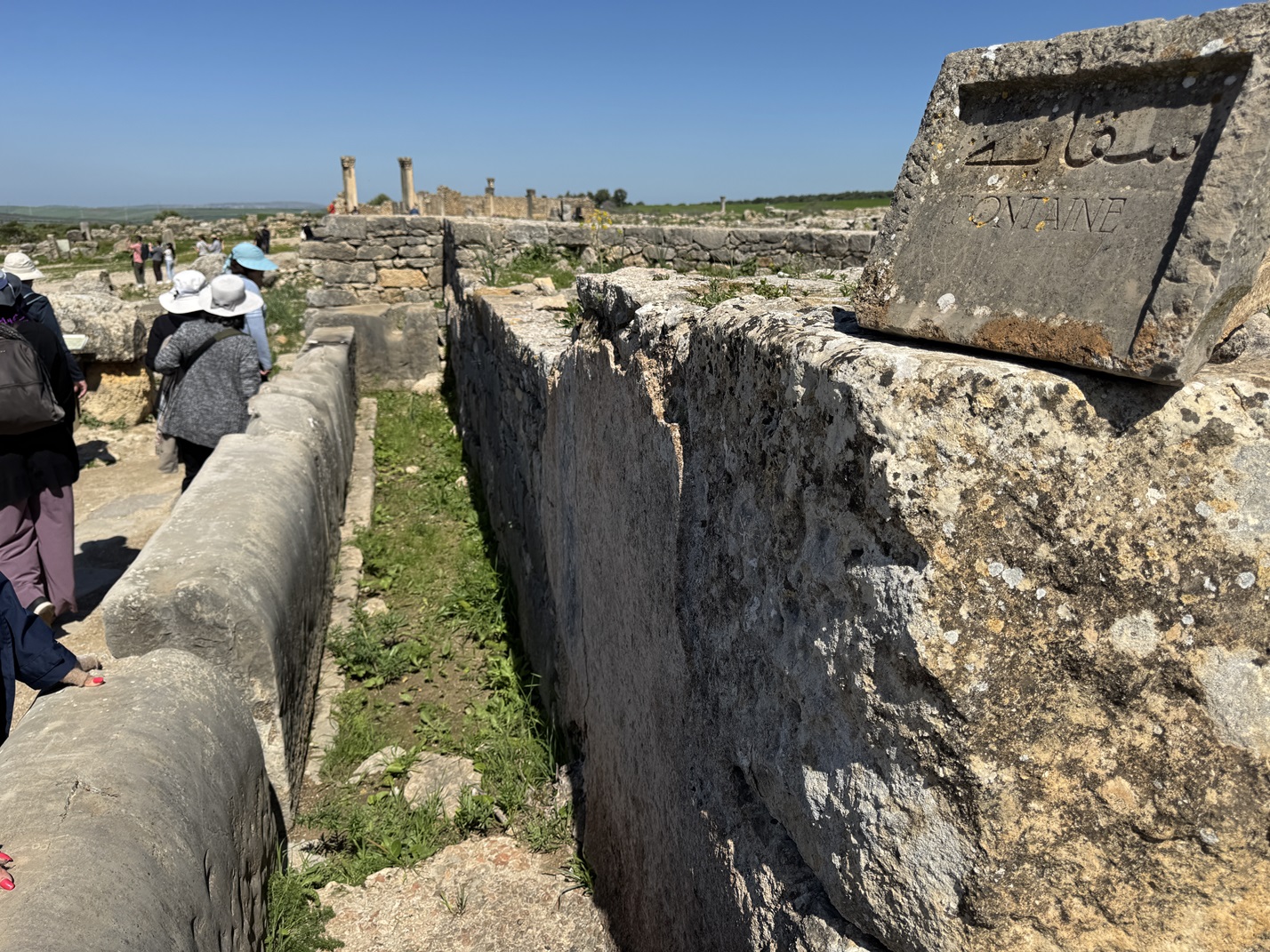
The main road, with sewers underneath.
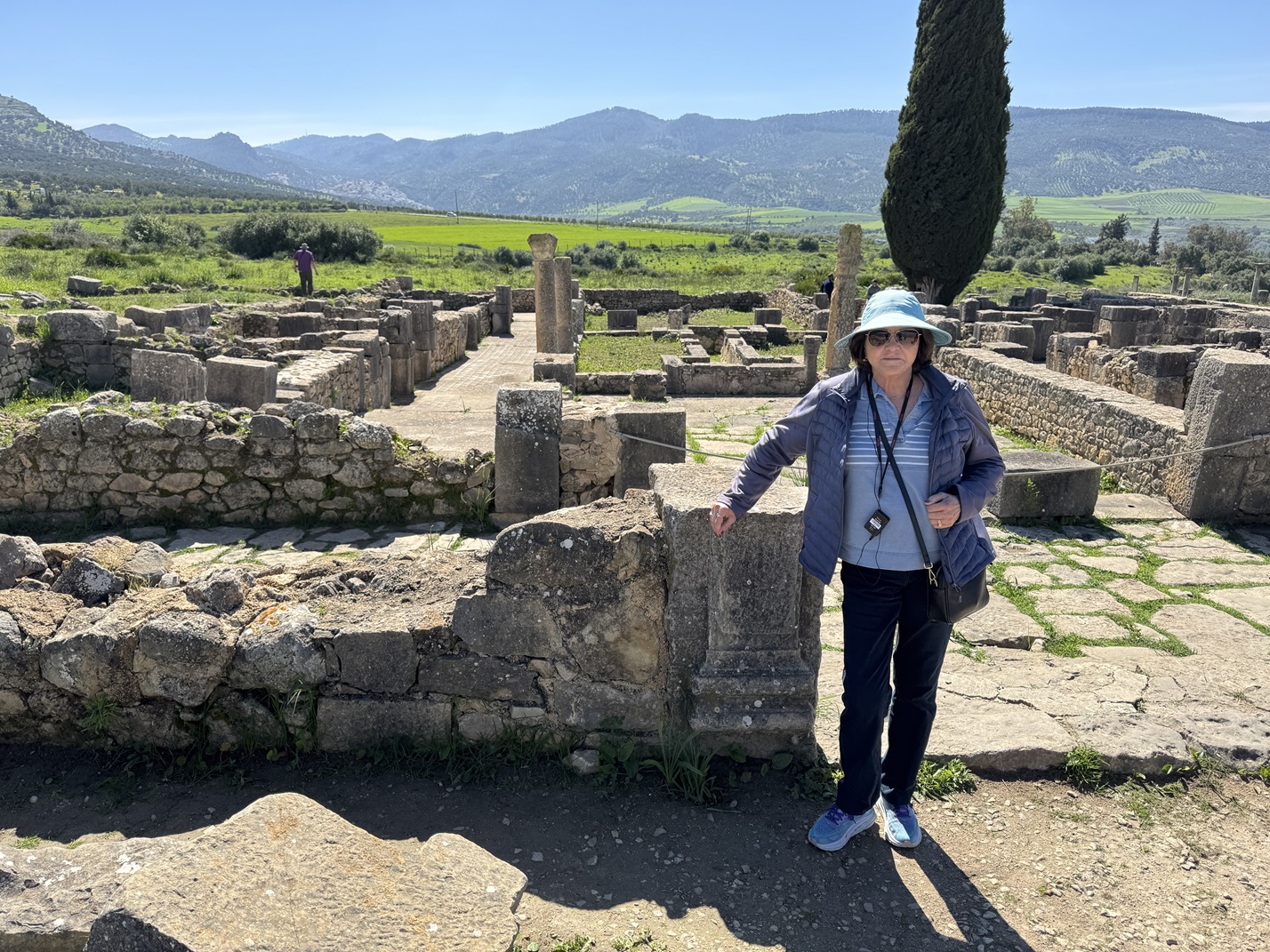
Kimberly in the entryway to a house.
Unfortunately, our local guide seems to know about 500-600 words of English, so we don't
get much more than "doorway" [points] "house" [points].
Kimberly in front of the main street.
Another mosaic in another house.
Wade holding up an archway.
This is a common laundry and washing area.
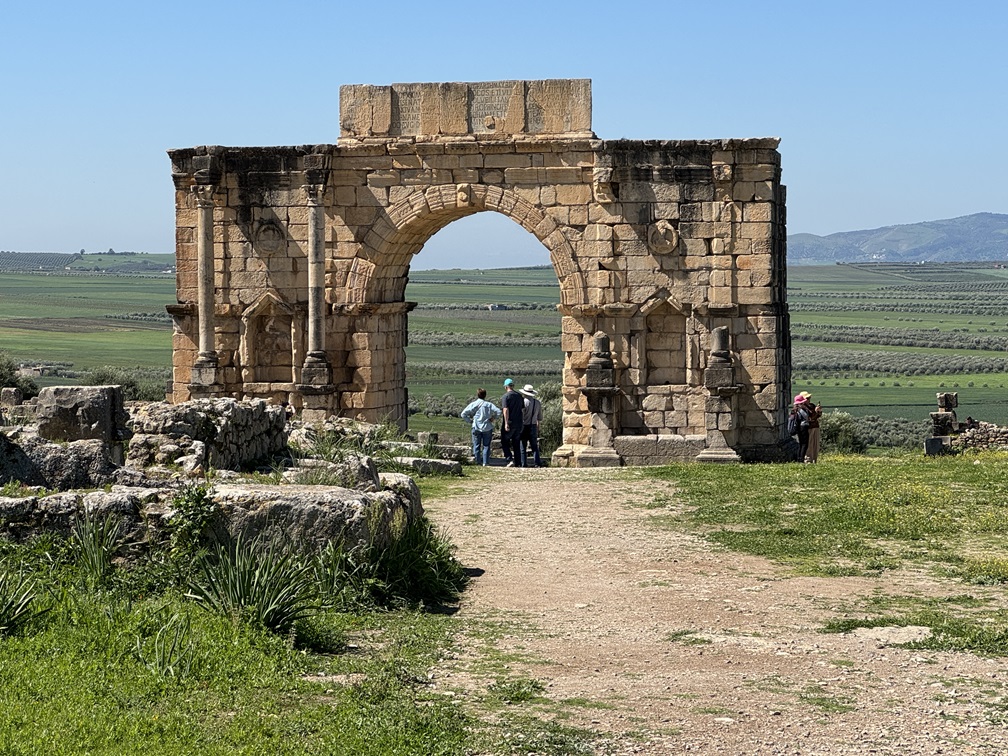
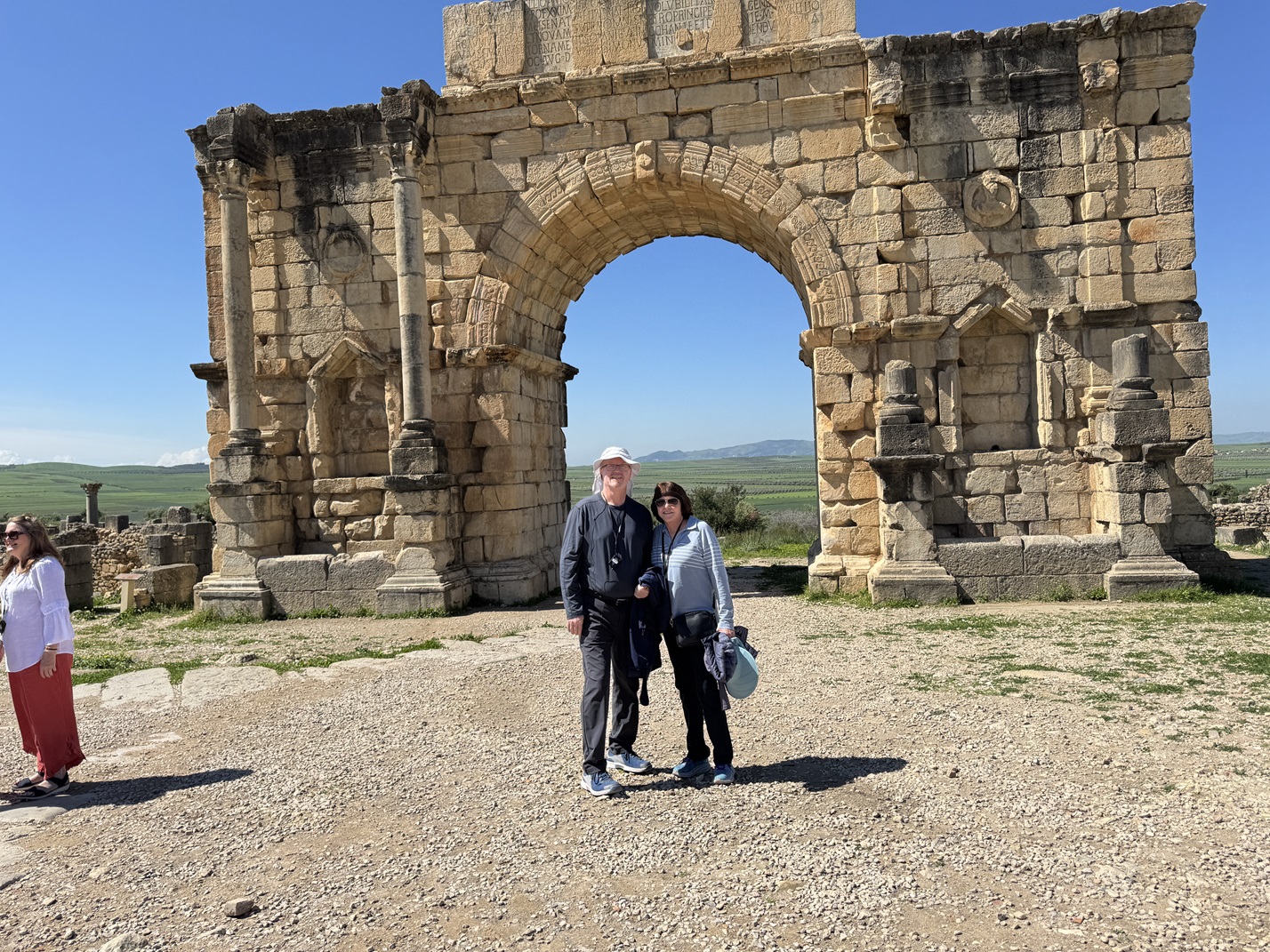
The Arch of Caracalla (Triumphal Arch).
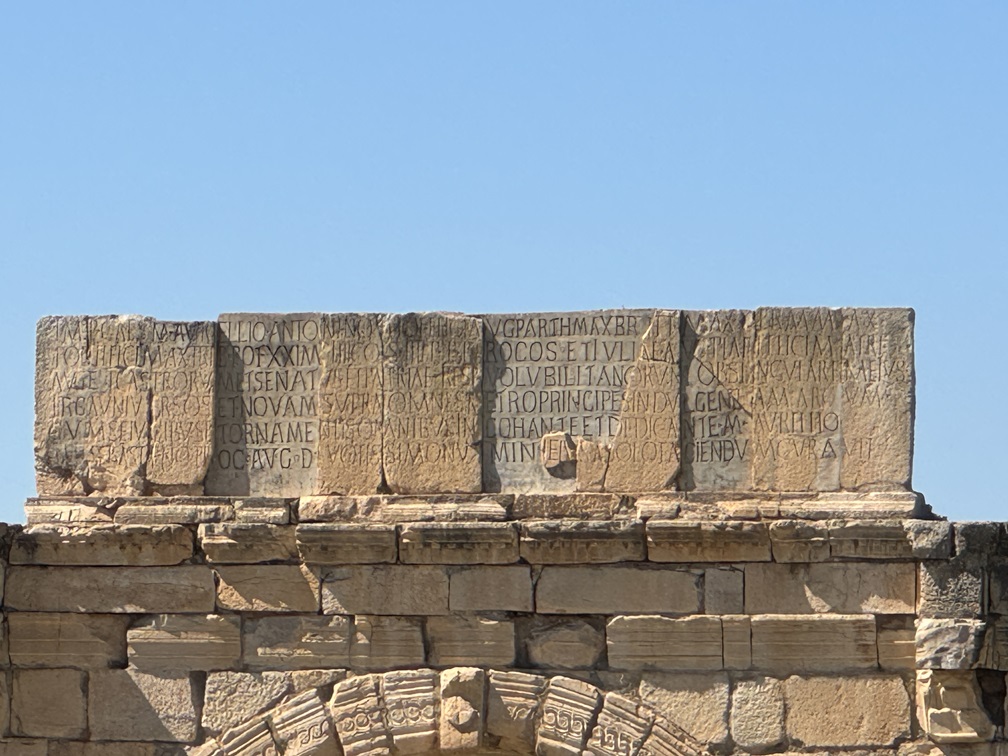
The writing over the Triumphal Arch.
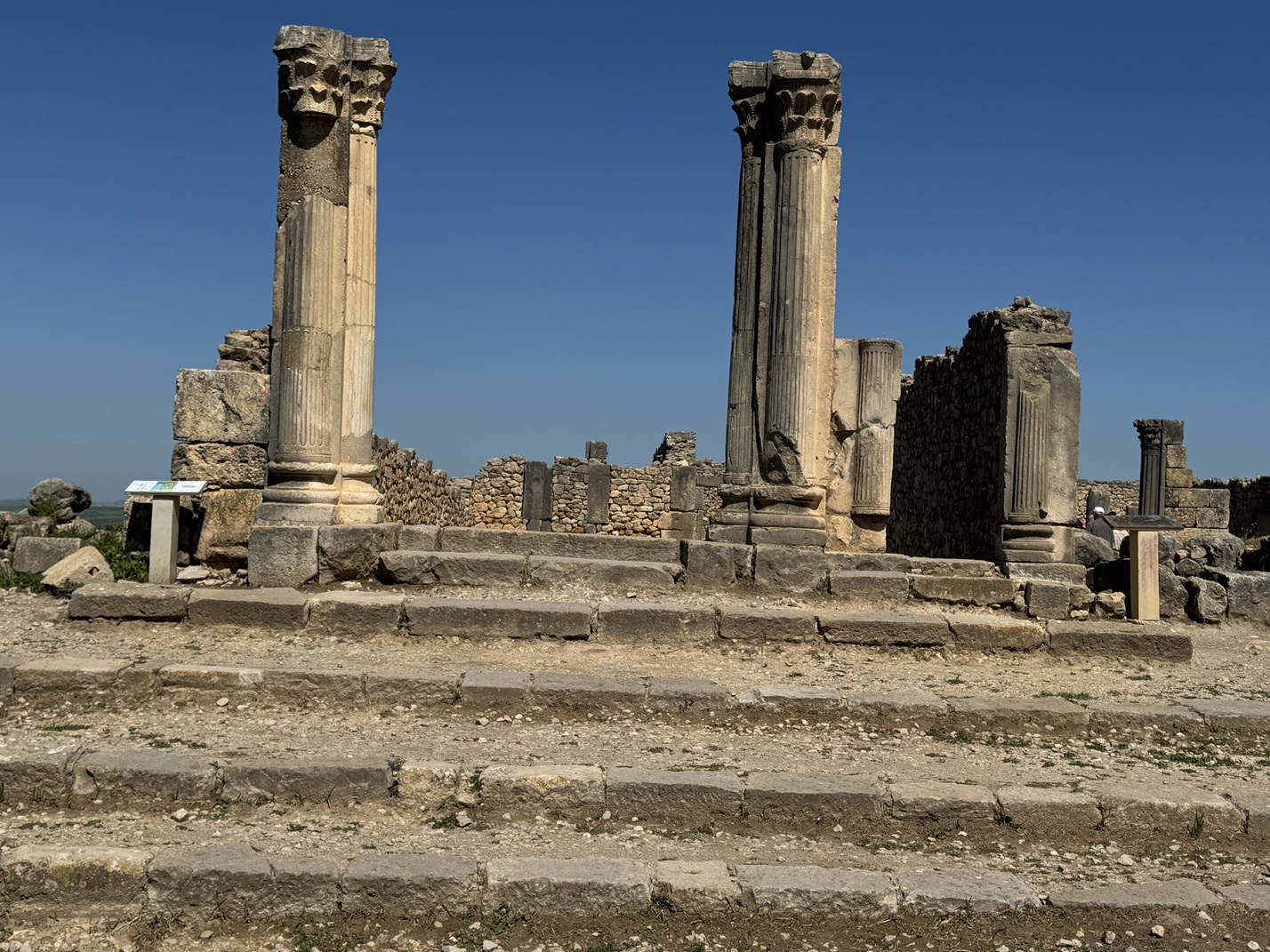
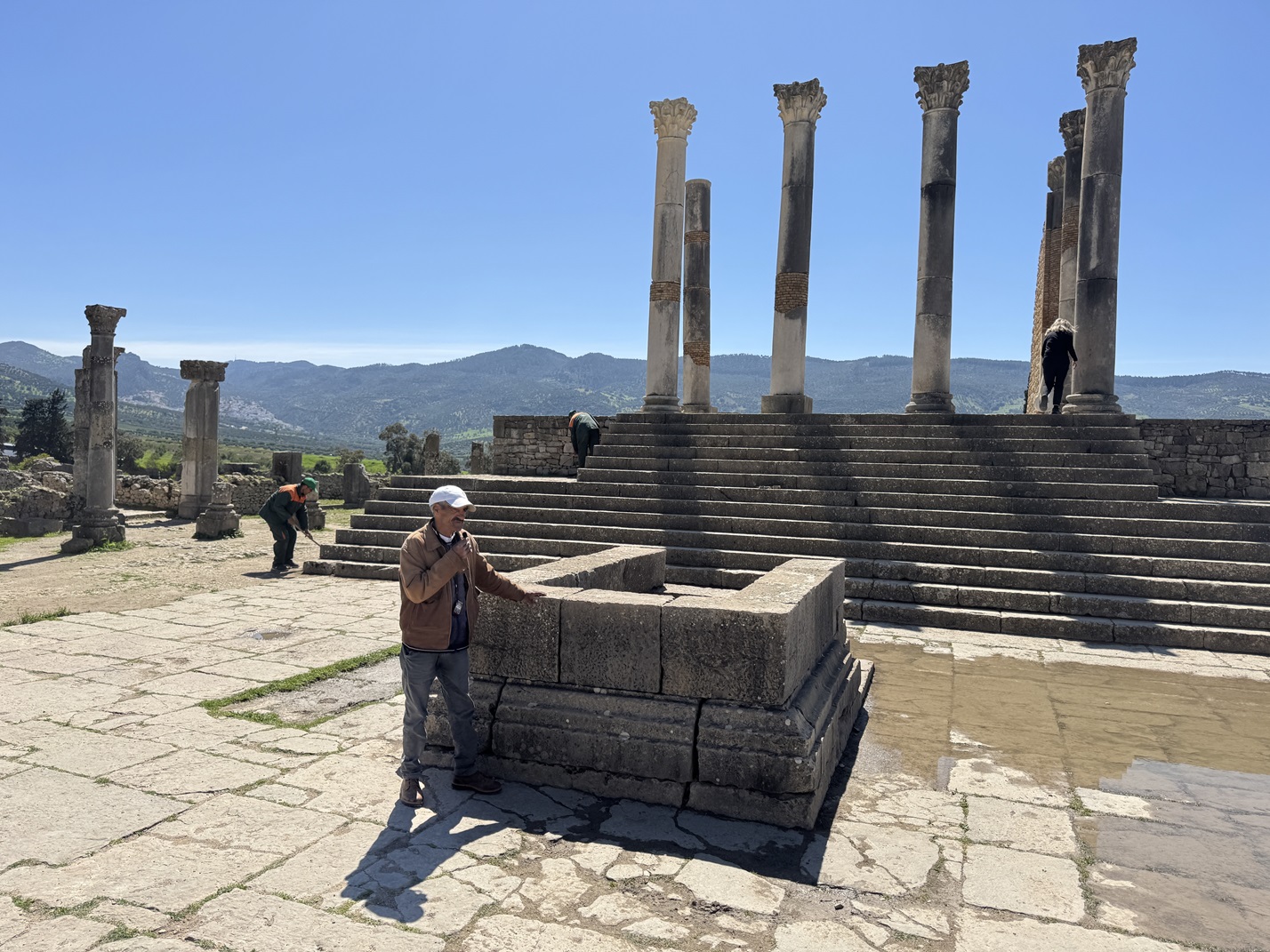
Part of the Capitaline temple.
Us posing with the arch.
Another view of the community washing area.
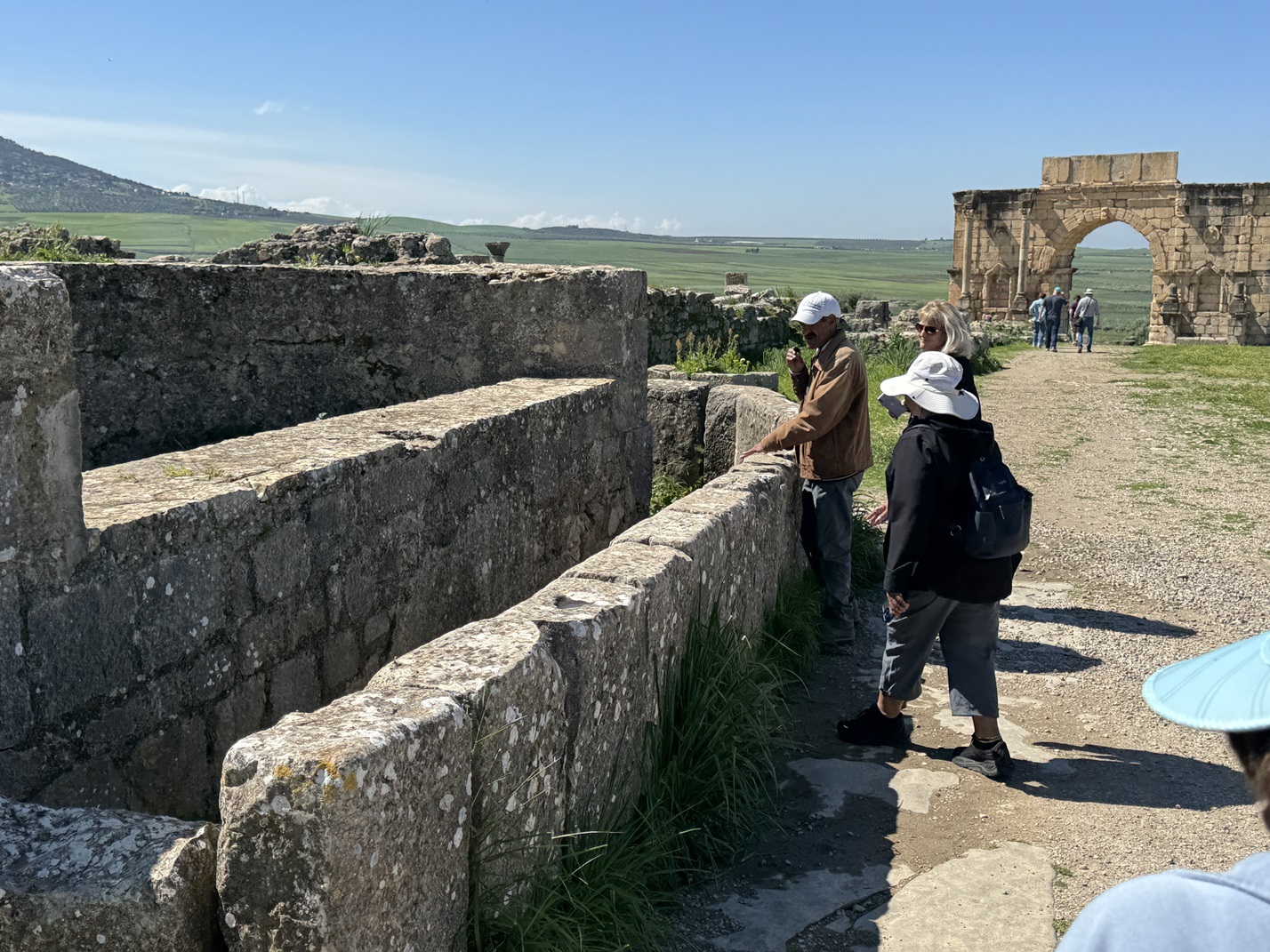
Our guide demonstrating how the community toilets were used.
Another mosaic, this one with more preserved coloring.
Making our way toward the main agora.
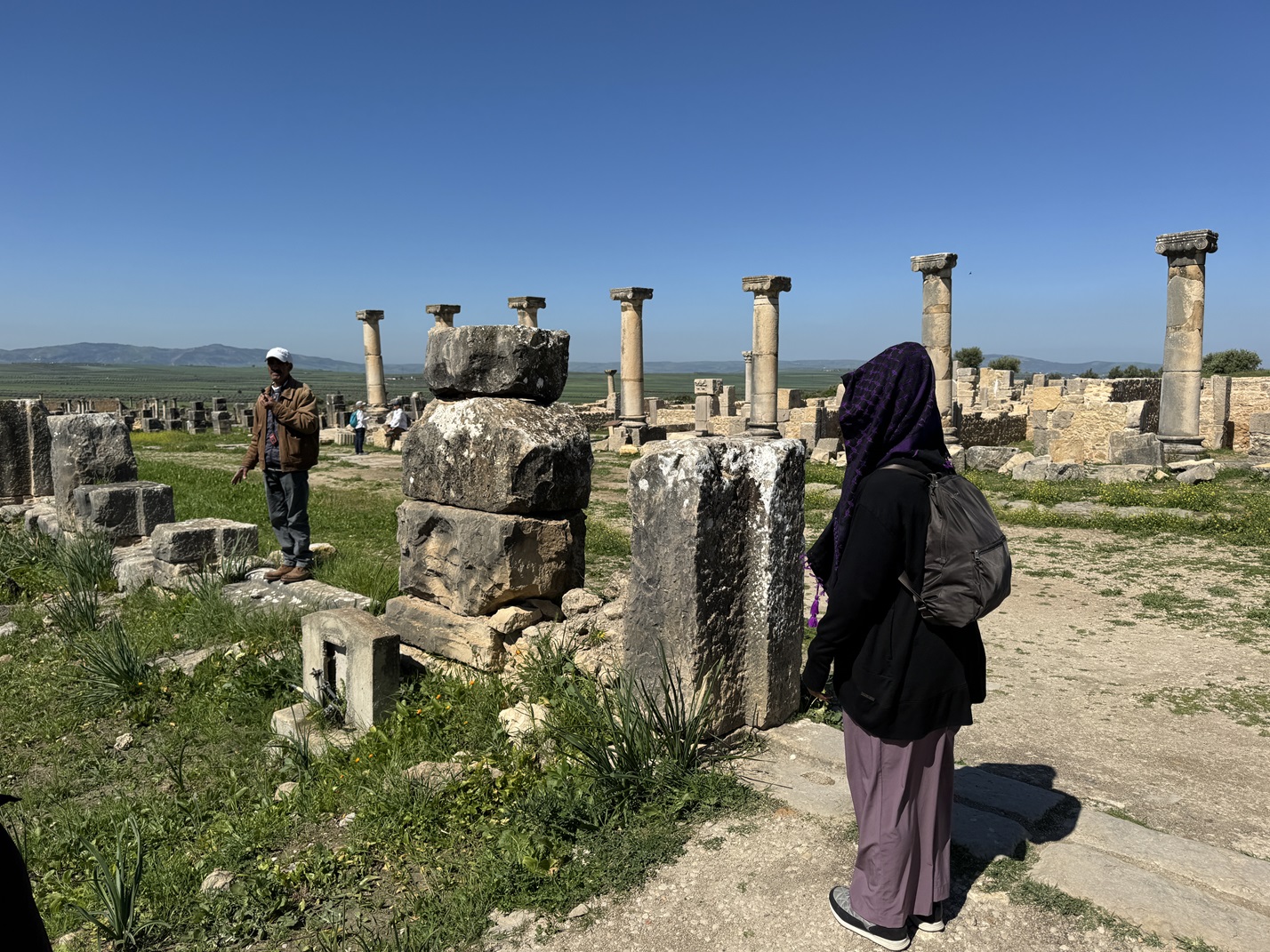
The agora (or marketplace) would be partially covered from this pillars.
Our intrepid guide searching for words.
Another view of the temple, with the offering dais in front.
A final shot back over the city.
We then proceed on to the city of Meknes, part of which is built from materials looted from Volubilis.
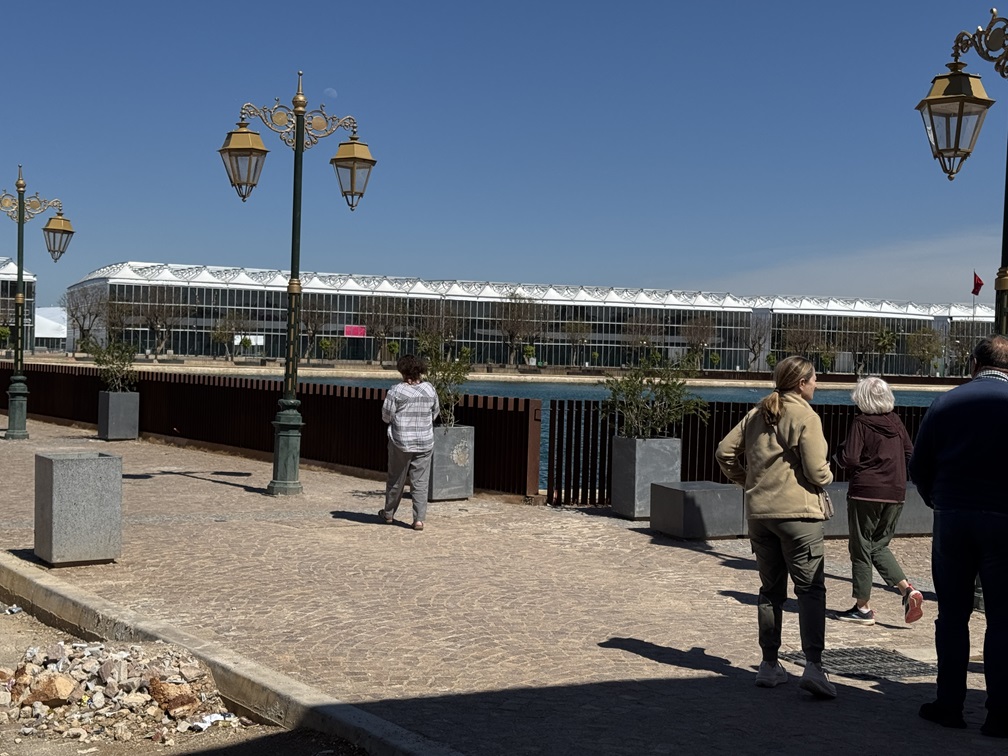
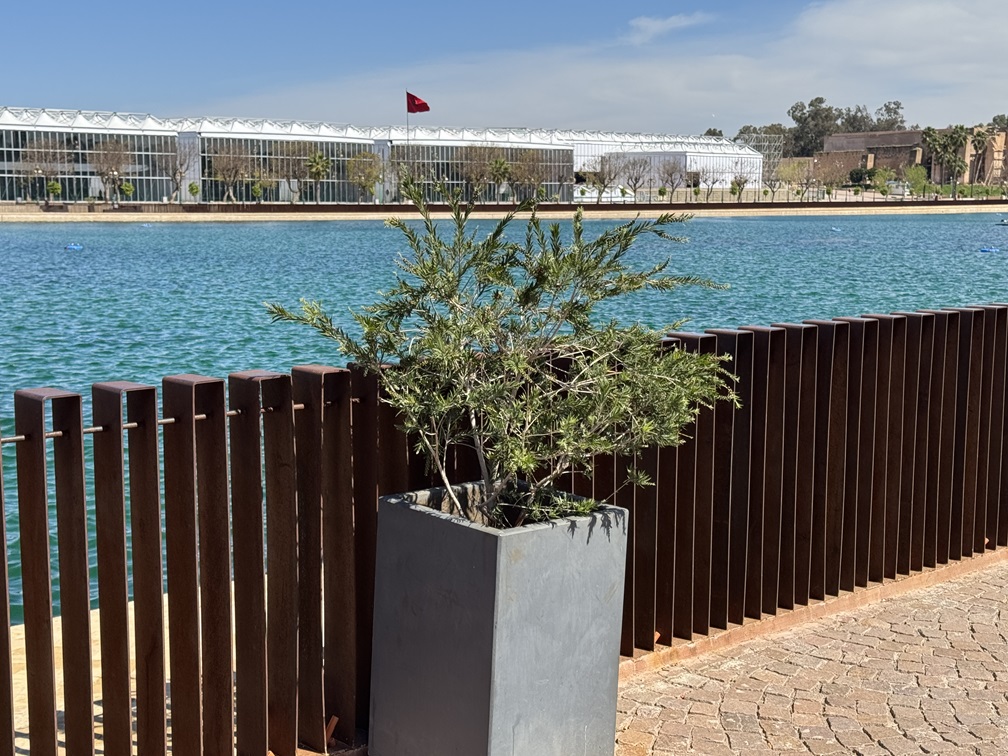
This temporary structure has been built for an upcoming pan-African agriculture conference.
It is built on the edge of this reservoir.
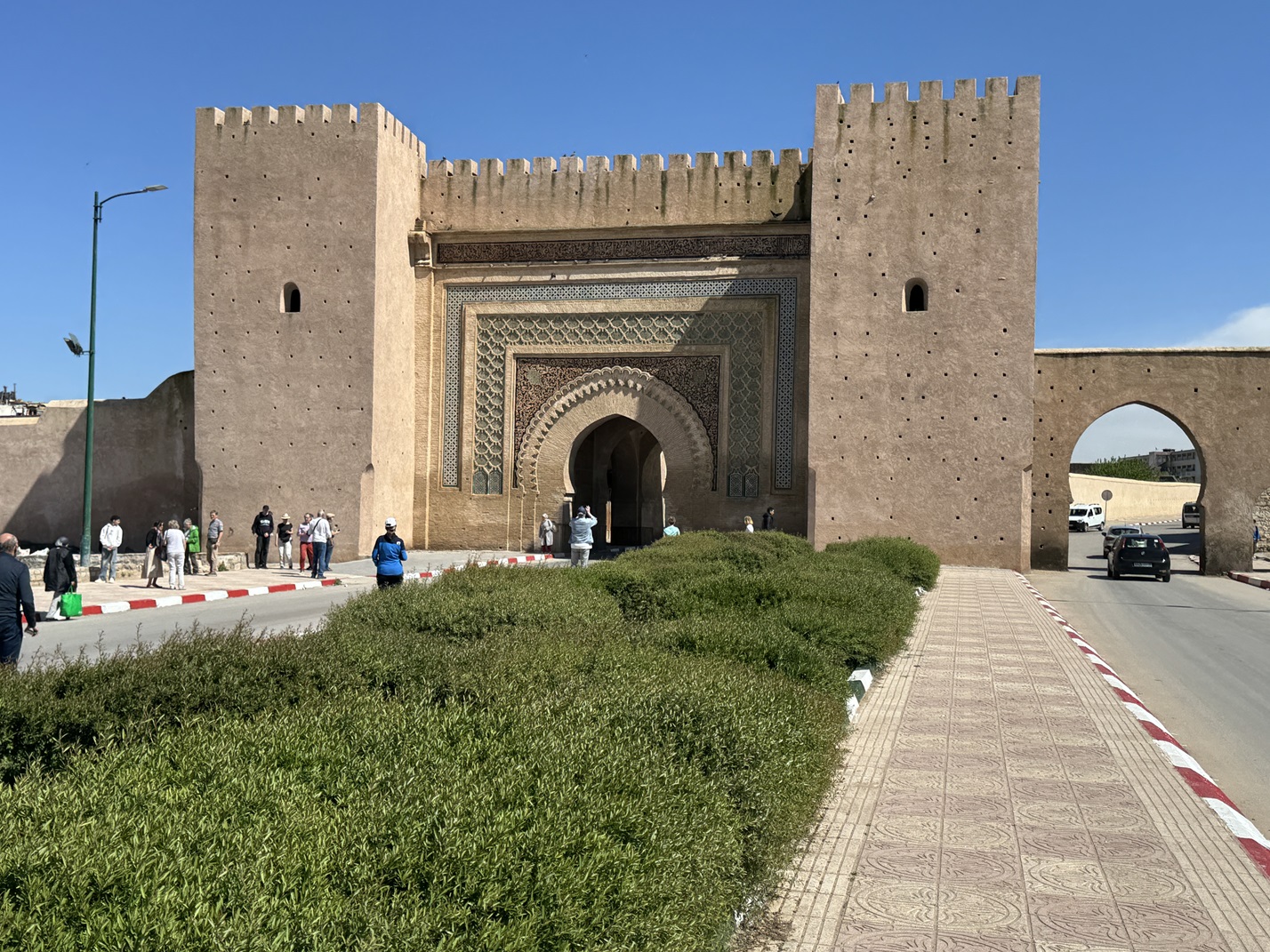
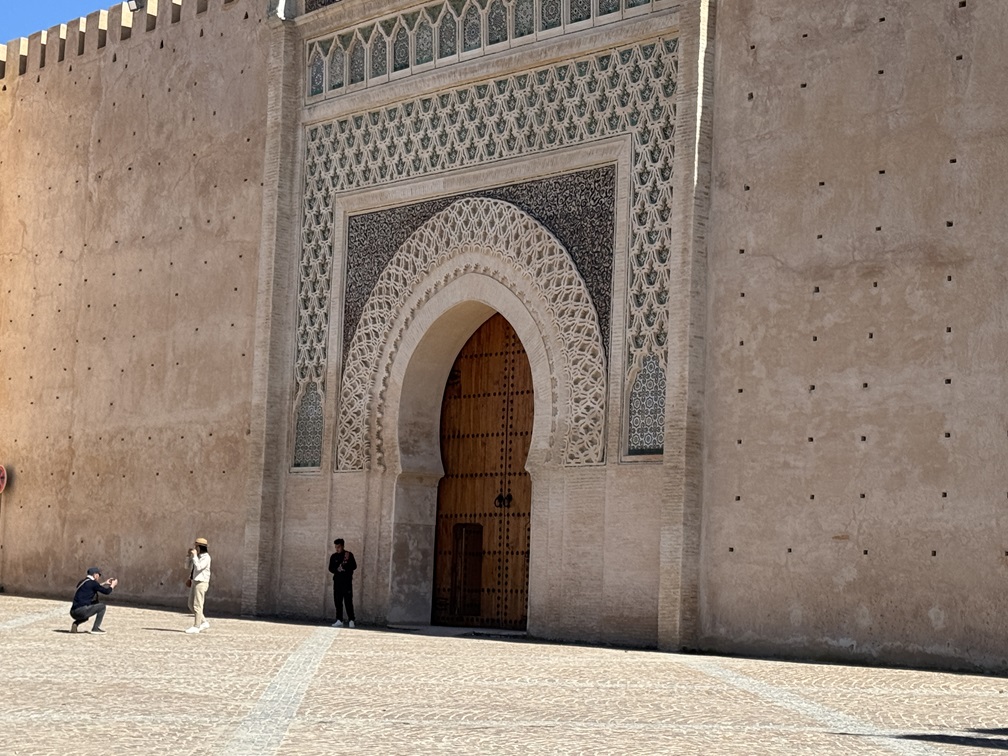
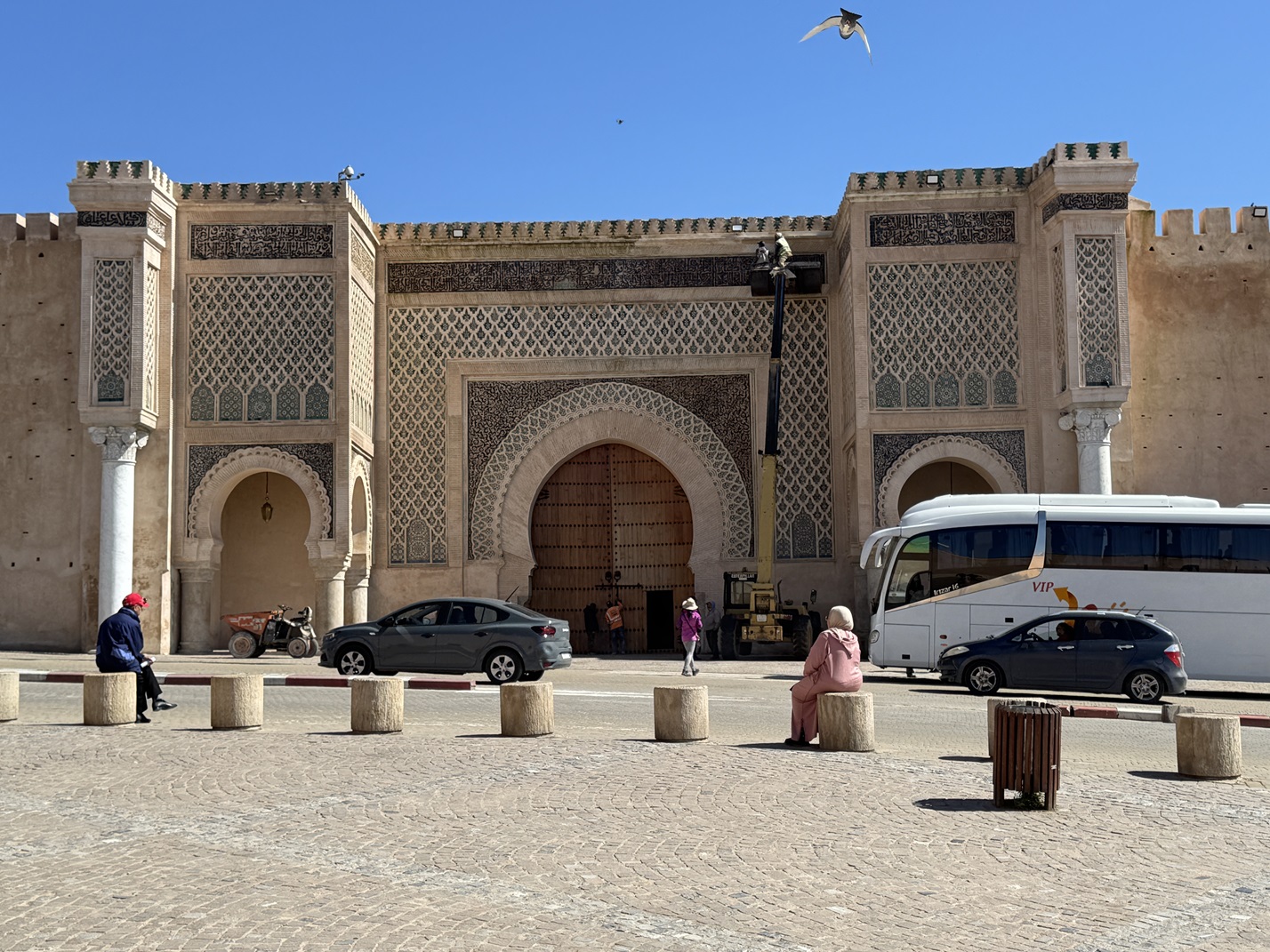
The Bab Mansur al-'Alj, the monumental gate to the imperial city.
Another shot of the gate.
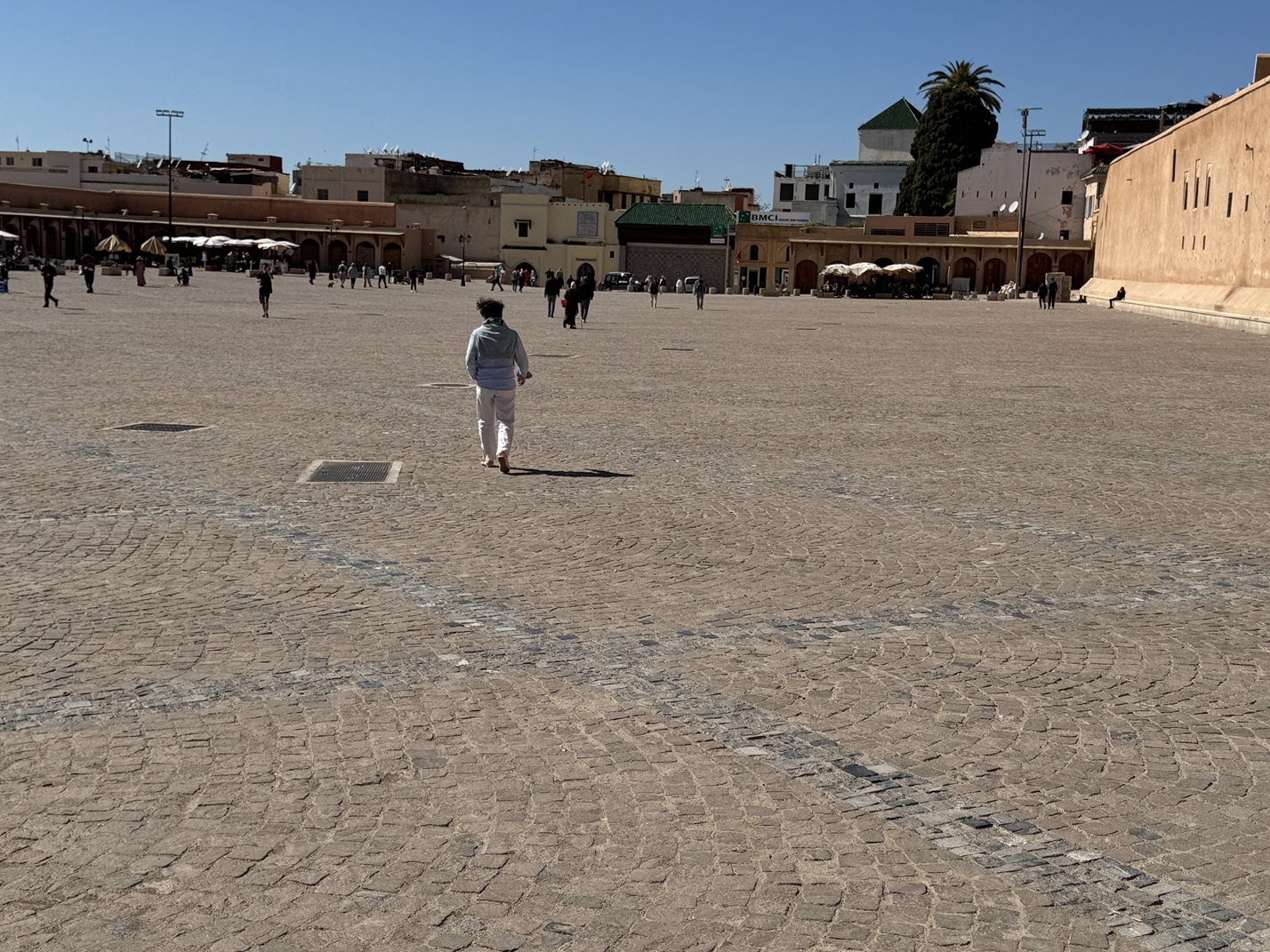
It sits on this square, where people would line up to enter.
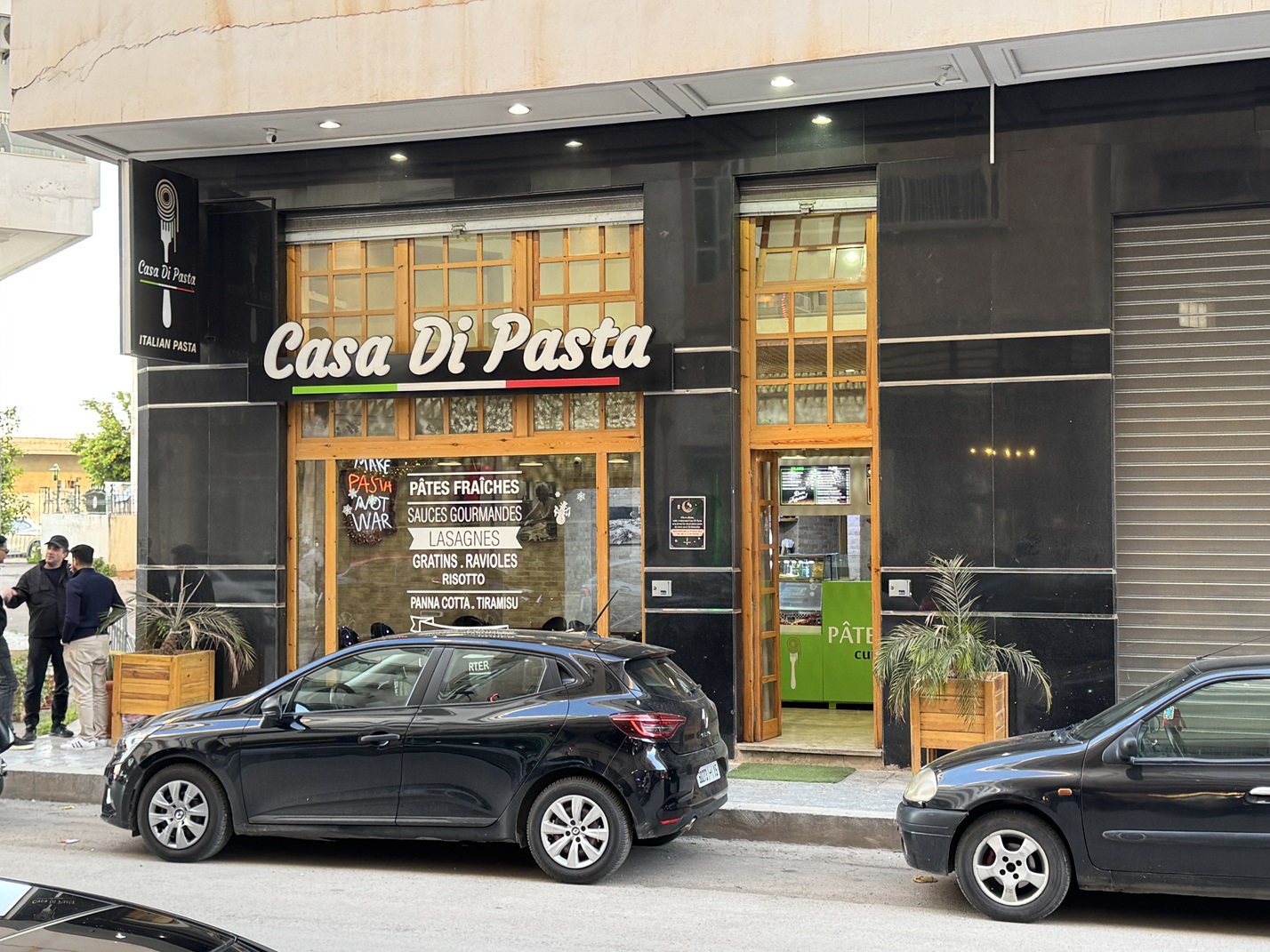
That evening, we go to a local shop called Casa di Pasta.
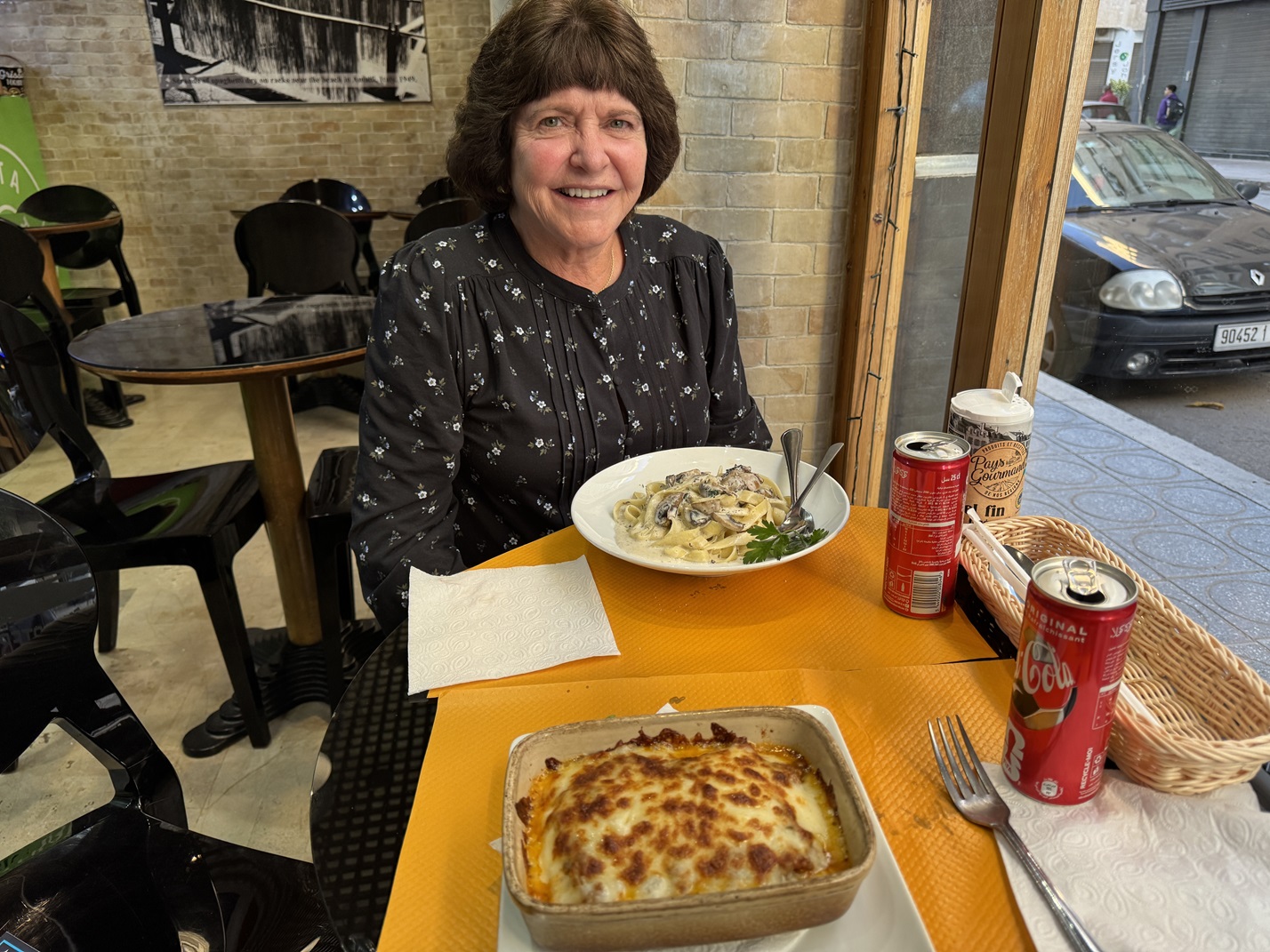
Kimberly had pasta with funghi, and Wade had this too-large lasagne.