Day 5: Cocina Prehispanica de Fogon, Monte Alban ruins.
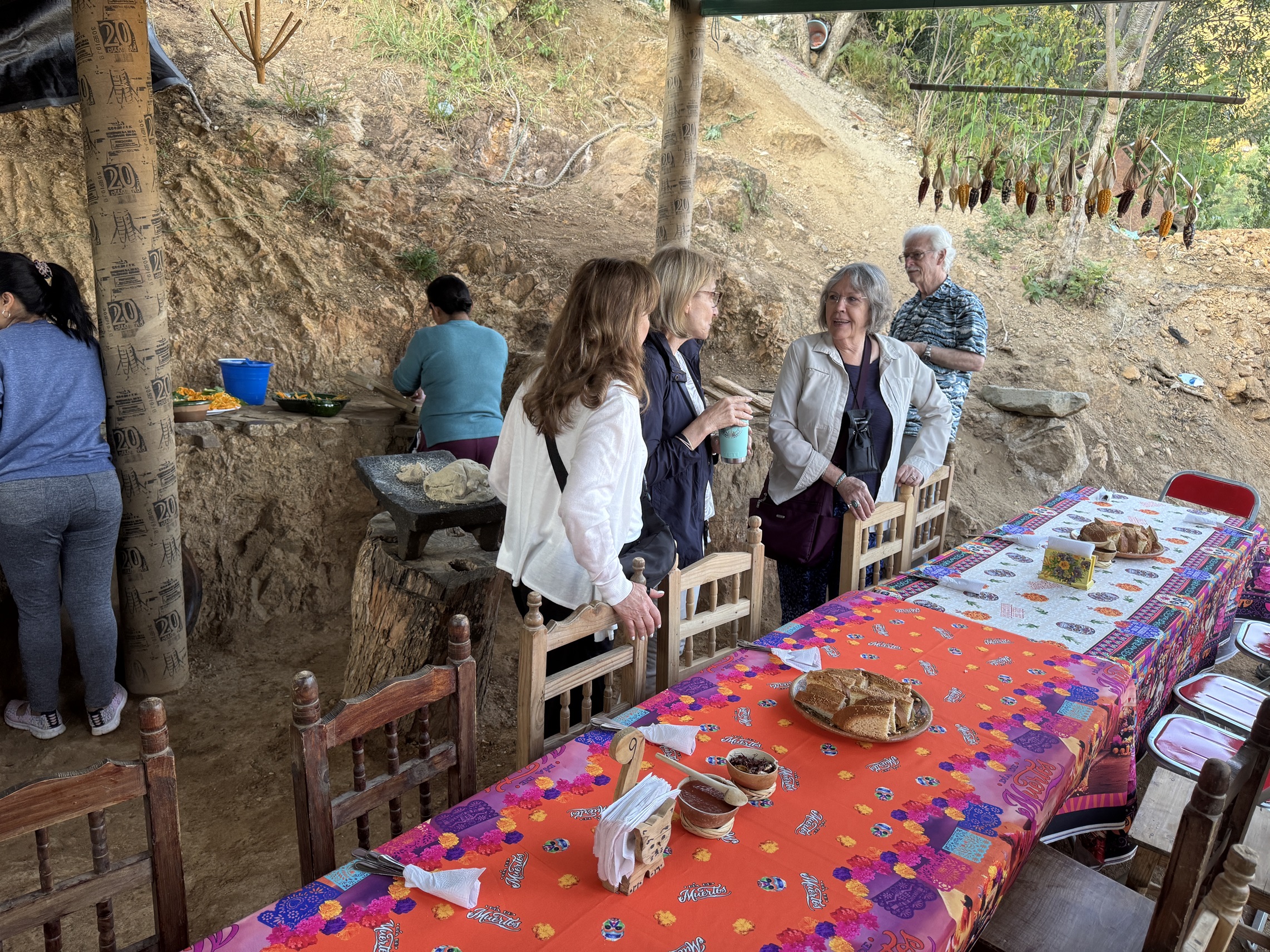
This mornings breakfast is at Cocina Prehispanica de Fogon.
It is about as rural as can be, literally carved into a hillside.
Our table, with the masa and the comal in the background.
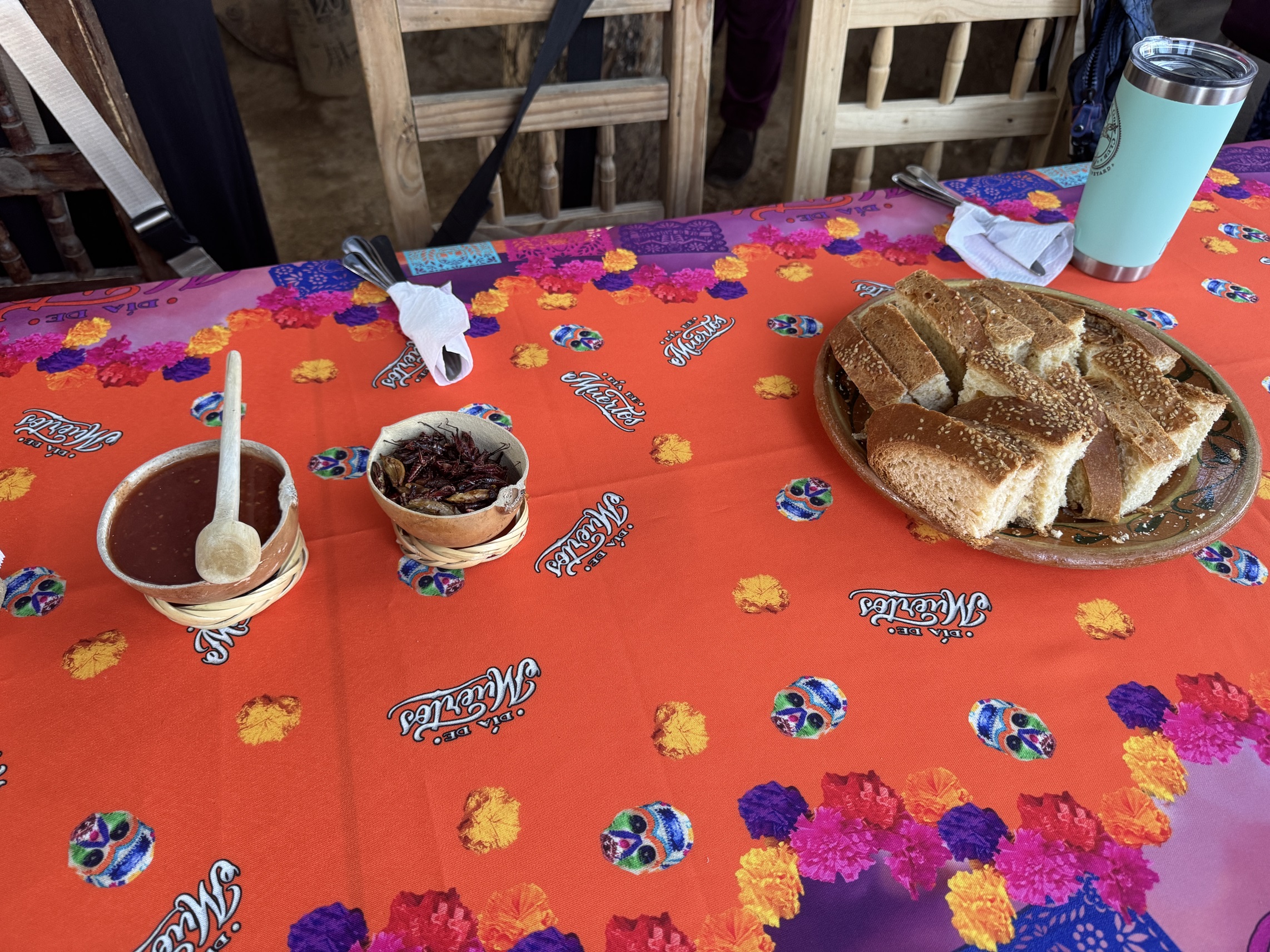
We get some actual bread instead of tortillas to start.
This is a local specialty called "sopa de guias", or "soup of the guides". It's only so-so.
More chicken with black mole, which would be better if we hadn't just had that for dinner last night.
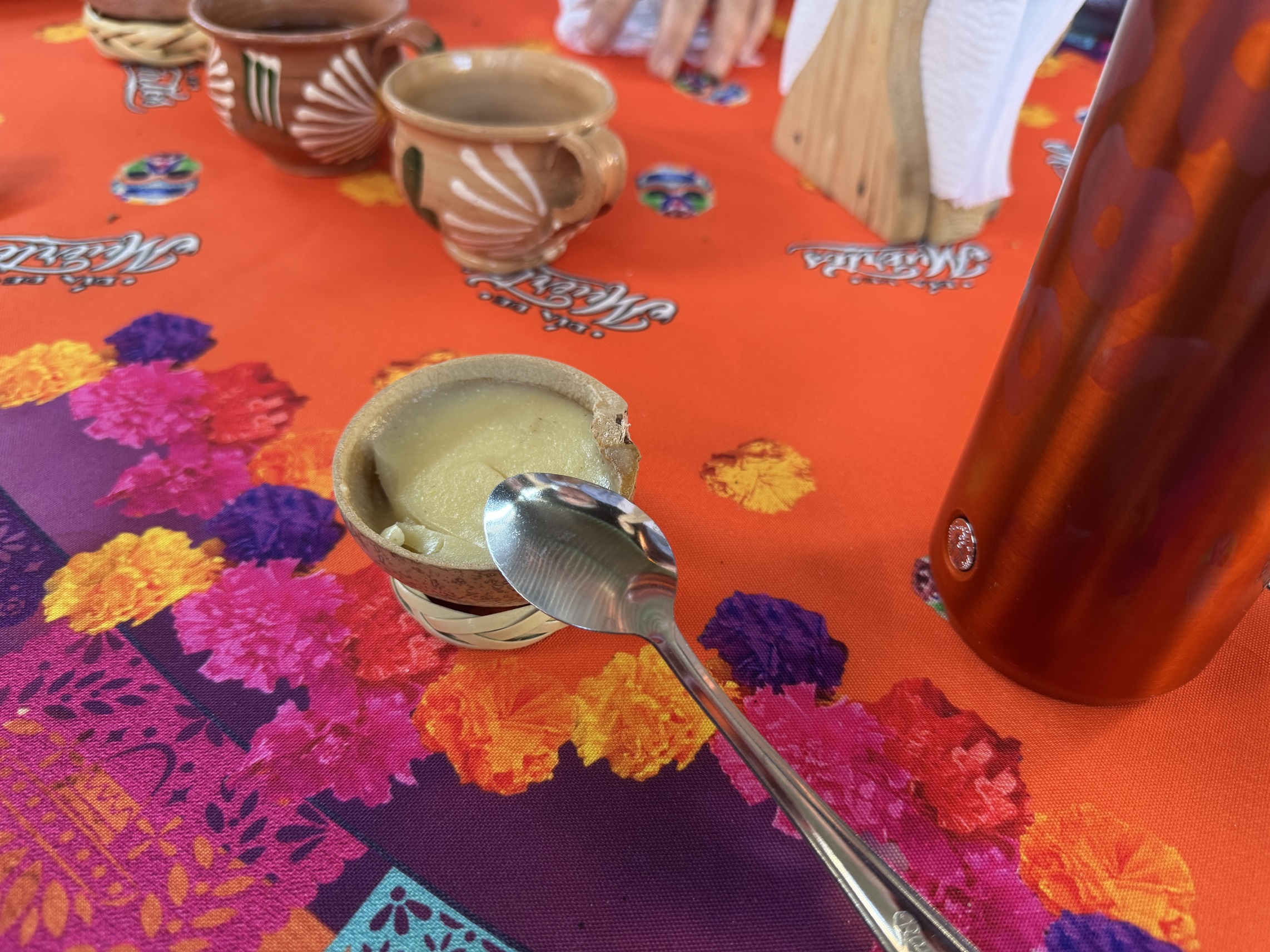
A corn pudding that is actually quite tasty.
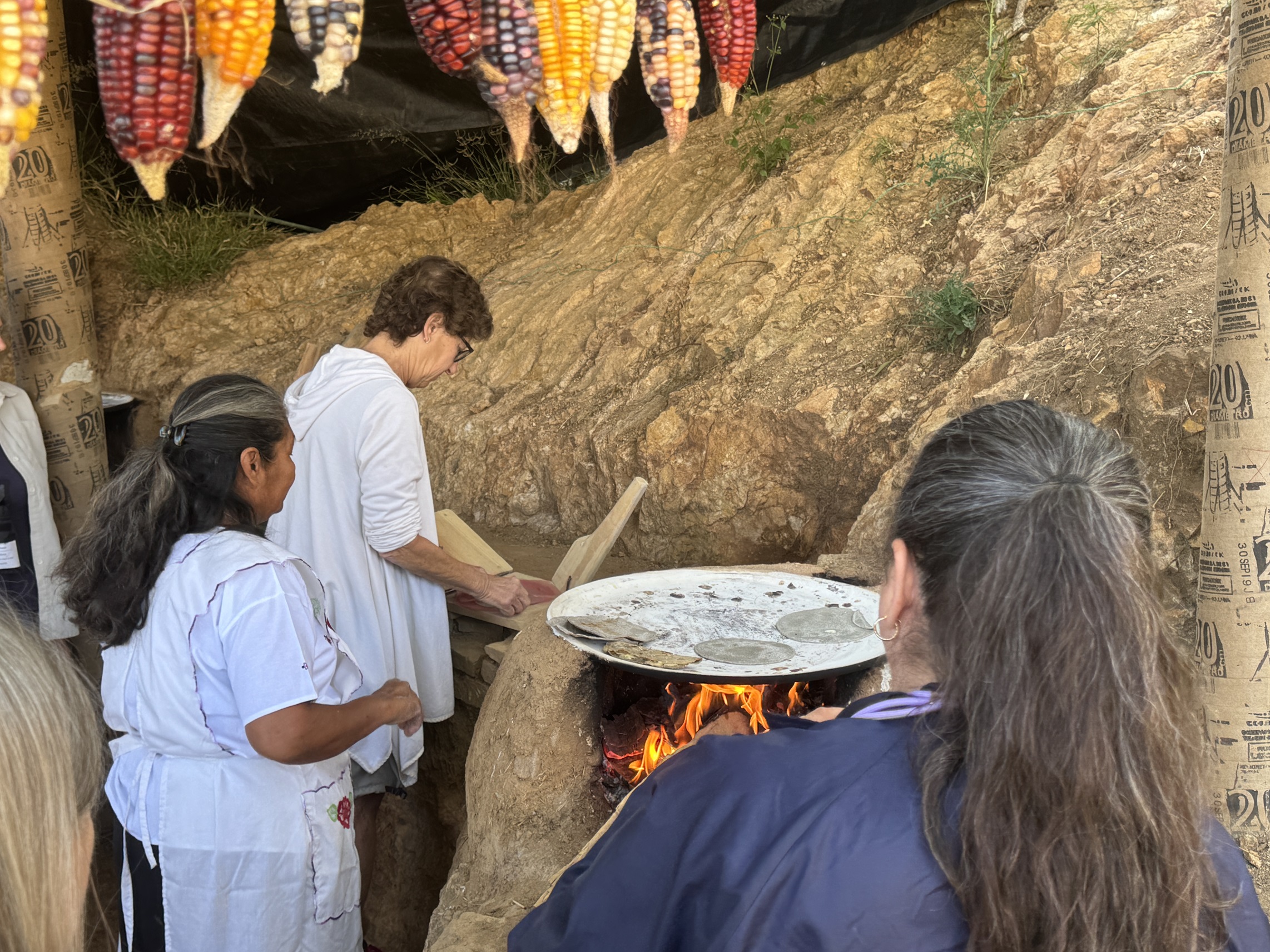
Afterward, some people try their hands at making tortillas.
Others look at the views down into the valley from the hillside.
On we go to the ruins at Monte Alban, which was really much bigger and more interesting than
we even knew. This is a relief map with an overview.
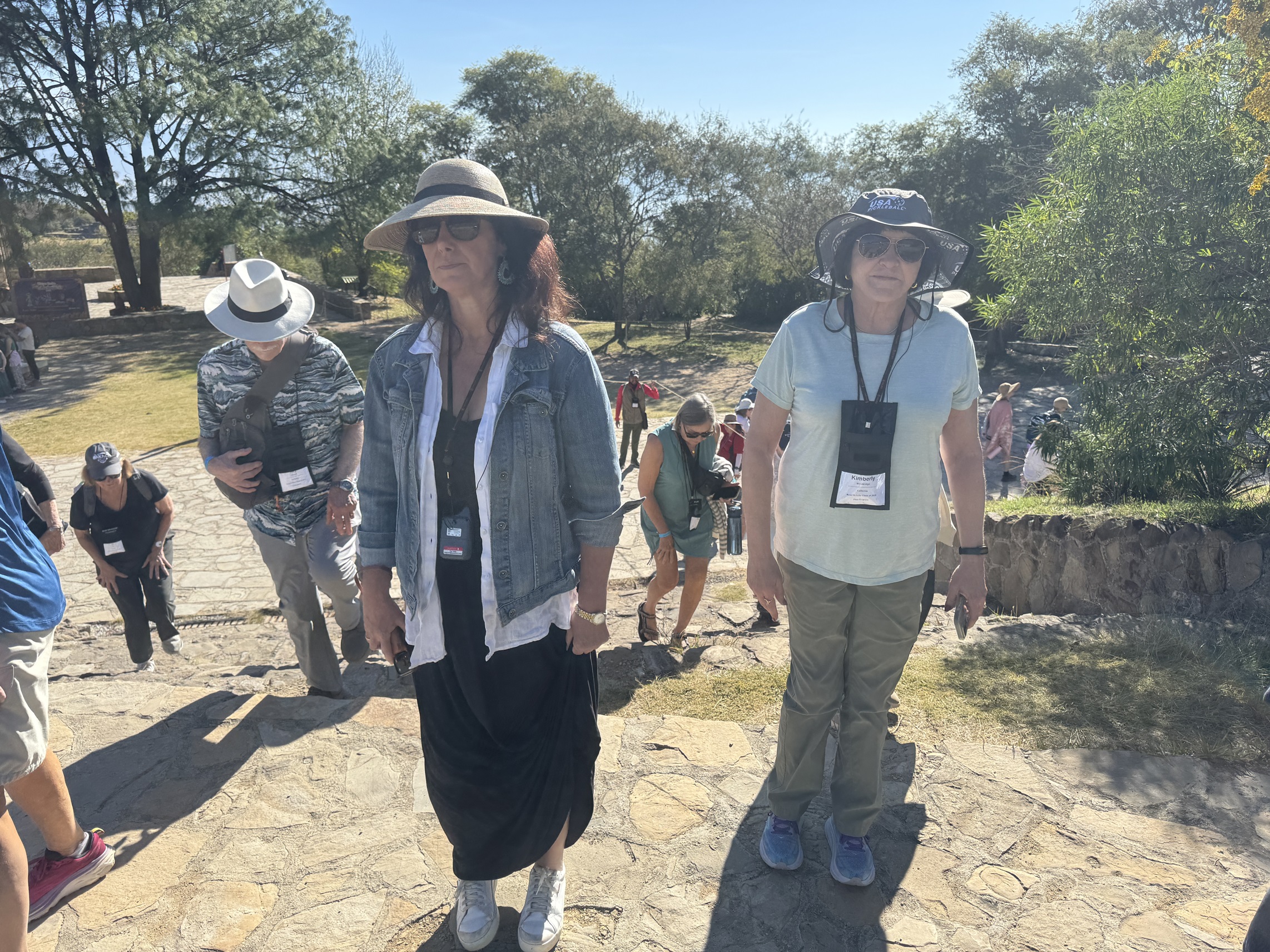
Kimberly hiking up one of the walkways. The site was founded by the Zapotec empire in 500 BCE,
and used until 800 CE.
Approaching one of the large pyramidal structures.
Monte Alban is Latin for "white mountain", a name which might have come from these flowers.
Another structure.
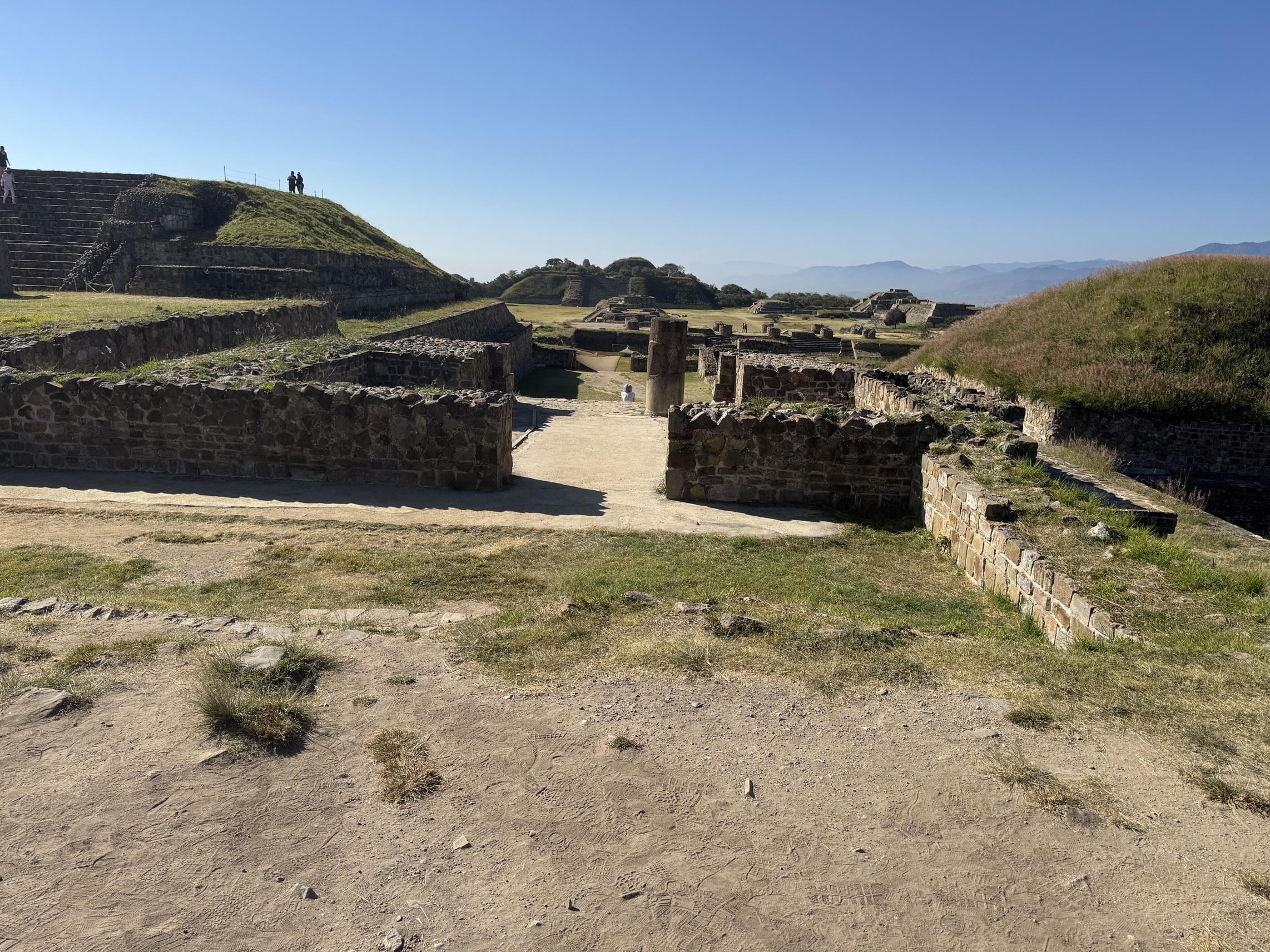
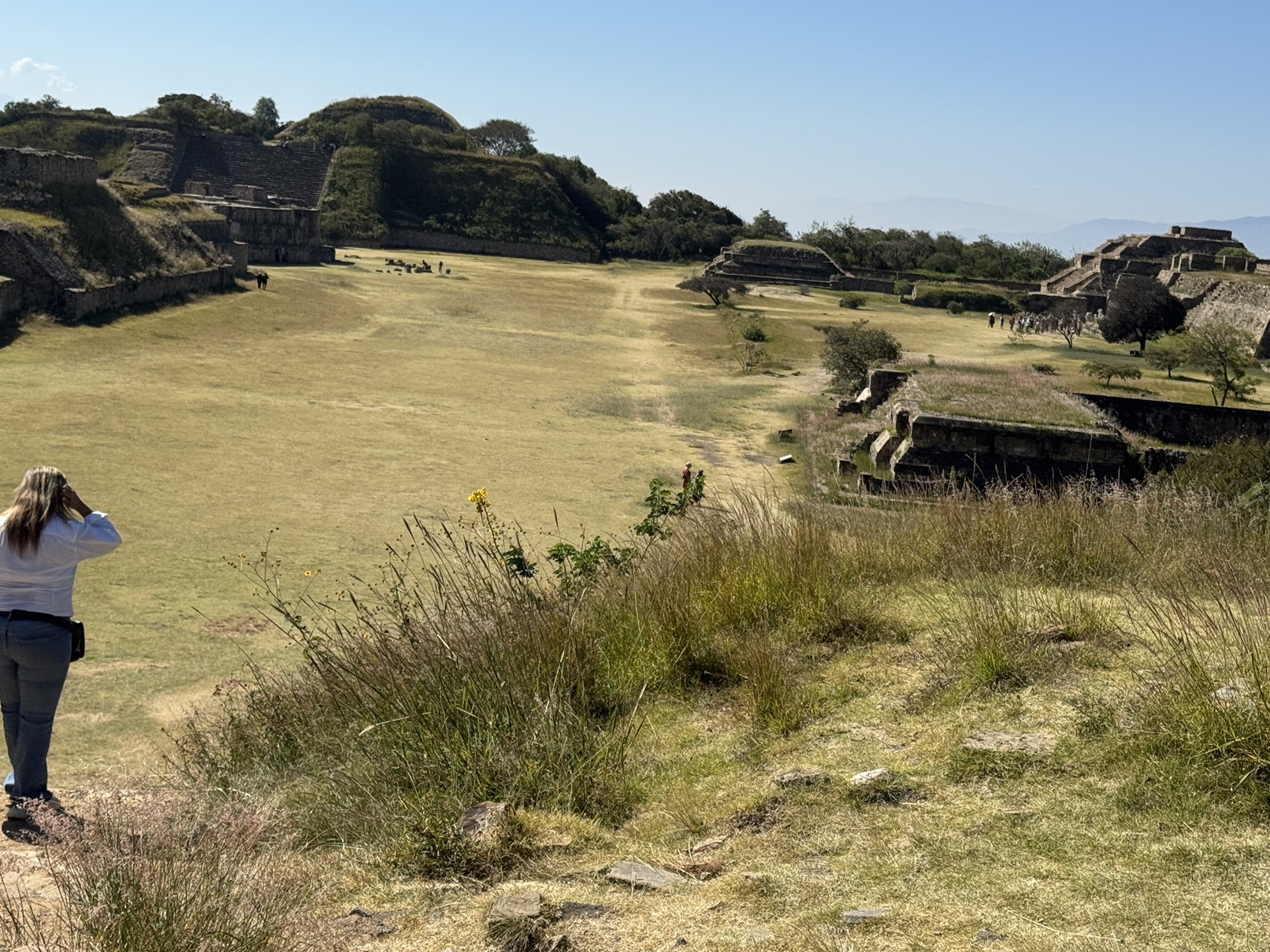
The size and scope of the site is amazing.
A valley off one side of the mountain. Our other tour guide Cosme is in red in the background.
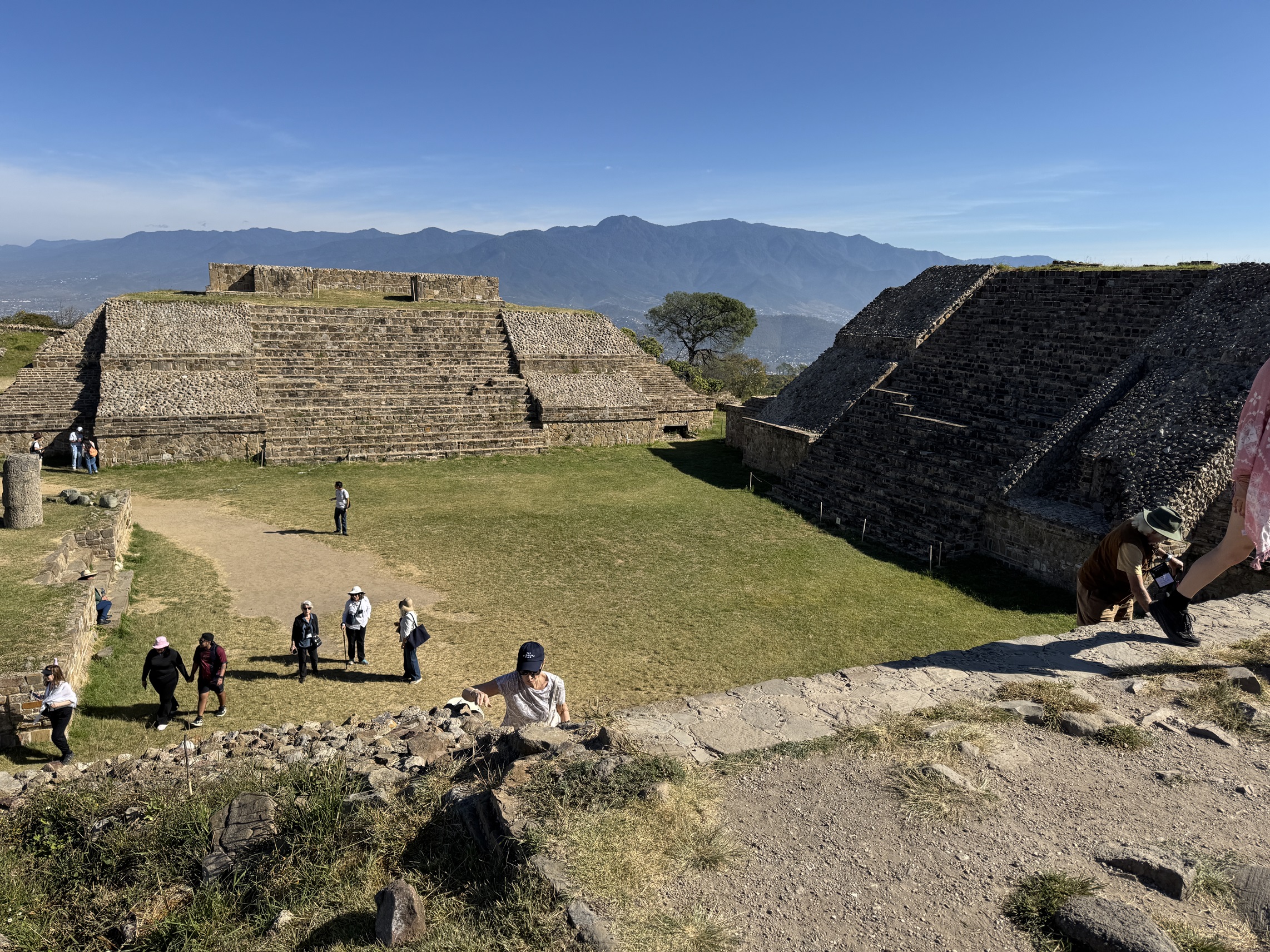
From the top of one of the pyramids, you can see how extensive it really is.
Another direction from the top of that same pyramid.
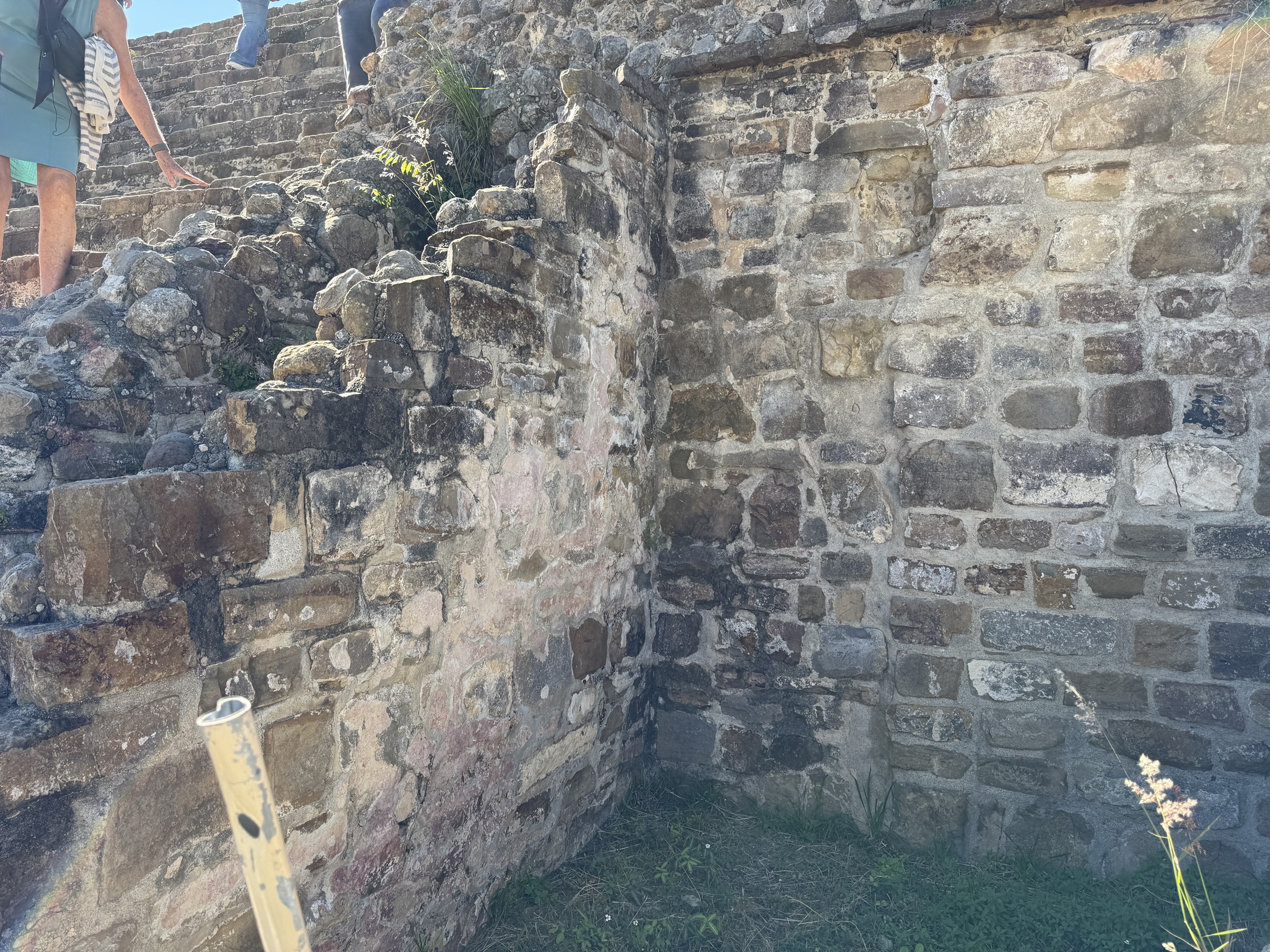
This is some original stucco and coloring on one of the walls.
What is left of an original carving of a leopard.
Some of the pyramids are purposely left unexcavated for future generations.
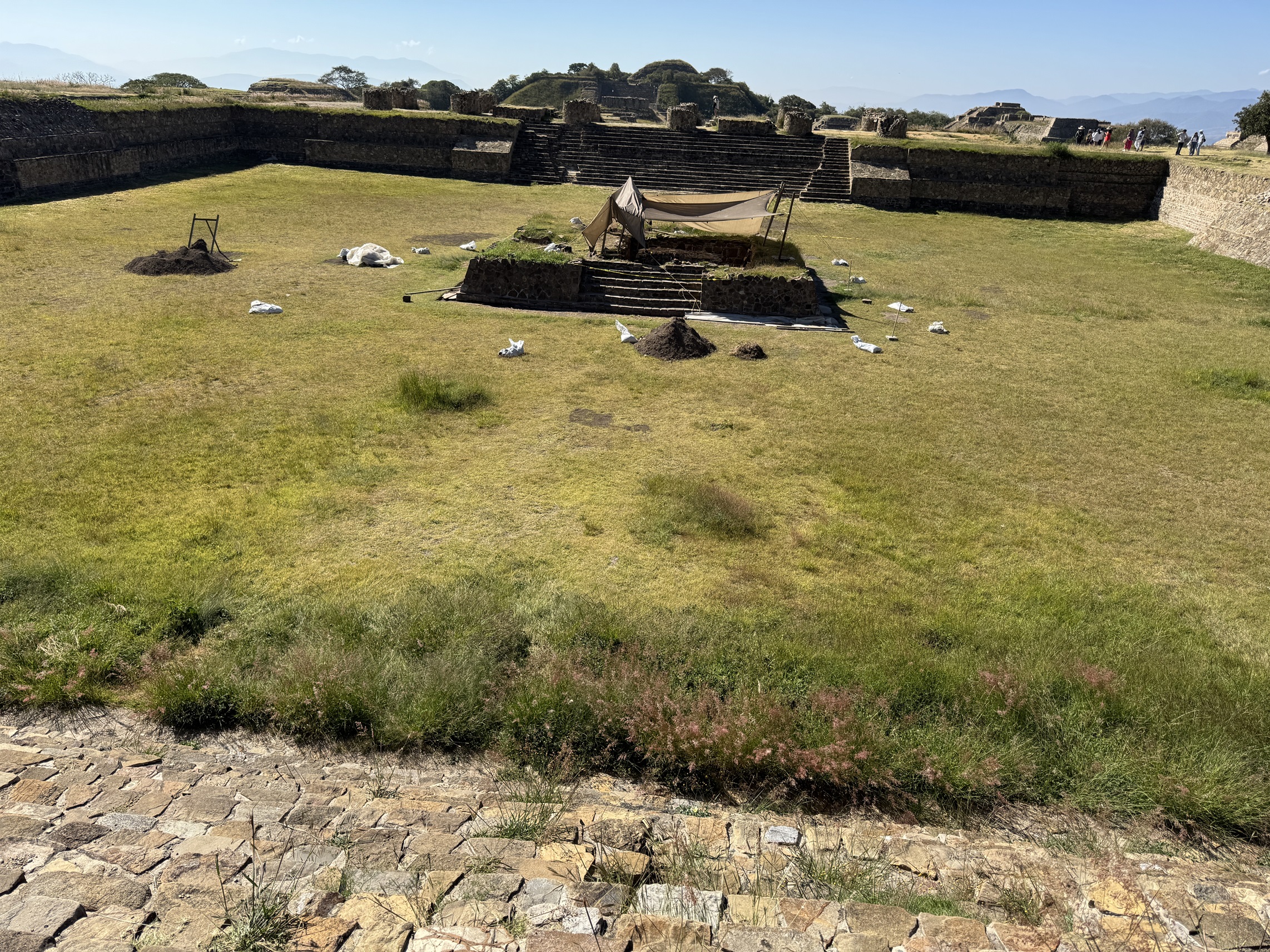
In the middle of this large stage square, there are some excavations currently under way.
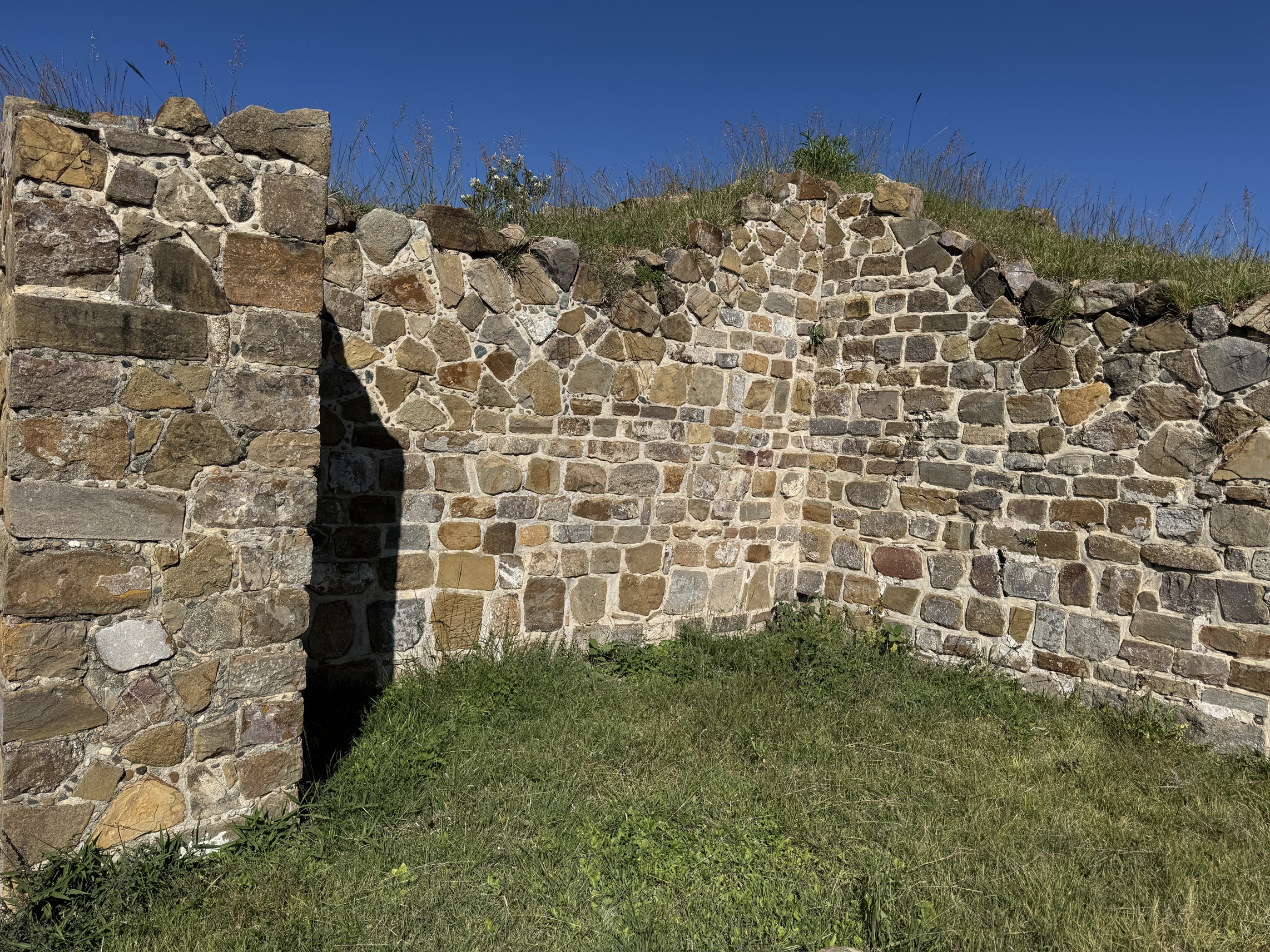
If you zoom in and look close, you can see that the bottom layers are original mortar. The Zapotec
mainly laid their bricks square. The reconstruction above it has small pebbles in the mortar to
identify that it is not original.
This giant open area was for public assemblies of tens of thousands of people. The normal
population was much less, only for royalty and clergy.
Walking through the open area to another large construction.
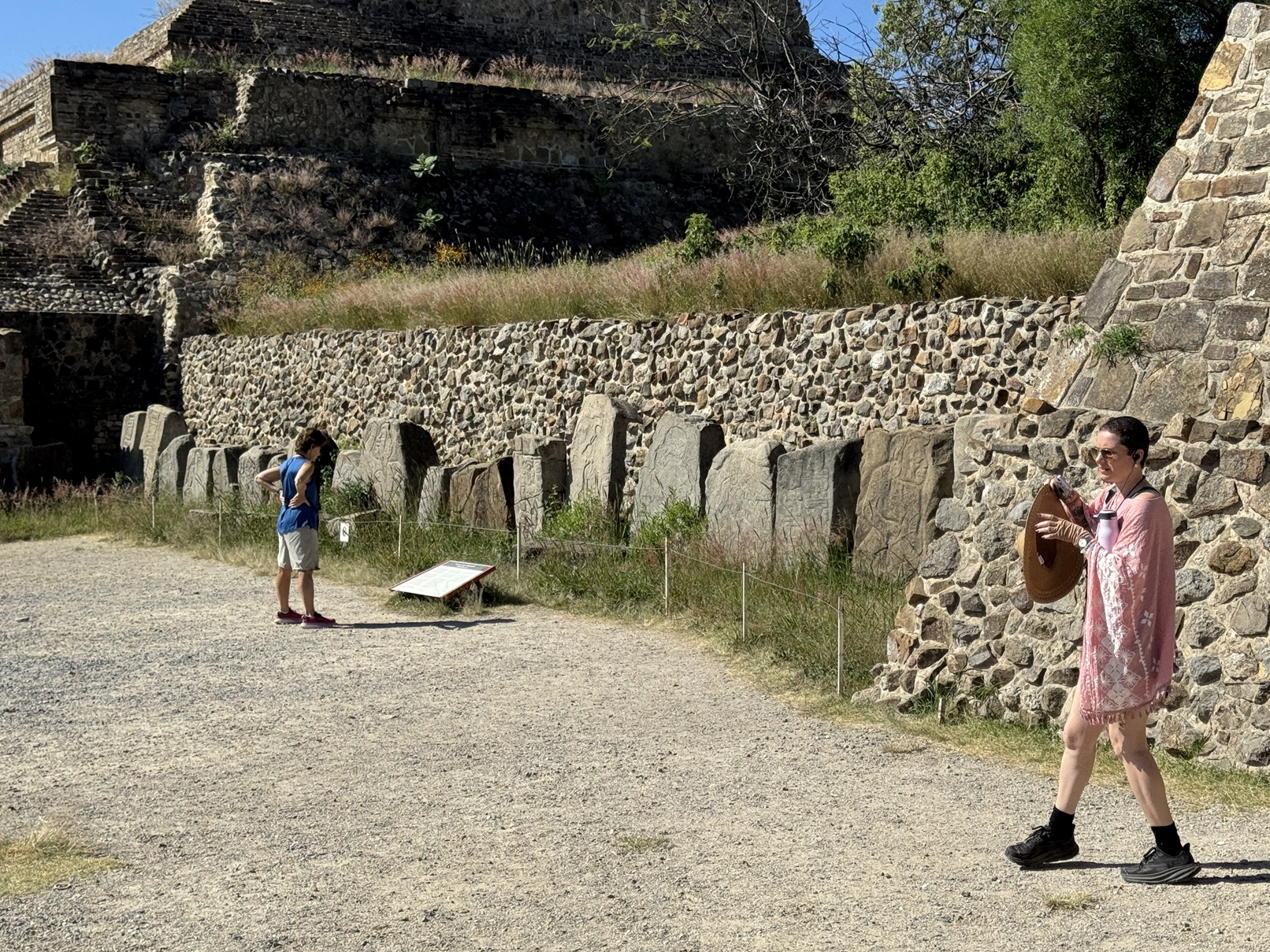
These inscribed stones are replicas of the originals that have been safely stored away.
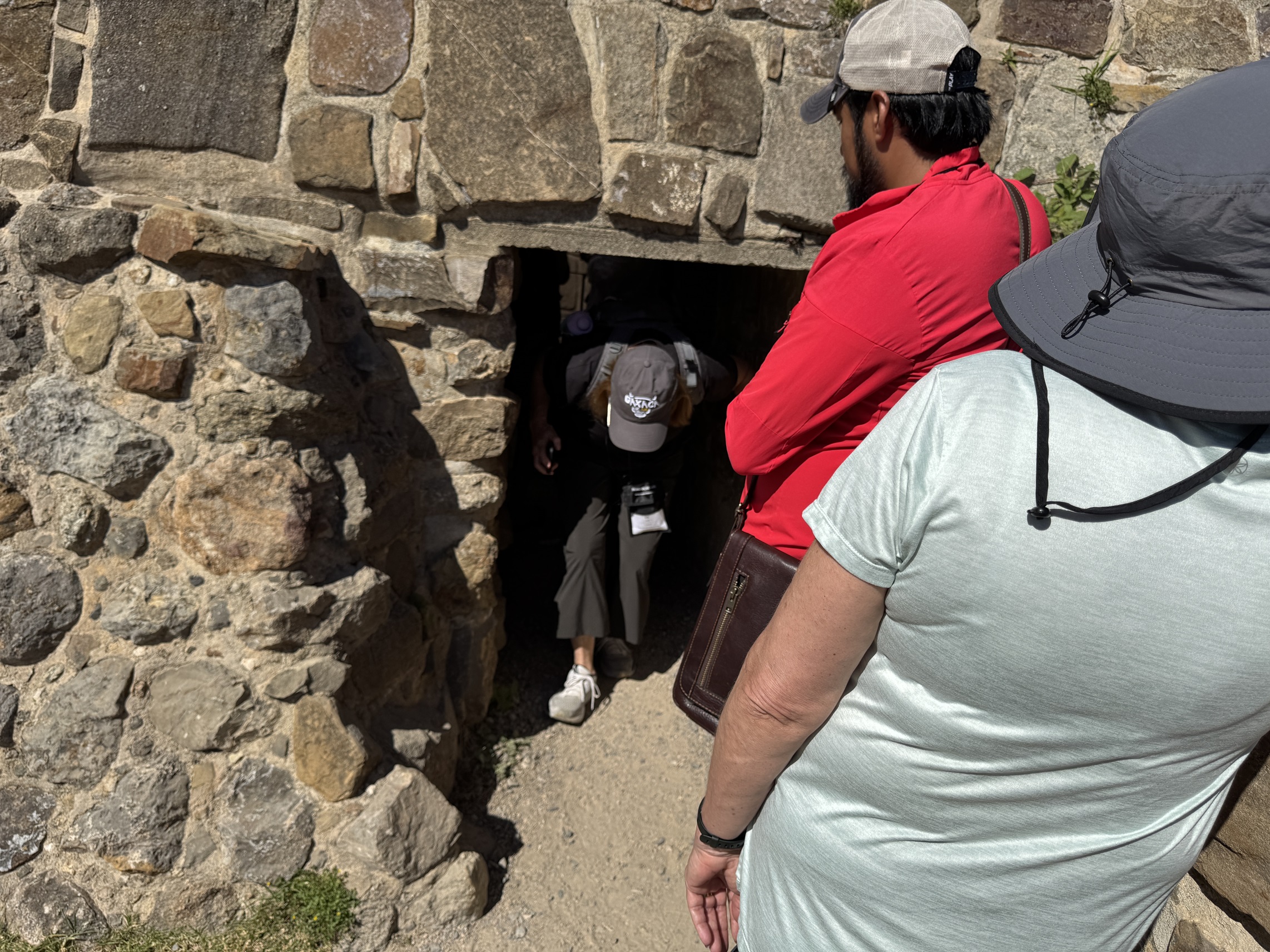
In this small excavation, you can still enter...
...and see some of the original carvings. The language is not fully understood.
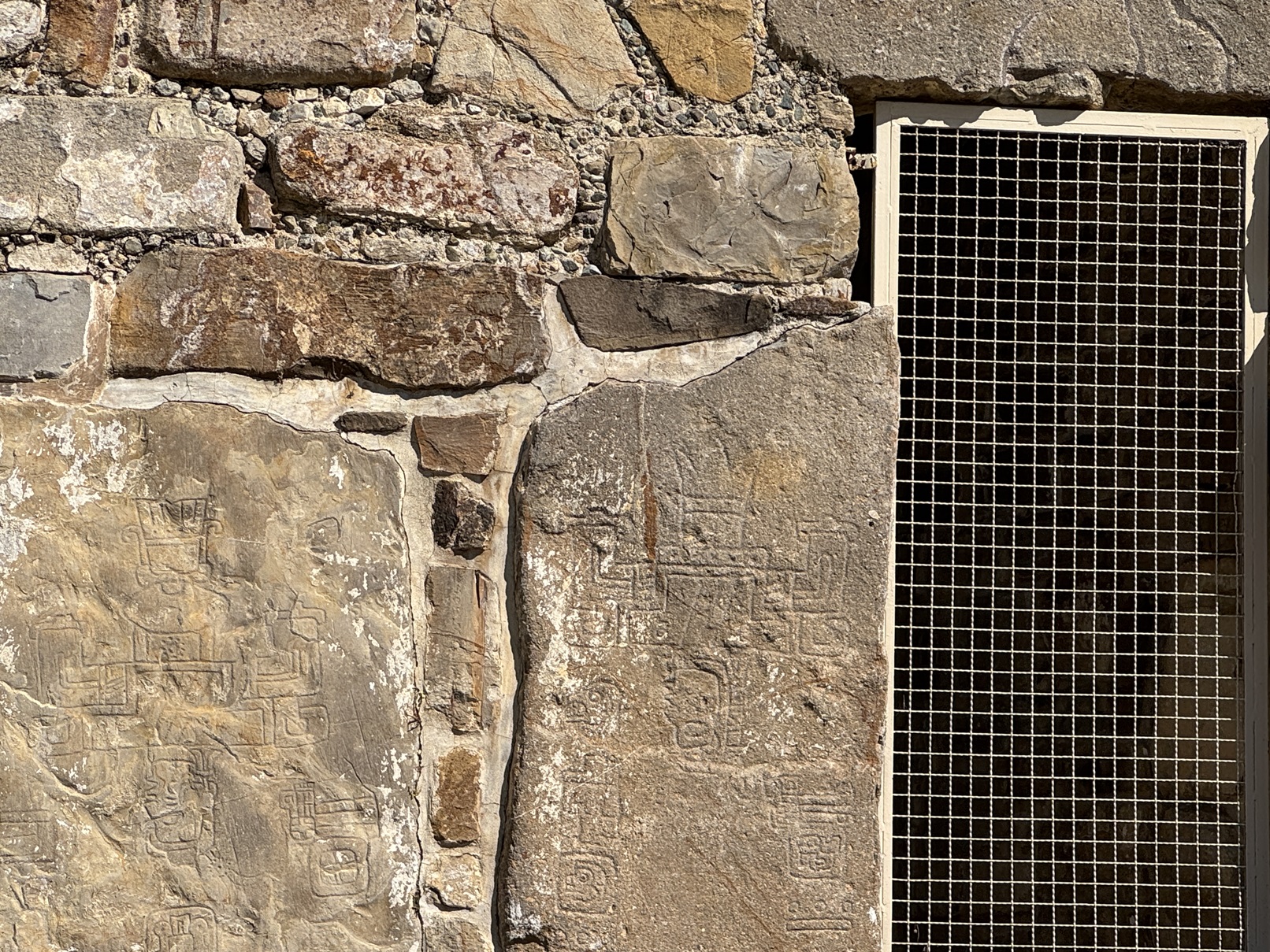
Some more carvings, next to a door sealing off access hallways.
The small hole about two-thirds of the way up is for marking the two days of the year when the sun
is at its zenith; it makes a shaft through an inside set of stones.
The ever-popular ball court. This one doesn't seem to have the rings, and is probably a variant
of the game.
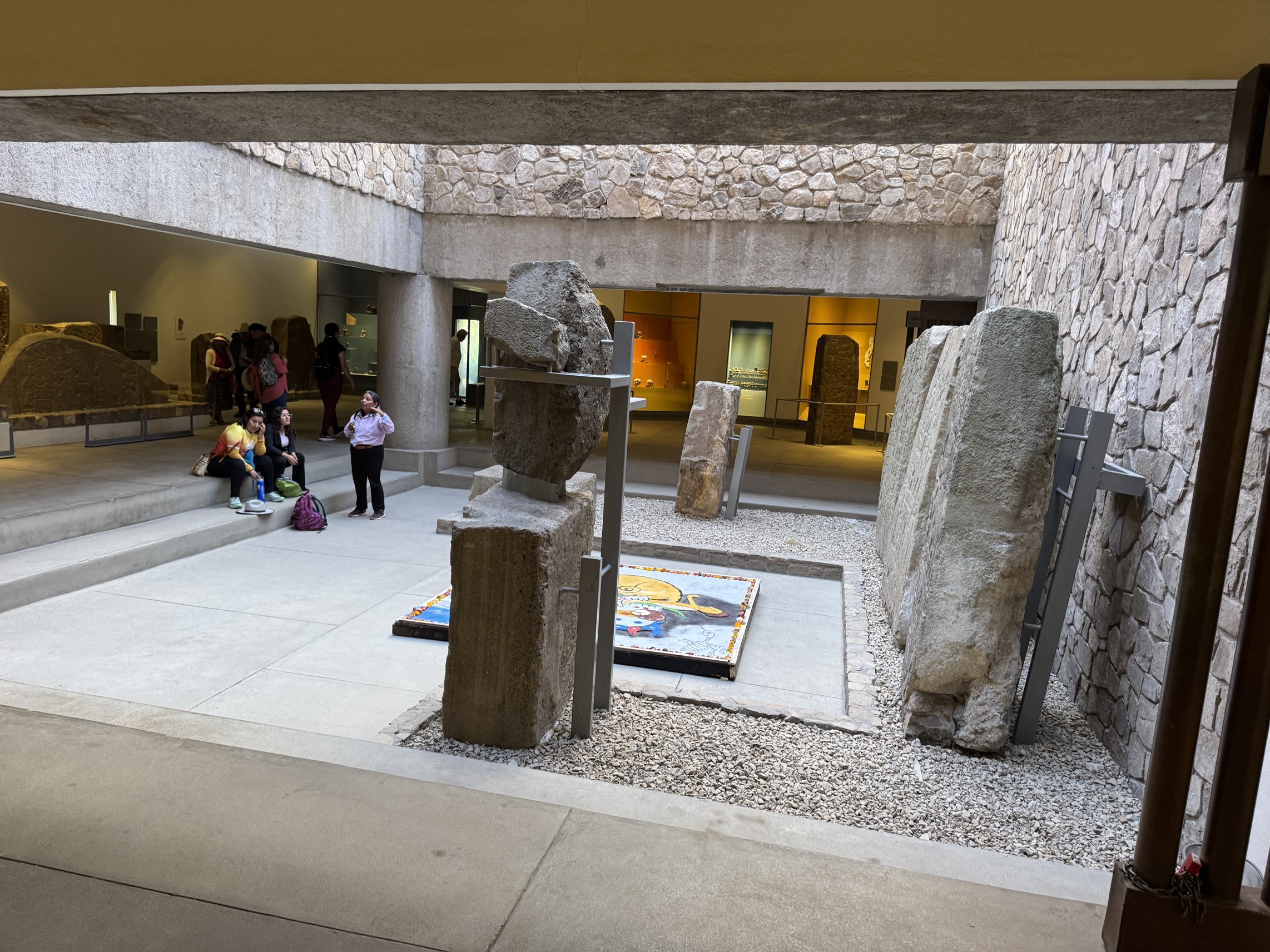
The museum attached to the site is much smaller than one would expect for the scope of the site.
While waiting for our bus, another bus takes the turn too short and ends up stranded with its back
bumper on the road and its wheels spinning. The workers get some boulders under the wheels to free it.
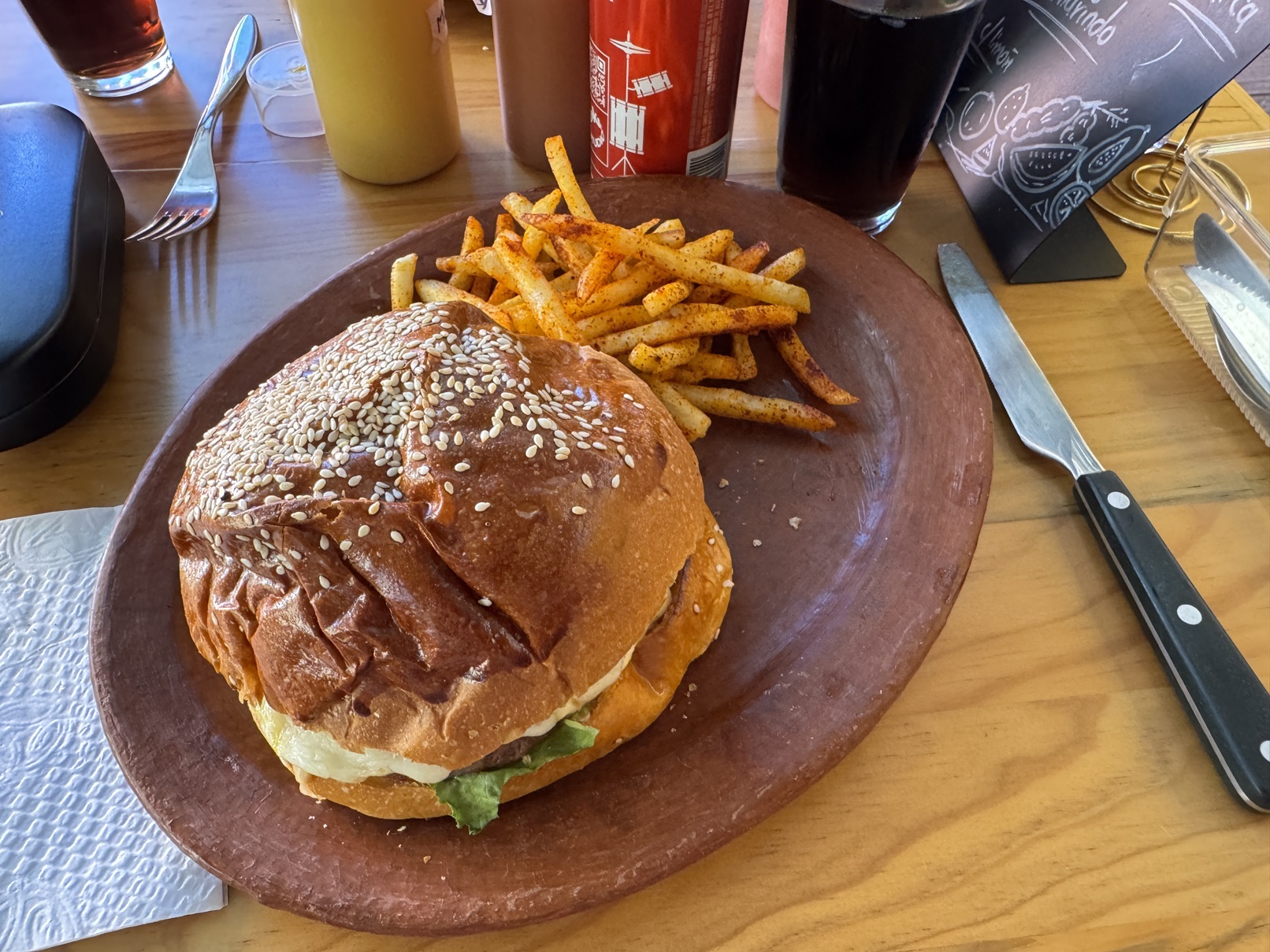
On our own for lunch, we decide we have had enough Mexican food for the moment, and look
up where to get a good hamburguesa.
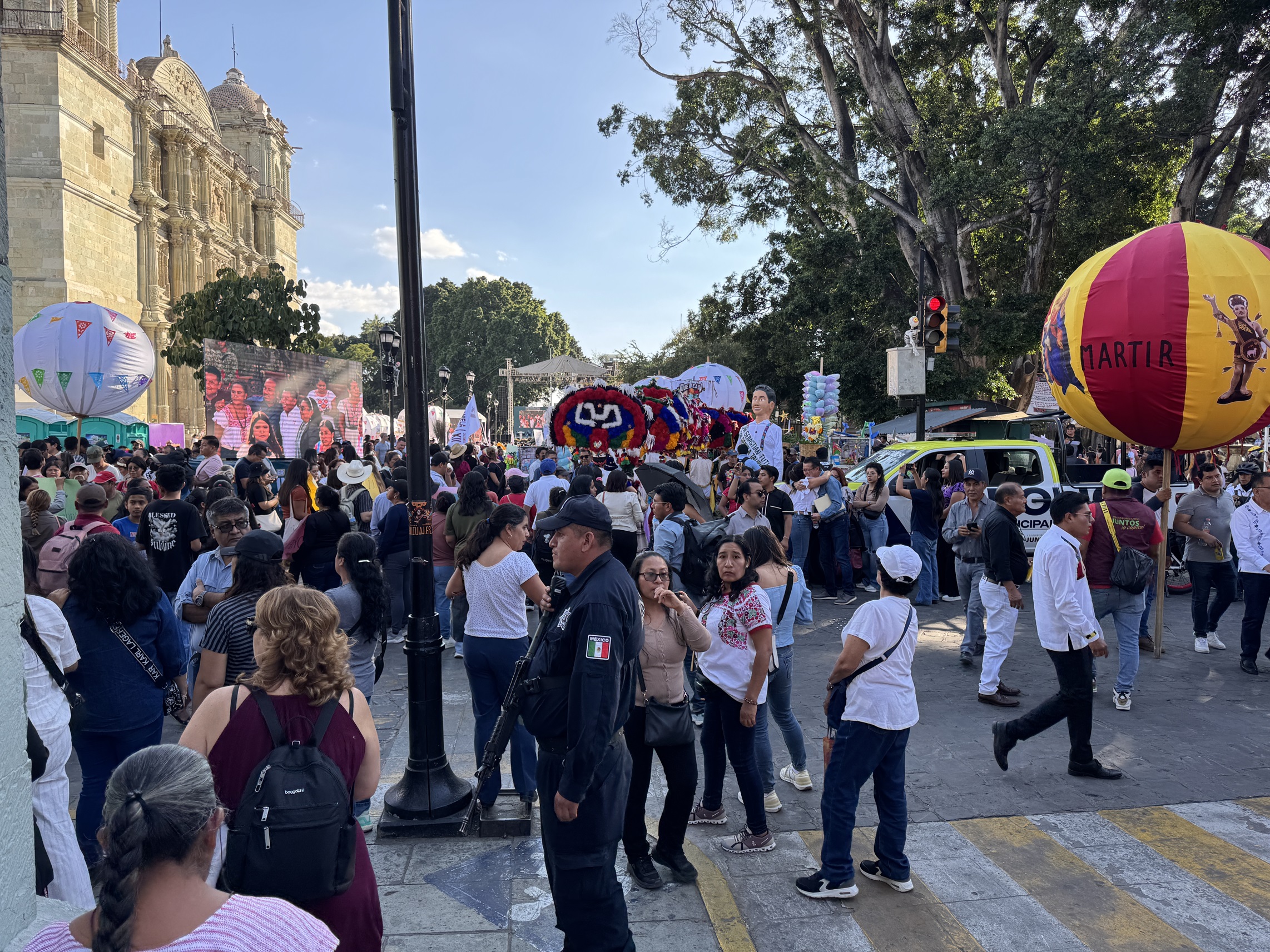
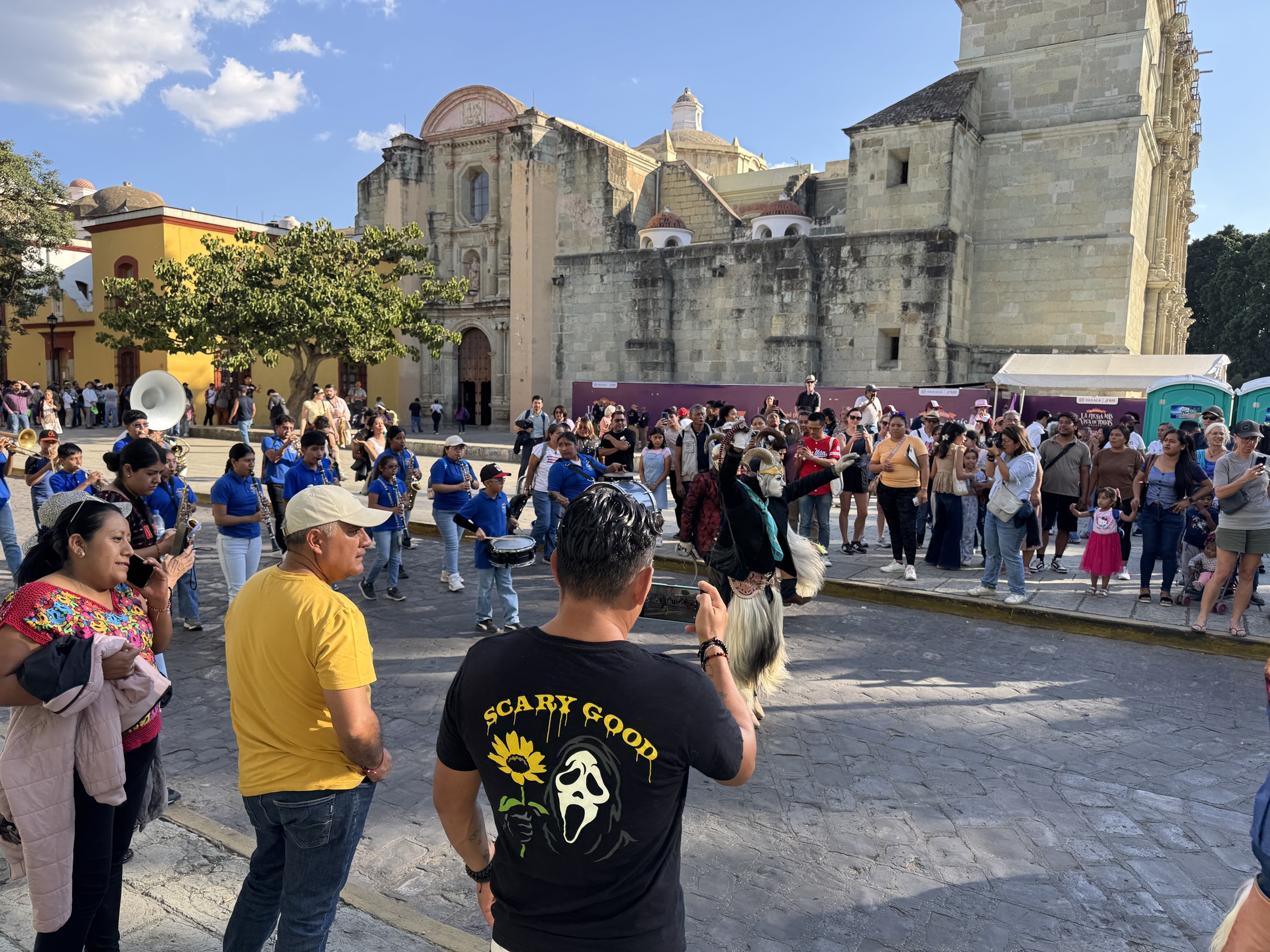
Walking back from lunch we see a parade...
...that includes these guys in scary masks...
...and even a marching band.
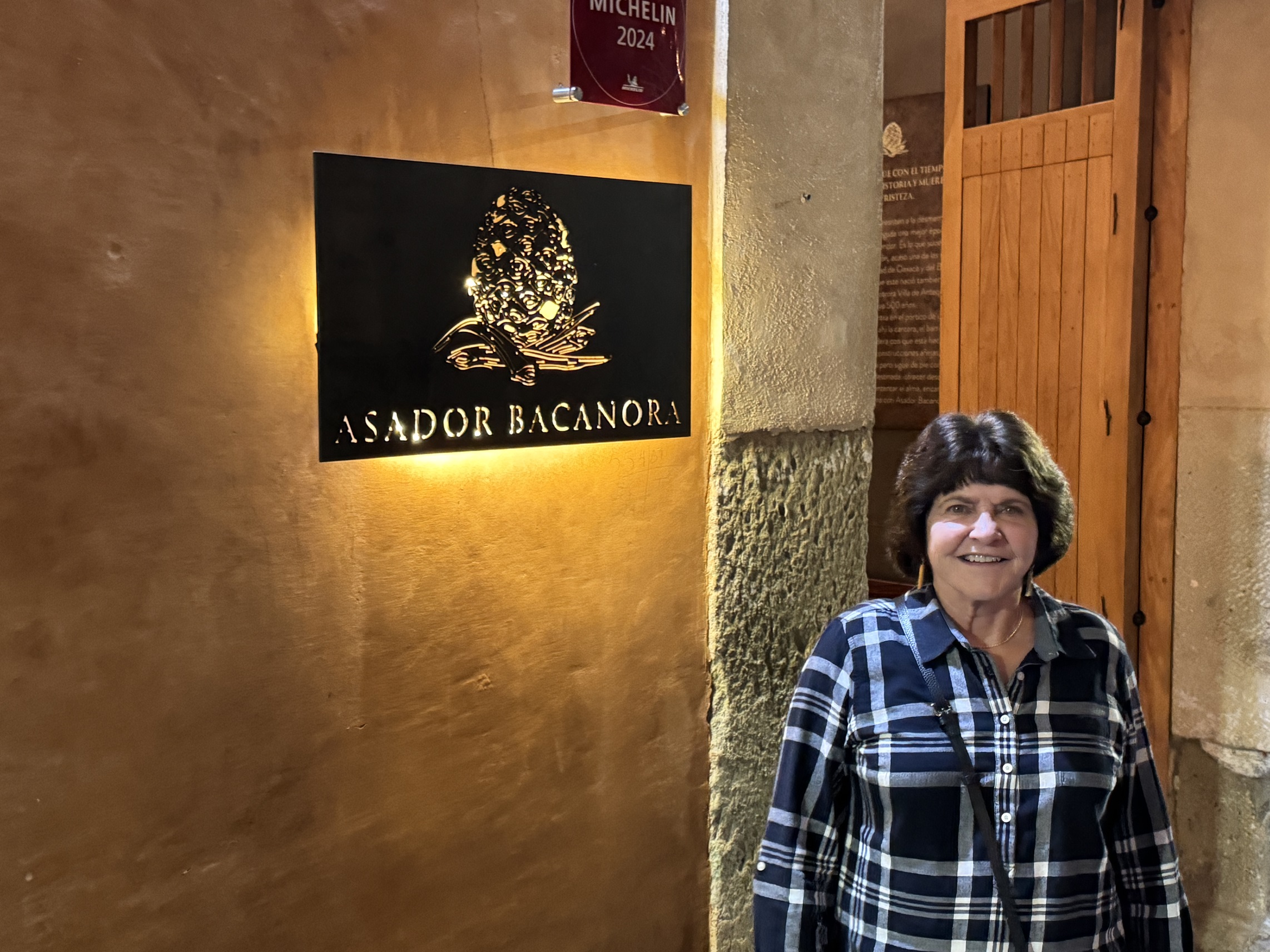
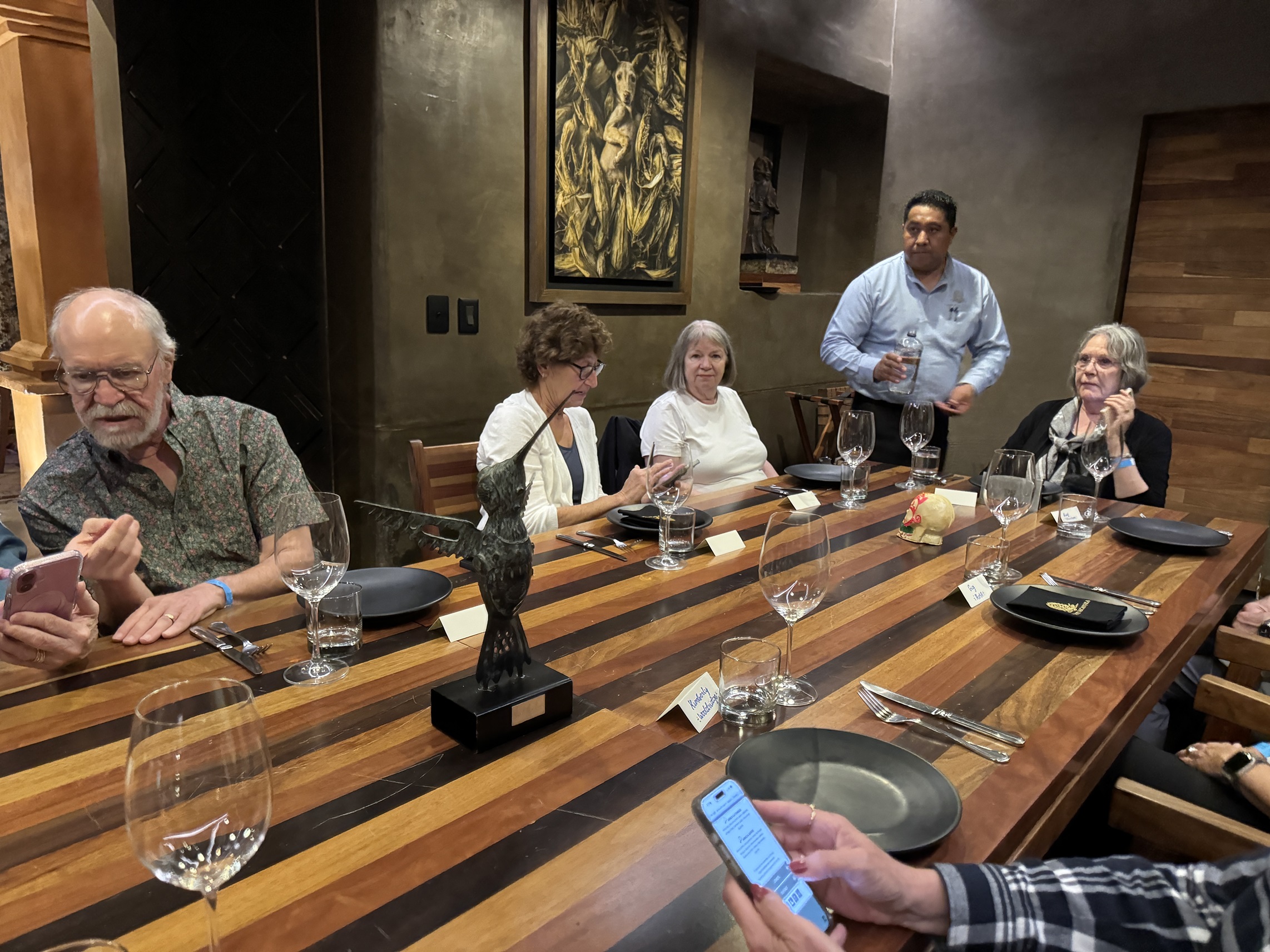
Our group dinner that night is at Asador Bacanora.
Oddly enough, we are inside in a dedicated room, while a piano / violin / flute combo plays
out in the main dining room.
Almost all of us had the shrimp tacos, which we didn't take a picture of.
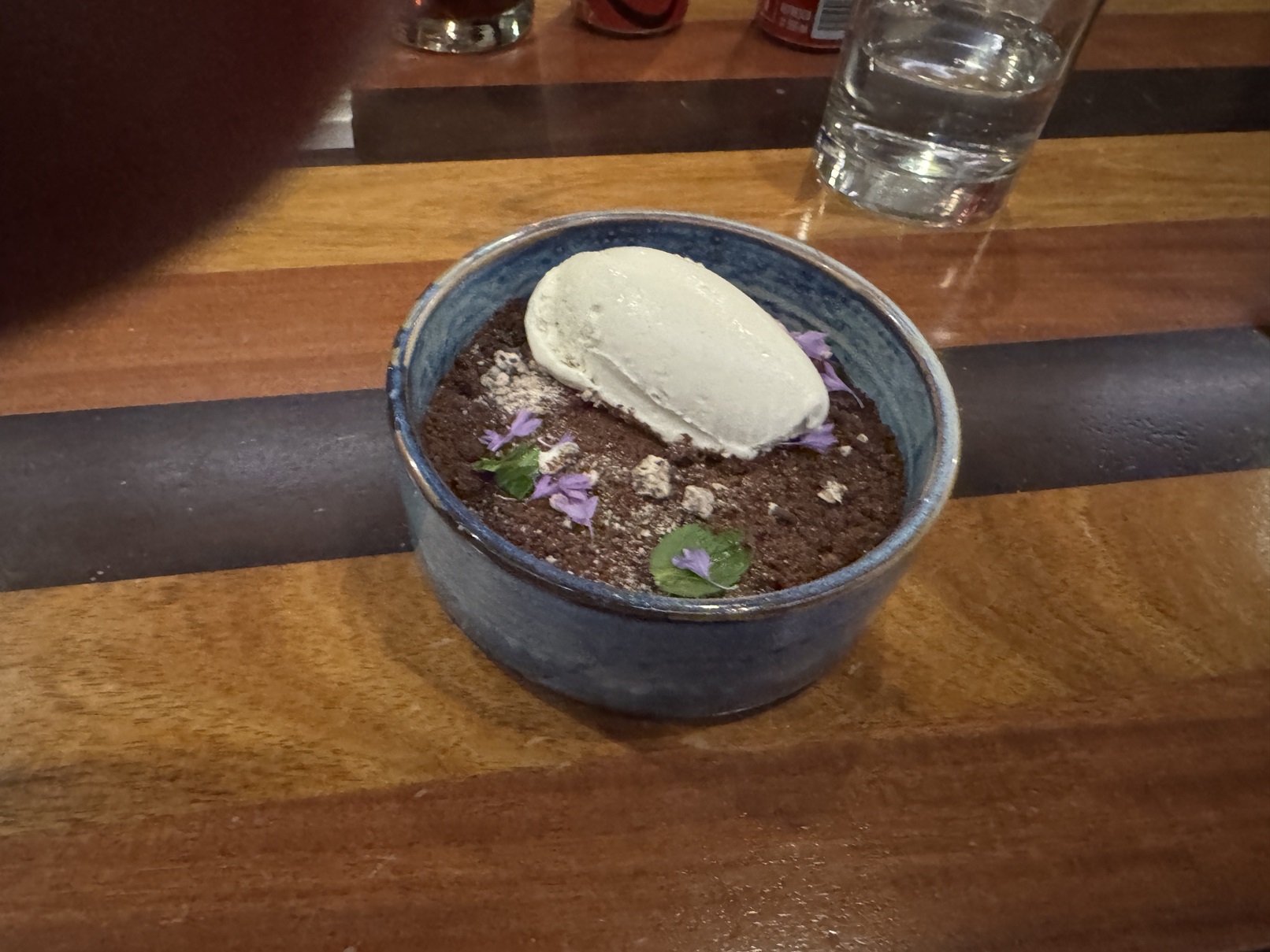
Dessert includes this chocolate mousse, which was made much more delicious with coffee and chocolate
crunchies on top, and a mint ice cream.