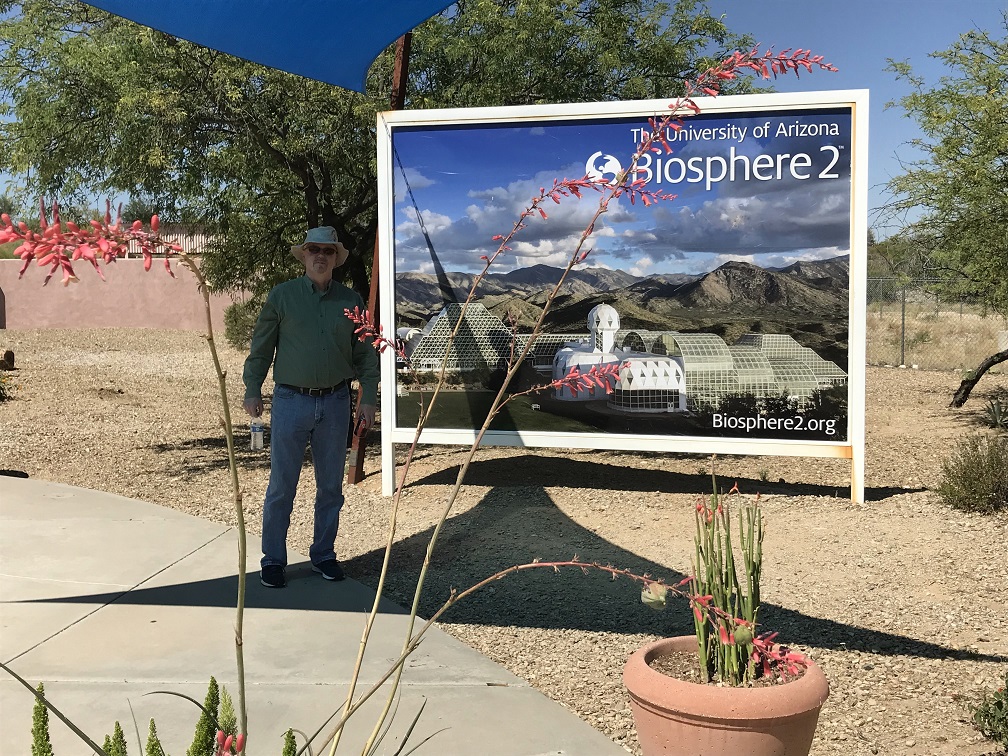
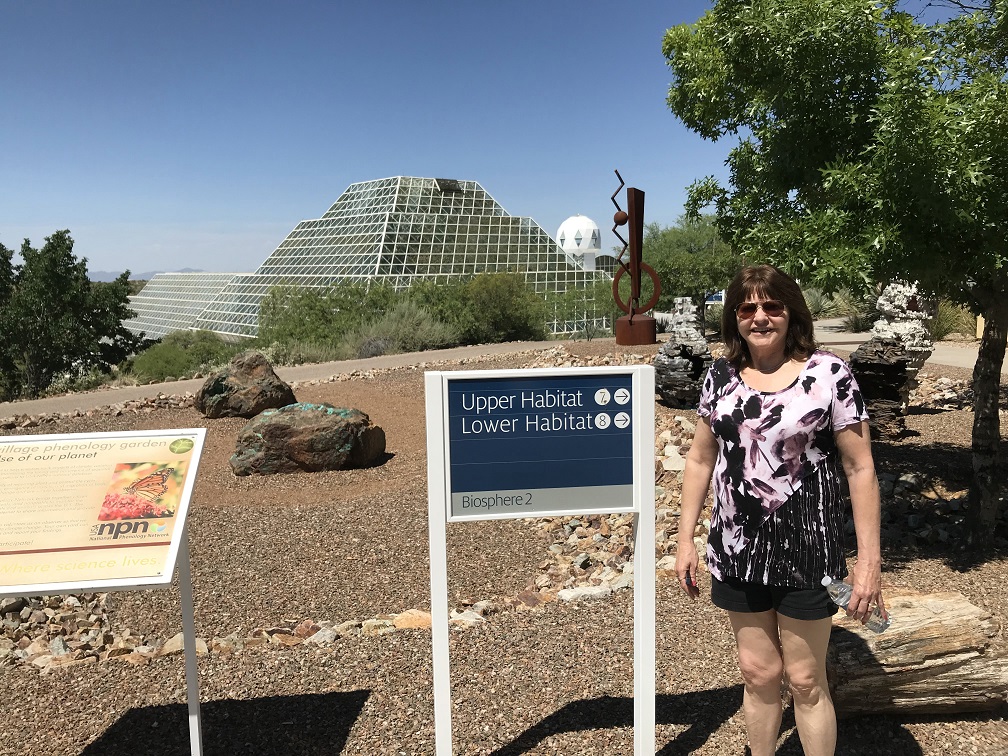
The Biosphere is the habitat they created to do the experiments in the 1970's where they locked away
eight people for two years in a closed environment.
It's also the model that they are basing Mars trips on: whether we can generate enough food, oxygen, etc.
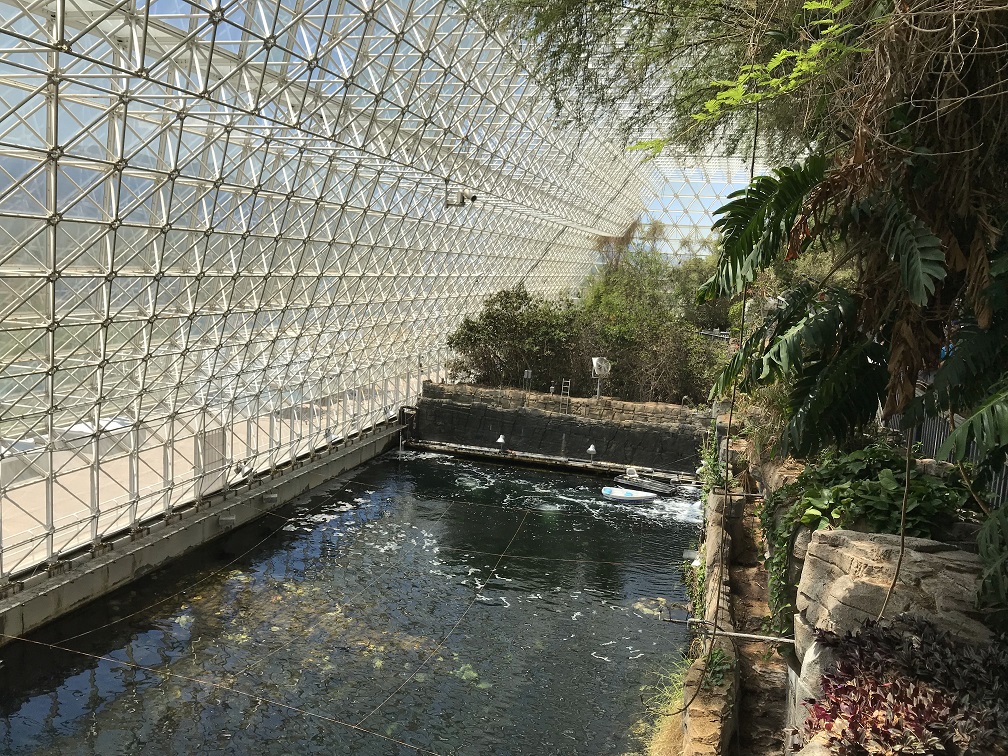
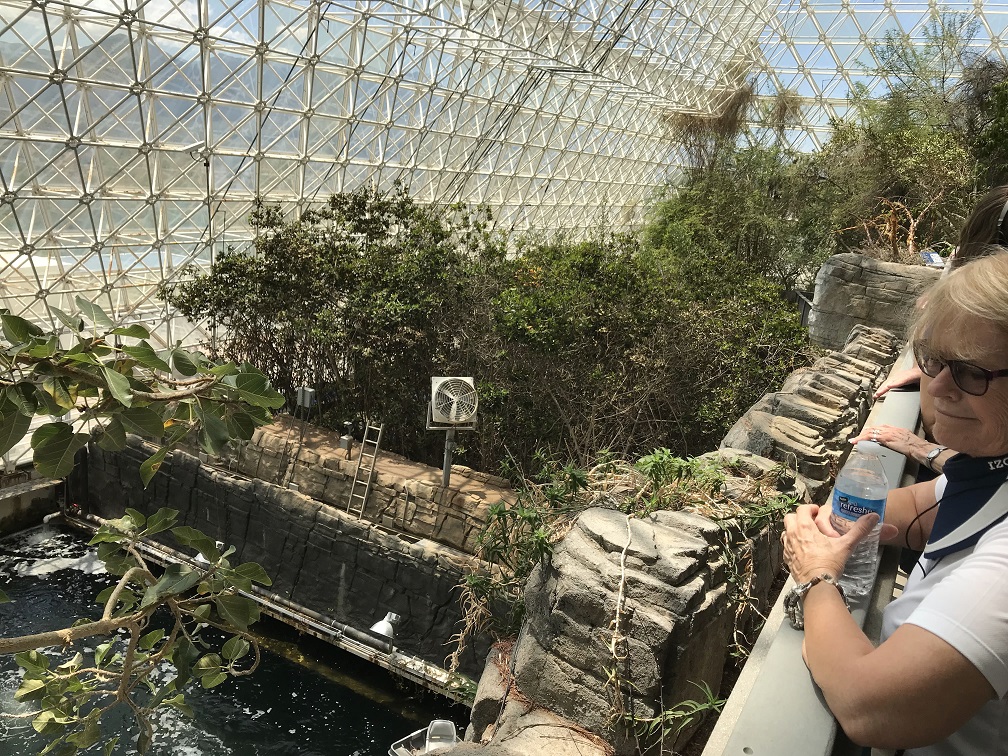
It's broken up into various habitat areas, such as this ocean / shore environment.
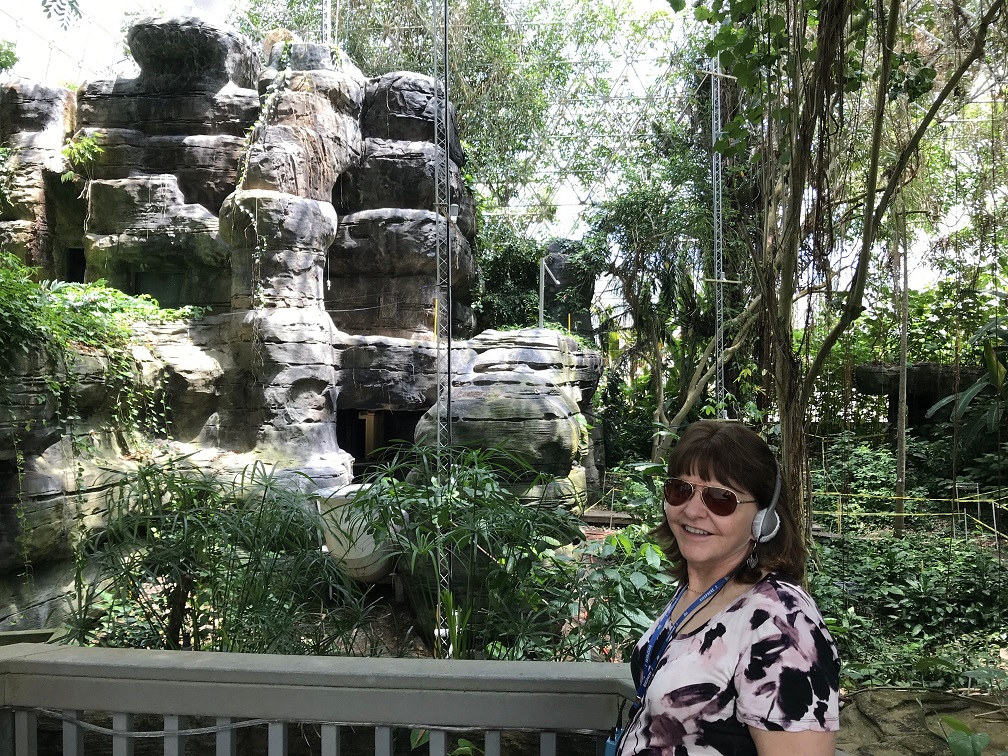
This is the rainforest area. It's drier now, as they are doing a long-term experiment on how
drought affects the various plants.
This is a mangrove wetlands next to the ocean environment.
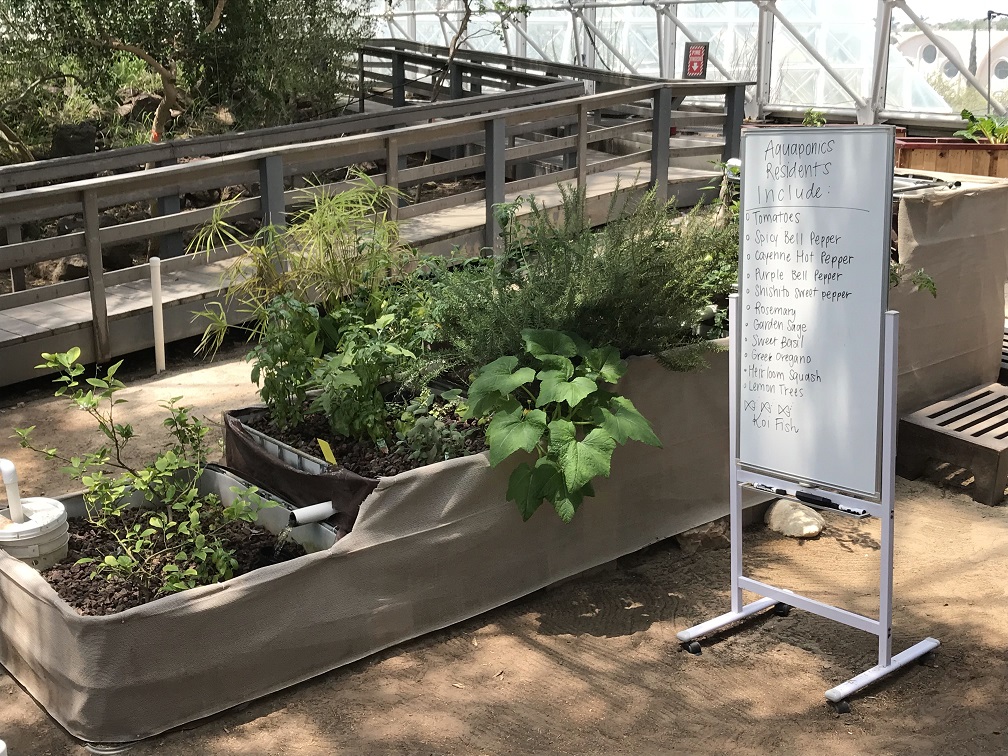
This is an aquaponic garden, similar to hydroponic, but they have fish in the upper chamber, and the
waste products from the fish become the fertilizer for the plants. The water is then pumped back up
to the top. This uses just a tenth of the water of typical gardening.
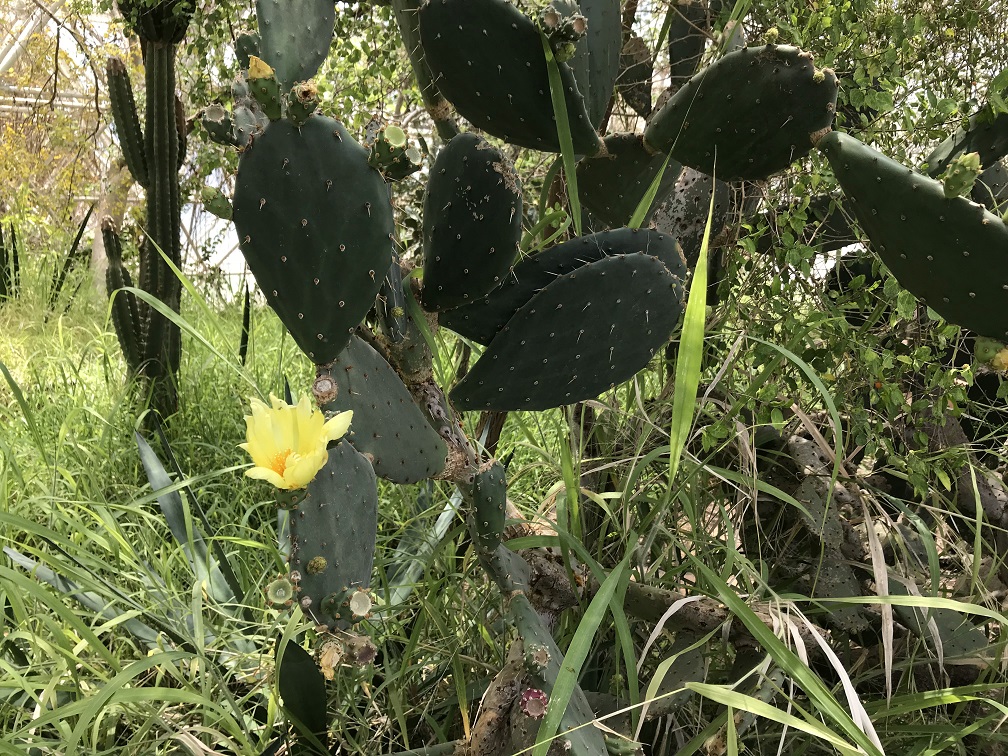
The cacti were in bloom in the desert environment...
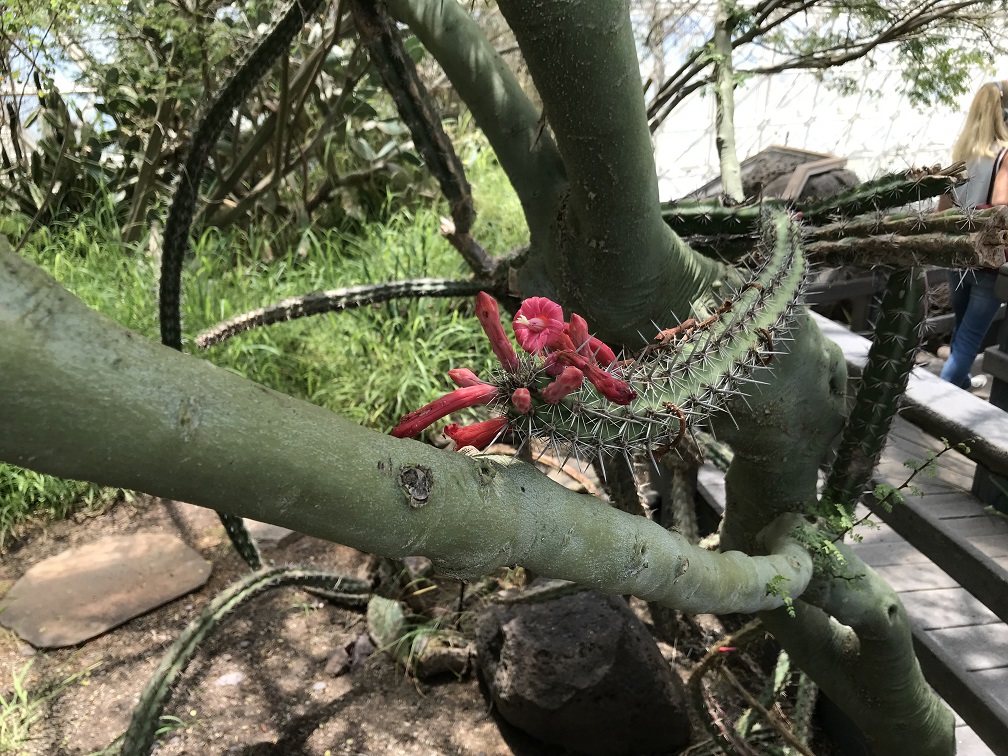
...so we took some pictures for Kimberly's Mom. This is an octopus cactus in bloom.
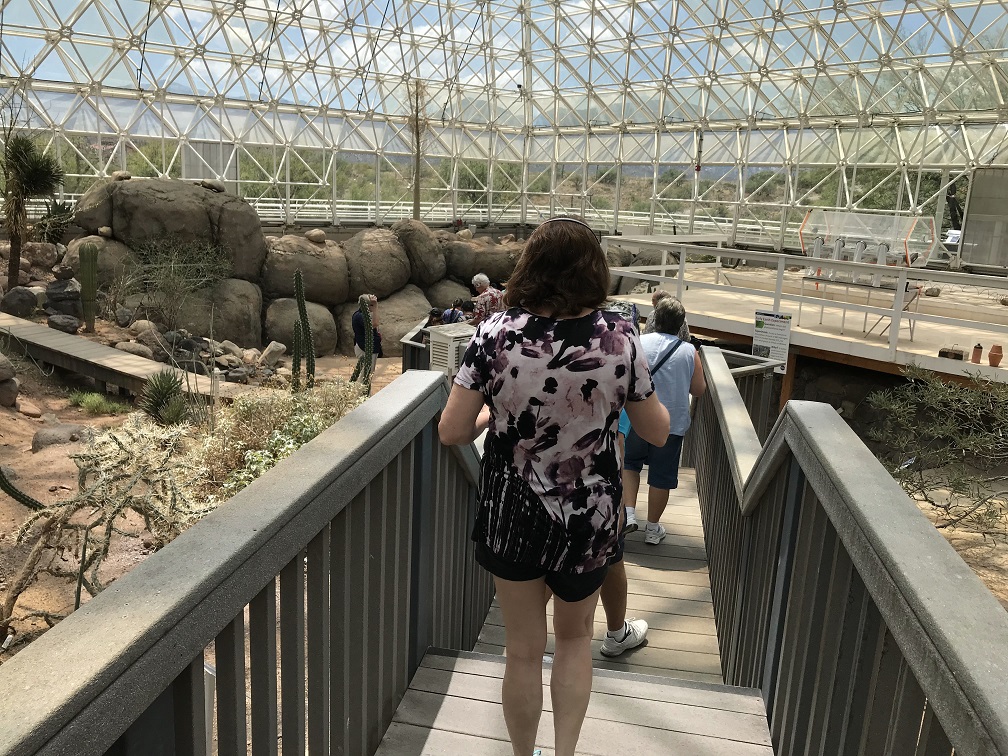
Down through the desert environment...
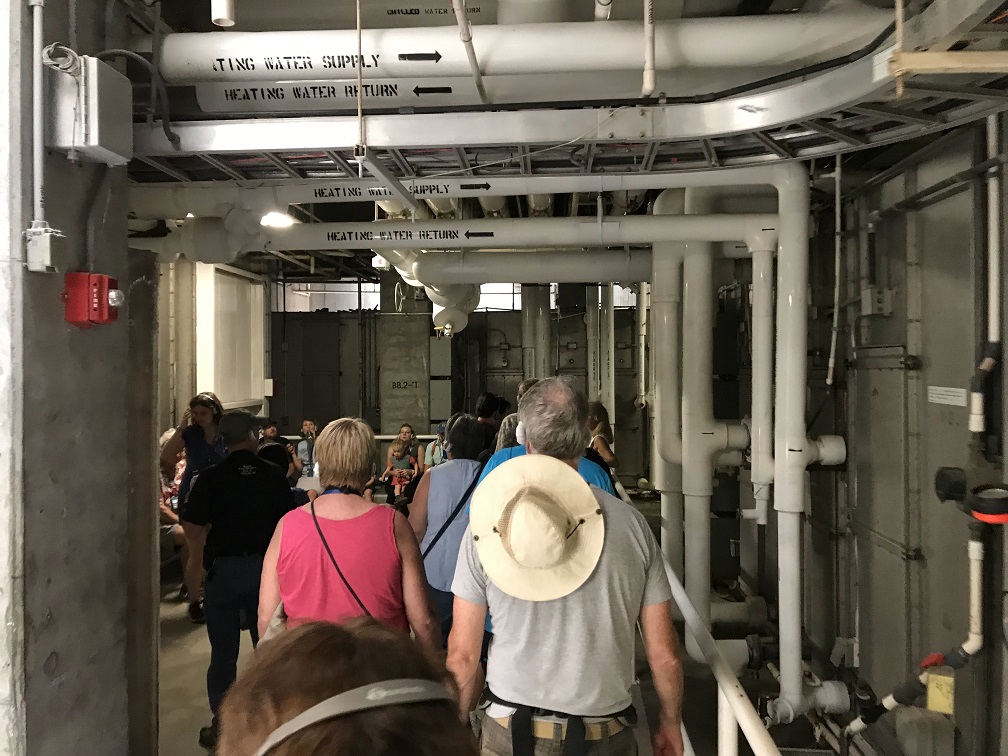
...to the control systems underneath.
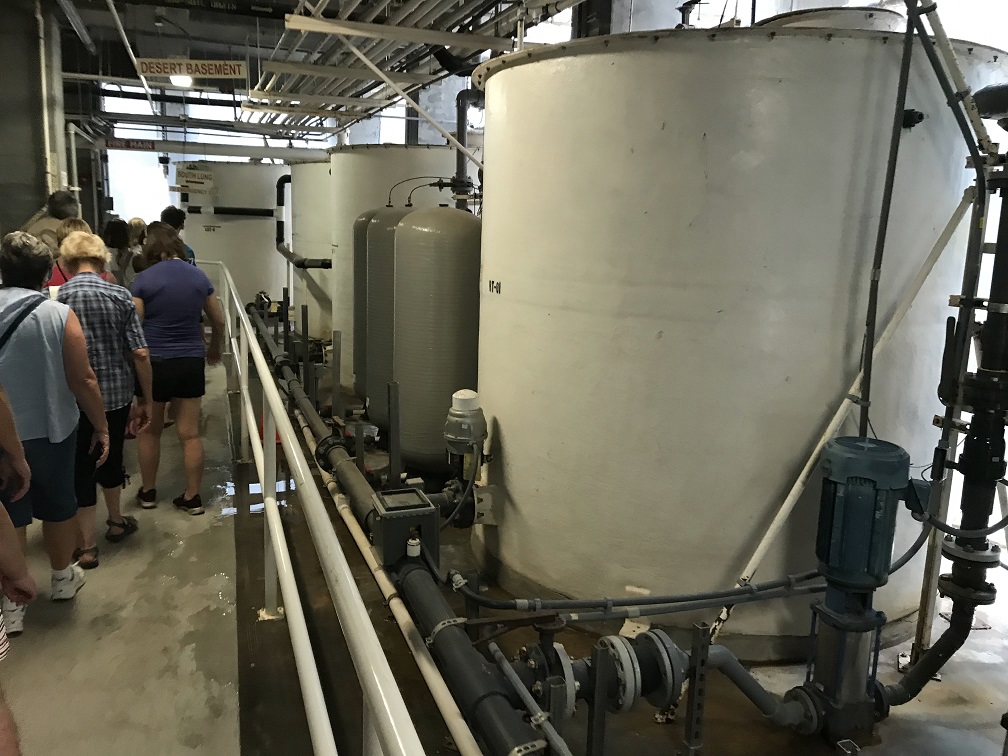
Mainly it is tanks and pipes and pumps. This is a large reverse-osmosis tank.
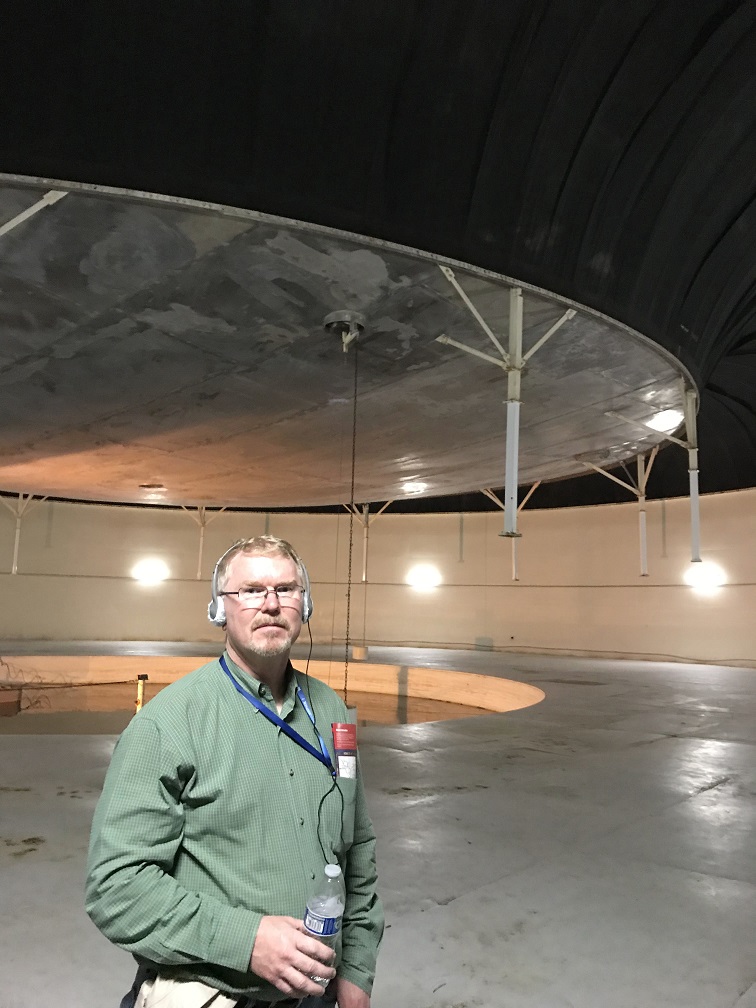
This is one of the more interesting rooms, called the "lung". The metal plate in the middle is attached
to the walls with a parabolic wall of rubber. In the day, the air in the main chambers heats up and
expands, and pushes air into the lung, raising the center. At night, it cools down, and the weight of
the center pushes air back out into the biosphere.
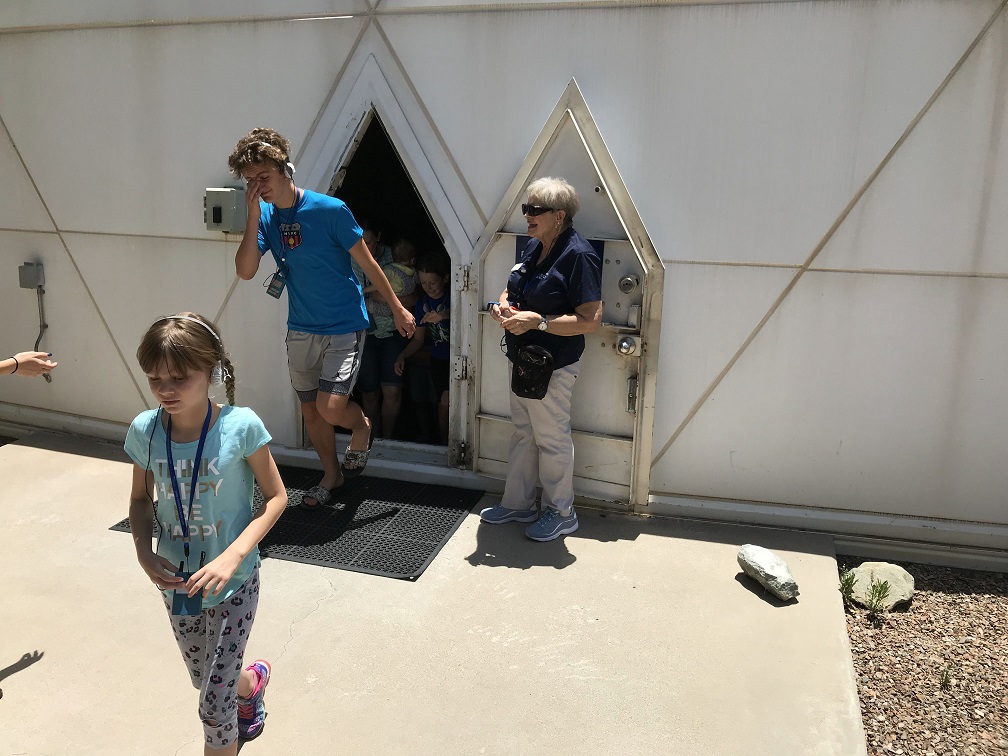
Here is our tour guide as we get blown out of the pressurized chamber. The lung is not really needed
now that we are not trying to maintain a perfectly-closed environment.
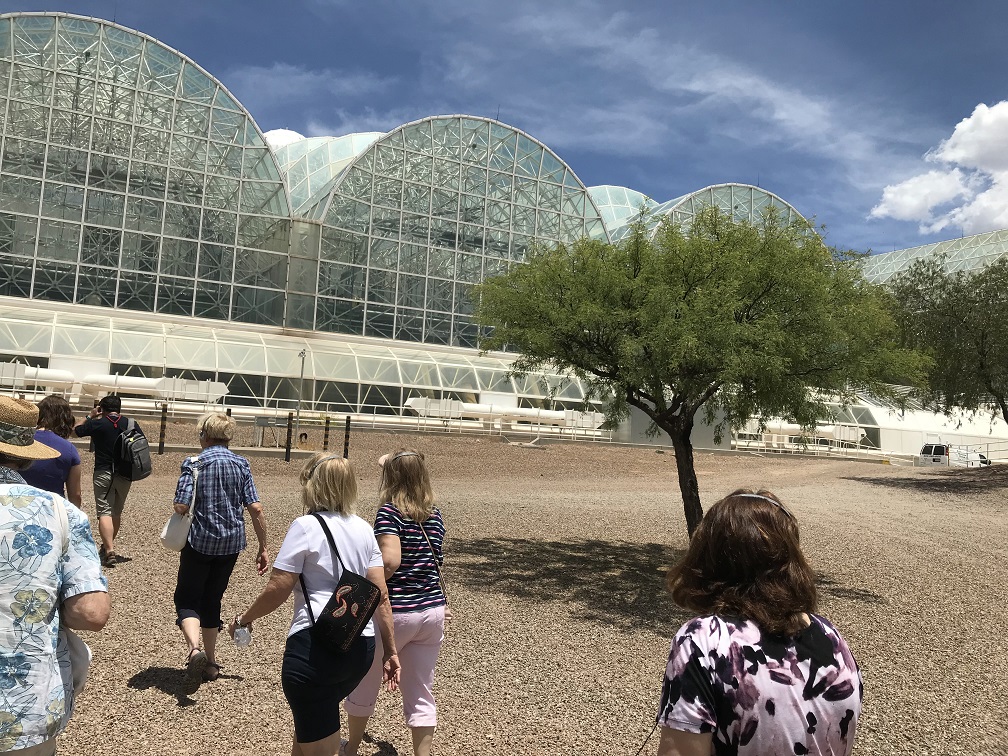
The view of the rainforest area from outside.
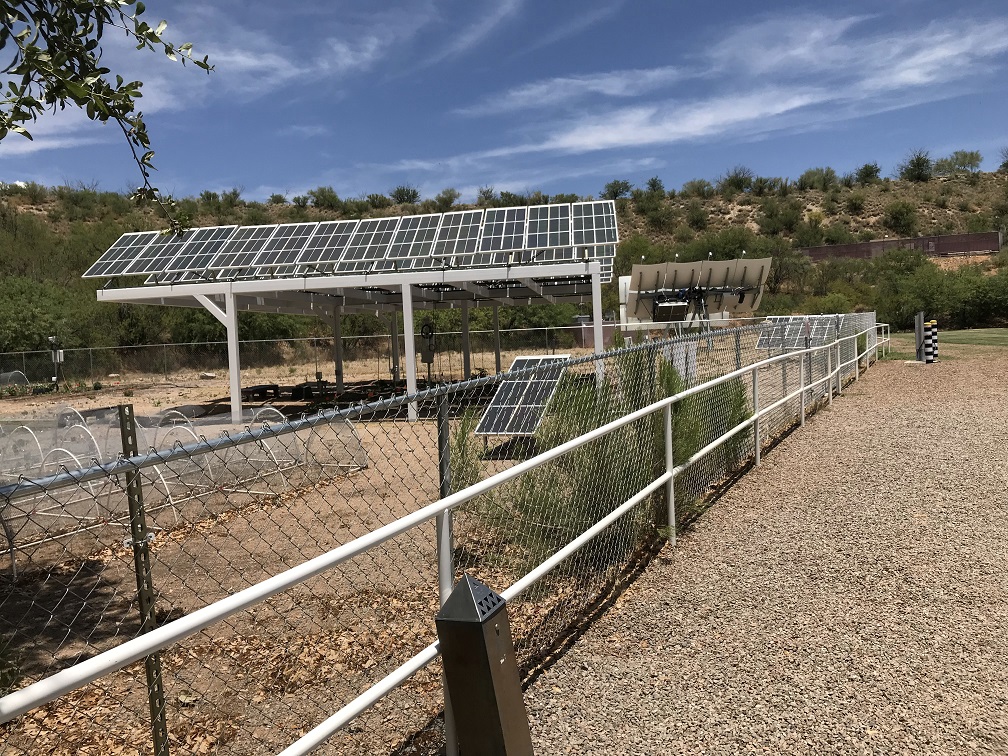
A "solar garden" where the solar cells help shield the plants beneath.